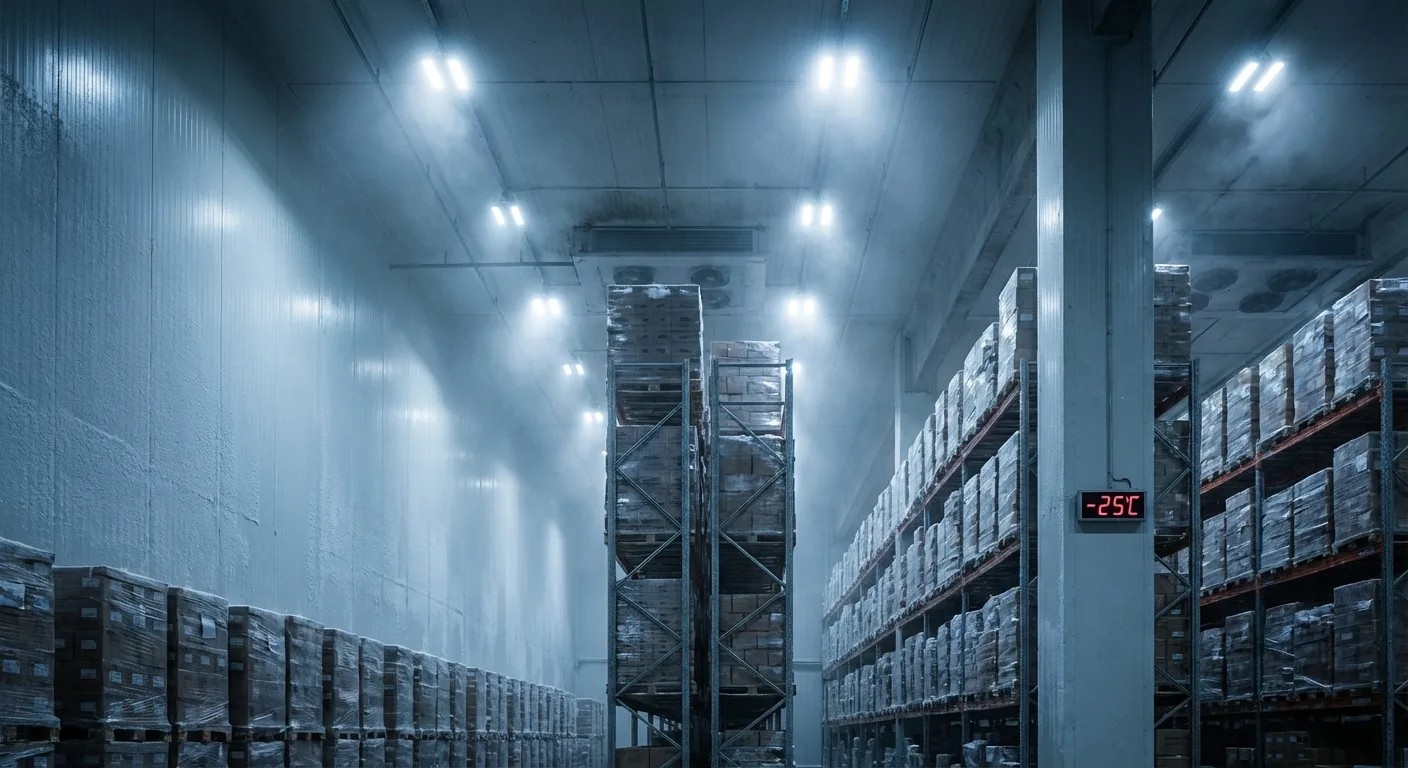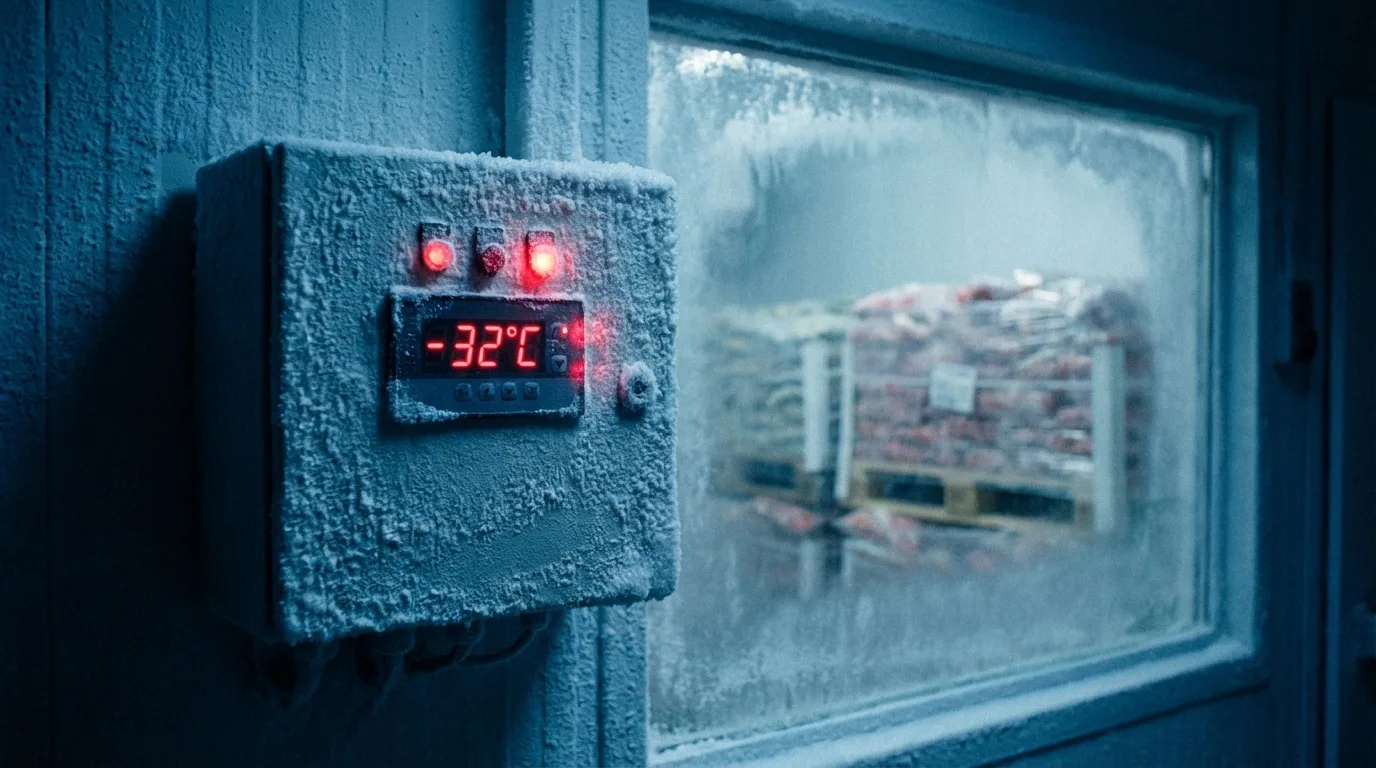
Temperature management in cold and frozen storage is the last line of defense for food safety. From fresh meat and seafood to pharmaceutical vaccines, once temperature goes out of control, the consequences range from product quality degradation and economic losses to food safety hazards and even public health incidents. With HACCP (Hazard Analysis and Critical Control Points) regulations becoming increasingly stringent and food supply chain traceability requirements constantly rising, cold storage temperature monitoring has evolved from traditional "manual patrol recording" to fully integrated systems of "automated sensing, real-time alerts, and cloud management." A well-designed temperature monitoring system is not only the technical foundation for HACCP compliance but also the core tool for ensuring cold chain integrity, reducing operational risks, and improving energy efficiency. This article progresses from regulatory requirements through system architecture, sensor selection, anomaly alert mechanisms, data management strategies, and smart development trends, providing comprehensive temperature monitoring system design and operation reference for cold chain practitioners and engineers.
1. Food Cold Chain Temperature Management Regulations and Standards
The design of temperature monitoring systems must first address the explicit requirements of regulations and standards for temperature management. While regulatory frameworks differ across countries and industries, their core philosophy is consistent -- temperature must be continuously monitored, completely recorded, and responded to immediately when anomalies occur.
HACCP Hazard Analysis and Critical Control Points
The HACCP system was established as the international benchmark for food safety management by the Codex Alimentarius Commission in CAC/RCP 1-1969 (revised through the 2020 edition)[1]. Among its seven principles, Principle 4 "Establish Monitoring Procedures" and Principle 7 "Establish Documentation and Record Keeping" directly regulate the implementation requirements for temperature monitoring: for temperature steps identified as Critical Control Points (CCPs), planned observation or measurement procedures must be established to assess whether the CCP is under control; and all monitoring records must be completely preserved as evidence of effective HACCP system operation. In cold and frozen storage facilities, maintaining storage temperature is the most typical CCP, and its monitoring frequency, precision, record retention period, and anomaly handling procedures are all key audit items in HACCP plans.
Taiwan's Food Safety and Sanitation Management Act and GHP
Article 8 of Taiwan's Food Safety and Sanitation Management Act authorizes the central competent authority to establish Good Hygiene Practice (GHP) standards, clearly specifying food operators' temperature management obligations[2]. Article 24 of the GHP stipulates that food refrigeration must maintain a core temperature of 7 degrees C or below, and freezing must maintain a core temperature of -18 degrees C or below. The Food Safety Control System Standards further require that food businesses mandated to implement HACCP must retain temperature monitoring records for at least five years[3]. Violations of temperature management regulations can result in fines ranging from NTD 60,000 to NTD 200 million, and severe cases may result in business suspension orders.
Temperature Requirements for Different Food Categories
Food temperature management is not one-size-fits-all. Different food categories have their own storage temperature requirements due to varying microbial growth characteristics and quality degradation mechanisms[4]:
- Frozen Foods (-18 degrees C and below): Frozen meat, frozen seafood, frozen fruits and vegetables, frozen prepared foods, etc. -18 degrees C is the minimum frozen food storage temperature standard recognized by Codex Alimentarius and most national regulations; at this temperature, microbial growth is almost completely halted and enzyme activity is significantly reduced
- Refrigerated Foods (0 degrees C to 7 degrees C): Fresh milk, fresh meat, fresh fish, tofu products, ready-to-eat cooked foods, etc. Taiwan's GHP requires refrigerated food core temperatures not to exceed 7 degrees C, while EU regulations (EC 852/2004) generally require 5 degrees C or below[5]. Some high-risk items (such as sashimi-grade seafood) require even stricter practical storage temperatures, controlled at 0 degrees C to 2 degrees C
- Ambient Controlled Foods (below 18 degrees C): Chocolate, certain bakery products, specific fermented foods, and other temperature-sensitive ambient controlled products. While Taiwan regulations have no unified "ambient" temperature definition, industry practice generally uses 18 degrees C to 25 degrees C as the benchmark
- Ultra-Low Temperature Foods (-50 degrees C to -60 degrees C): Deep-sea tuna sashimi-grade products, special pharmaceutical biological agents, etc., requiring ultra-low temperature storage or cascade refrigeration systems
International Standards: ISO 22000 and FDA FSMA
ISO 22000:2018 Food Safety Management Systems standard incorporates temperature monitoring into its Operational Prerequisite Programs (OPRP) and HACCP control plan framework, requiring organizations to implement metrological management of monitoring equipment to ensure accuracy and traceability of temperature measurements[6]. The U.S. FDA's Food Safety Modernization Act (FSMA) goes further, listing cold chain temperature management as a mandatory requirement under "Preventive Controls," and also applying the Foreign Supplier Verification Program (FSVP) to imported food suppliers[7]. For Taiwanese food businesses with U.S. export market needs, temperature monitoring system design must not only comply with domestic regulations but also meet FSMA's stringent requirements.
2. Temperature Monitoring System Architecture Design
A complete cold storage temperature monitoring system, from the field sensing layer to the cloud management platform, can be divided into four core tiers. The technology selection and integration approach of each tier determines the overall system's accuracy, reliability, real-time capability, and scalability.
Sensing Layer: Temperature Sensors
Temperature sensors are the data source of the entire system, and their accuracy and reliability directly determine the quality of all subsequent judgments and decisions. Temperature sensors commonly used in cold storage can be classified into three major categories based on their measurement principles[8]:
- Platinum Resistance Temperature Detectors (PT100/PT1000): Measure temperature using the characteristic of platinum metal resistance changing linearly with temperature. PT100 has a resistance of 100 ohms at 0 degrees C, PT1000 is 1000 ohms. High accuracy (Class A plus/minus 0.15 degrees C, Class AA plus/minus 0.1 degrees C), excellent stability, good linearity, and low long-term drift make them the preferred choice for industrial-grade temperature monitoring. Disadvantages include higher cost and the need for three-wire or four-wire measurement circuits to eliminate lead wire resistance effects
- NTC Thermistors (Negative Temperature Coefficient Thermistors): Measure temperature using semiconductor material resistance changes with temperature. High sensitivity (approximately 10 times that of PT100), fast response, and low cost. Disadvantages include pronounced nonlinear characteristics requiring lookup table or polynomial fitting correction; lower long-term stability compared to platinum resistance; and limited measurement range (typically -40 degrees C to +125 degrees C). Suitable for cost-sensitive mass deployment scenarios
- Digital Temperature Sensors: Represented by the Dallas DS18B20, single-bus (1-Wire) digital temperature sensors integrate sensing elements, A/D conversion, and digital communication on a single chip. Accuracy of plus/minus 0.5 degrees C (in the -10 degrees C to +85 degrees C range), with resolution up to 12-bit (0.0625 degrees C). Advantages include simple wiring (multiple sensors can be daisy-chained on a single data line) and strong digital signal anti-interference capability; disadvantages include lower accuracy compared to PT100, the need for additional environmental protection design, and reliability at extremely low temperatures (below -40 degrees C) requiring verification
Data Acquisition Layer: Data Loggers
Data loggers receive analog or digital signals from sensors, perform A/D conversion, temperature value calculation, data buffering, and local alarm judgment. Based on functional complexity and application scenarios, they can be divided into standalone loggers and Programmable Logic Controllers (PLCs). Standalone loggers are suitable for small to medium-sized cold storage, typically supporting 4 to 16 sensor channels, with built-in memory storing tens of thousands to hundreds of thousands of records, and some models featuring local display screens and alarm relay outputs. PLCs are suitable for integrated monitoring systems in large cold chain logistics centers, capable of simultaneously managing hundreds of sensing points and performing logical interlocking with compressor control, defrost scheduling, access management, and other subsystems[9].
Communication Layer: Data Transmission Modules
Communication modules transmit field data to central monitoring platforms or cloud servers. Communication technology selection must comprehensively consider transmission distance, penetration capability, bandwidth, power consumption, and deployment cost:
- RS-485 Wired Communication: A classic industrial standard with transmission distances up to 1,200 meters, supporting multi-drop daisy-chaining (up to 32 nodes), with strong electromagnetic interference resistance. Combined with Modbus RTU protocol, it is the traditional solution for cold storage monitoring systems. Disadvantages include extensive wiring effort and the need for proper waterproof sealing and insulation treatment where cables penetrate cold storage walls
- Wi-Fi (IEEE 802.11): Suitable for scenarios where existing Wi-Fi infrastructure is available, with sufficient bandwidth for large data volumes. Disadvantages include significant shielding effects of metal storage walls on 2.4 GHz and 5 GHz signals, higher power consumption unsuitable for battery-powered sensor nodes, and connection stability concerns in dense multi-device environments
- 4G/LTE Mobile Communication: Suitable for remote areas or standalone cold storage without fixed network infrastructure. Data is transmitted directly to cloud platforms via SIM cards, offering high deployment flexibility. Disadvantages include ongoing monthly fees, signal coverage limitations by telecom carriers, and the need for external antennas for reception in metal enclosed spaces
- LoRa/LoRaWAN: A representative Low Power Wide Area Network (LPWAN) technology, with transmission distances up to 5--15 km in open environments and better building structure penetration than Wi-Fi. Battery-powered LoRa temperature sensor nodes can operate for 3--5 years, suitable for distributed cold storage monitoring across large campuses. Disadvantages include low bandwidth (only tens of bytes per transmission), higher transmission latency (second-level), and unsuitability for applications requiring real-time large data volumes[10]
Platform Layer: Central Monitoring and Cloud Management
The central monitoring platform is the "brain" of the temperature monitoring system, responsible for data aggregation, visualization, alert logic processing, historical data storage, and report generation. Based on deployment approach, it can be divided into on-premise server solutions and cloud SaaS solutions. On-premise solutions store all data on the operator's own servers, suitable for large enterprises with strict data sovereignty requirements. Cloud solutions operate on monthly or annual subscription fees, requiring no self-built servers or IT infrastructure maintenance, with anytime access to data via web or mobile apps, making them particularly attractive to small and medium food businesses. Regardless of deployment approach, the platform should at minimum provide: real-time temperature dashboards, multi-tier alert settings and push notifications, historical trend curves and comparative analysis, automated HACCP-format report generation, and user permission and operation audit trail management.
3. Sensor Selection and Installation Practices
Correct sensor selection and installation are the first step in ensuring temperature monitoring data quality. No matter how accurate a sensor is, if installed in an improper location or without adequate protection, its measurement results cannot truly reflect the temperature distribution within the storage facility.
Accuracy Requirements and Calibration Intervals
Under the HACCP system, temperature monitoring sensor accuracy should be at least plus/minus 0.5 degrees C. Taking the -18 degrees C control limit for frozen storage as an example, if the sensor's own measurement error is plus/minus 1 degrees C, the sensor may still display -18 degrees C when the actual storage temperature has deviated to -17 degrees C, creating a false compliance risk. For applications with stricter temperature control (such as low-temperature refrigerated storage at 0 degrees C to 2 degrees C, or ultra-low temperature storage at -50 degrees C), sensor accuracy should be further improved to plus/minus 0.2 degrees C to plus/minus 0.3 degrees C. Calibration interval settings should be determined by comprehensively considering sensor type, operating environment, and regulatory requirements. Generally, PT100 sensors are recommended to be calibrated every 12 to 24 months, and NTC thermistors every 6 to 12 months. Calibration work should use standard thermometers traceable to NIST or TAF, with complete preservation of calibration records and certificates[6].
Installation Location Selection
Temperature distribution within cold storage is not uniform. The area near the evaporator air outlet has the lowest temperature, the door area has the highest temperature, and temperature differences exist between different shelf levels. Sensor installation locations should represent the actual storage temperature of products, rather than reflecting only extreme values at a specific position. Recommended installation locations in practice include:
- Evaporator Return Air Inlet: Measuring the evaporator return air temperature provides the most representative reflection of the average air temperature within the storage. Temperature data from this location also serves as feedback for refrigeration system control
- Central Shelf Area: Located at 1.5 meters above the floor, in the center of the shelf array, representing the typical temperature of the product storage area. Large cold storage facilities should have at least 2 to 4 sensing points in the shelf area
- Near the Door: The door area is a high-risk zone for cold air leakage and warm air infiltration. Installing sensors here monitors the impact of door-opening operations on storage temperature and also serves as a reference for access management
- Worst-case Location: The highest temperature point identified through Temperature Mapping of the storage interior, typically located in corners or dead zones farthest from the evaporator with the poorest air circulation. If the temperature at this location remains within the control limits, it confirms that the entire storage temperature is under control
Protection Rating and Redundancy Design
The cold storage environment poses severe physical protection requirements for sensors: low temperature (-18 degrees C to -60 degrees C), high humidity (approaching 100% RH during defrost), wash-down cleaning (high-pressure water jets), and frost and ice formation. Sensor enclosure protection rating should be at least IP67 (dust-proof, short-term immersion). In areas requiring frequent wash-down or where defrost drainage may contact sensors, IP68 or IP69K rated enclosures are recommended. Sensor cable connectors are the most vulnerable point for water intrusion failure and should use waterproof crimp terminals or sealant encapsulation.
For critical CCP monitoring points, redundancy design should be implemented -- installing two independent sensors at the same location, connected to different data loggers or communication paths. When the primary sensor fails or shows anomalous data, the backup sensor can immediately take over, avoiding monitoring gaps. The investment cost of redundancy design, relative to the potential product losses and regulatory penalties from temperature loss-of-control, offers an extremely high return on investment[11].
4. Anomaly Alert and Response Mechanisms
The value of a temperature monitoring system lies not only in "recording" temperature but also in its ability to immediately "notify" management personnel and activate pre-established response procedures when temperature deviates from the normal range. The quality of the alert mechanism design directly determines the time window between "discovering an anomaly" and "completing the response" -- the shorter this window, the lower the product loss and safety risk.
Multi-Tier Alert Configuration
Temperature alerts should not have only a single threshold. In practice, a three-tier alert architecture is recommended, with escalating notification targets and response levels based on severity:
- Pre-alarm (Advisory): Triggered when storage temperature approaches but has not yet exceeded the control limit. For example, with a frozen storage control limit of -18 degrees C, the pre-alarm threshold is set at -19 degrees C. The purpose of this tier is to provide early warning, giving on-site personnel time to check system status and take preventive measures (such as verifying door closure, confirming normal compressor operation) to prevent further temperature deviation
- Alarm: Triggered when storage temperature reaches or exceeds the control limit. For example, frozen storage temperature rises above -18 degrees C. This tier requires on-site personnel to immediately respond, initiate corrective action Standard Operating Procedures (SOPs), and record the time of anomaly occurrence and response actions taken
- Critical / Emergency Alarm: Triggered when storage temperature is severely out of control or when the alarm state persists beyond a preset duration without resolution. For example, frozen storage temperature rises above -12 degrees C, or the alarm state continues for more than 30 minutes. This tier should automatically escalate notification to management and equipment maintenance contractors, while initiating product isolation and assessment procedures
Alert threshold settings should account for normal storage temperature fluctuation ranges to avoid excessive sensitivity generating large numbers of false alarms, leading to a "cry wolf effect" -- when management personnel habitually ignore alerts, genuine temperature anomalies may also be delayed in response[1].
Notification Methods and Acknowledgement
Alert notifications should employ a multi-channel parallel strategy to ensure messages reach responsible personnel in the shortest possible time:
- Mobile App Push Notifications: Highest immediacy, can be paired with vibration and sound alerts, and can directly view real-time temperature curves and anomaly trends within the app
- SMS Notifications: Independent of internet connectivity, serving as a backup channel when app push notifications fail to deliver, with high delivery rates
- Automated Voice Phone Calls: Suitable for critical/emergency alert levels, with configurable calling sequences -- first calling the on-duty personnel, then automatically calling the next person in sequence if unanswered, until someone confirms receipt
- Email: Suitable for notifying management and generating formal records, but lower immediacy makes it unsuitable as a front-line notification channel
- LINE / Enterprise Messaging Groups: Extremely high usage rates in Taiwan's workplace environment, enabling rapid anomaly reporting and coordinated response within on-duty groups
All alert notifications should include an "Acknowledgement" mechanism -- responsible personnel must confirm receipt in the system after receiving notification. If unacknowledged within a preset time, the system should automatically escalate notification to the next tier of responsible personnel.
Response SOPs and Temperature Rise Curve Analysis
Temperature anomaly response Standard Operating Procedures should be pre-established, regularly drilled, and documented in the HACCP plan. Typical response SOPs include the following steps: confirm alert validity (rule out sensor malfunction possibility), initial on-site response (close doors, check compressor status), activate backup refrigeration equipment or transfer products to backup storage areas, record anomaly occurrence time and temperature rise trajectory, assess affected product safety, investigate root cause and implement corrective actions.
Temperature rise curve analysis is an important tool for anomaly event investigation. Through historical temperature data, the precise moment when storage temperature began deviating from normal range can be traced back, along with the rate of temperature rise and the time to return to normal range. An excessively rapid temperature rise may indicate large-scale door opening or complete compressor shutdown; a slow, continuous temperature climb may suggest chronic issues such as compressor efficiency degradation, severe evaporator frosting, or insulation material deterioration[12].
Defrost Cycle Alert Exclusion
Periodic defrost operations on cold storage evaporators cause temporary temperature rises of 2 degrees C to 5 degrees C -- this is normal system behavior, not a temperature anomaly. If the alert system does not incorporate defrost cycle exclusion logic, every defrost cycle will trigger unnecessary alert notifications. Smart temperature monitoring systems should receive defrost schedule or defrost activation signals, automatically pausing alert evaluation (or adjusting alert thresholds) during defrost periods, and resuming monitoring after defrost completion and storage temperature recovery to normal range. Additionally, the system should monitor post-defrost temperature recovery time -- if storage temperature has not returned to normal range within a preset time after defrost completion (e.g., 45 minutes), a dedicated "defrost recovery timeout" alert should be triggered, indicating potential refrigeration system efficiency insufficiency.
5. Data Management and HACCP Electronic Records
Temperature data is the "chain of evidence" for the HACCP system -- from daily operational compliance evidence, to anomaly event traceability analysis, to written documentation for external audits, complete and credible temperature records are the cornerstone of the entire management system. Traditional manual recording methods are being comprehensively replaced by automated electronic records, driven not only by technological progress but also by regulatory requirements and management efficiency imperatives.
Automated Electronic Records vs Manual Records
Manual recording involves on-duty personnel periodically (typically every 2 to 4 hours) inspecting cold storage temperature display panels and handwriting readings on paper record forms. This method has multiple systemic deficiencies: insufficient recording frequency that cannot capture short-term temperature deviations between inspections; high risk of human error including omissions, misreadings, backfilling, and even falsification; and inconvenience in preserving, retrieving, and statistically analyzing paper records. Automated electronic recording systems use sensors for automatic sampling (typically at 1 to 15-minute intervals), with data transmitted in real time through data loggers to database storage. Electronic records provide complete timestamps, data tamper-resistance (Write-Once-Read-Many mechanism), automated report generation, and remote access and retrieval capabilities[3].
Data Retention Period and Regulatory Requirements
Taiwan's Food Safety Control System Standards require HACCP-related records to be retained for at least five years. While ISO 22000 does not specify a retention period, it requires organizations to determine appropriate record retention periods based on regulatory and customer requirements. FDA FSMA preventive control rules require records to be retained for at least two years[7]. For businesses with export markets spanning multiple countries, the strictest regulatory requirement (at least five years) should be used as the design benchmark. Data storage capacity planning must consider the product of sensor count, sampling interval, and retention period -- for a cold storage facility with 20 sensing points sampling every 5 minutes, five years of data amounts to approximately 10.5 million records, requiring approximately 200 MB to 500 MB of structured database storage space, which is entirely manageable with modern storage technology.
Report Generation and Audit Preparation
The temperature monitoring platform should be able to automatically generate standardized reports meeting HACCP audit requirements, including at minimum: daily temperature summary reports (maximum, minimum, and average temperatures for each monitoring point, and number of anomaly events), weekly/monthly temperature trend reports (with statistical charts), detailed anomaly event reports (trigger time, duration, maximum deviation temperature, response records), sensor calibration record reports, and annual comprehensive temperature management analysis reports. Reports should support PDF and Excel format export for printing, archiving, and data analysis. During audit preparation, management personnel should be able to quickly retrieve complete temperature records and anomaly response records for specified time ranges and storage areas through the platform, without browsing through large volumes of paper documents[6].
Cloud Backup and Information Security
The integrity and availability of temperature records are critical to the HACCP system. If using on-premise server storage, regular backup strategies should be implemented (daily incremental backups and weekly full backups are recommended), with backup copies stored off-site. Cloud platforms have a natural advantage in this regard -- data automatically synchronizes to Multi-AZ Redundant data centers, ensuring historical data remains intact even if local equipment fails or is affected by natural disasters. Regarding information security, the system should implement user identity verification, tiered access permission management (e.g., operators can only view data while administrators can modify alert settings), audit trails, and data transmission encryption (TLS 1.2 or higher), ensuring the authenticity and tamper-resistance of temperature records.
6. Smart Trends and Future Development
With the rapid development of Artificial Intelligence (AI), Internet of Things (IoT), and digital technologies, cold storage temperature monitoring is transitioning from "passive recording and alerting" to "proactive prediction and optimization." The following technology trends are reshaping the landscape of cold chain temperature management.
AI Predictive Maintenance: Compressor Anomaly Early Warning
Traditional equipment maintenance relies primarily on time-based maintenance or reactive maintenance. AI predictive maintenance continuously analyzes compressor operational data -- including current waveforms, vibration spectra, discharge temperature, suction pressure, oil temperature, and oil pressure among other multi-dimensional parameters -- to establish a baseline model of normal operation. When machine learning algorithms detect that operational characteristics begin deviating from the baseline (e.g., compressor current gradually increasing under the same load conditions, abnormal discharge temperature elevation), early warnings can be issued before equipment failure, allowing advance scheduling of inspection and repair work, avoiding unplanned shutdowns that lead to temperature loss-of-control[13]. The ASHRAE Handbook also indicates that predictive maintenance can reduce unplanned downtime of refrigeration equipment by 30% to 50%, while extending equipment service life[8].
Energy Consumption Optimization and Smart Scheduling
AI algorithms can dynamically optimize refrigeration system operating schedules based on historical storage temperature data, product loading/unloading schedules, outdoor temperature forecasts, and electricity rate period structures. For example, pre-cooling the storage to the lower set point during off-peak electricity rate periods for thermal storage, and reducing load during peak rate periods to cut electricity costs; or adjusting compressor start timing and operating power in advance based on the next day's expected incoming cargo volume and product initial temperature, so the system reaches optimal refrigeration capacity before product loading. Such data-driven energy optimization strategies typically save 10% to 25% of refrigeration system electricity consumption, with investment payback periods of only 1 to 3 years.
Digital Twin
Digital twin technology creates a virtual model of the cold storage facility that synchronously updates with the physical facility. This virtual model integrates building structure thermal transfer models, refrigeration system thermodynamic models, computational fluid dynamics (CFD) models of internal airflow, and time-varying product load models. Through continuous calibration with real-time sensor data, the digital twin can simulate and predict storage temperature distribution, energy consumption changes, and equipment loading under different operational scenarios. For example, managers can pre-simulate "if three storage doors are simultaneously opened for bulk shipment, what will the temperature rise curve and recovery time be," and accordingly optimize shipping schedules and air curtain configurations. Digital twins can also be used for design verification of new cold storage facilities, confirming the rationality of sensor placement, evaporator configuration, and airflow organization through simulation before physical construction[14].
Blockchain Traceability Integration
The immutability and decentralized characteristics of blockchain technology provide technical assurance for the credibility of cold chain temperature records. Writing hash values of raw temperature sensor data to the blockchain in real time ensures that every temperature record from origin to retail point has not been tampered with after the fact. In cross-organization cold chain collaboration scenarios -- for example, where harbor fish unloading, cold storage warehousing, refrigerated truck transport, and supermarket receiving are handled by different operators -- blockchain provides a shared temperature record ledger trusted by all stakeholders, significantly reducing communication costs related to temperature record disputes and liability attribution. Several international cold chain traceability platforms have already integrated blockchain technology into their temperature monitoring solutions, and widespread adoption in high-value cold chains (pharmaceuticals, premium fresh food) is expected within the next five to ten years[15].
Conclusion
The design and operation of cold storage temperature monitoring systems is a multidisciplinary systems engineering discipline integrating sensing technology, communication engineering, data science, food safety regulations, and operations management. From the precise measurement of sensors to the reliable acquisition of data loggers; from the stable transmission of communication modules to the intelligent analysis of cloud platforms; from multi-tier alert real-time response to the complete preservation of HACCP electronic records -- every link is an indispensable part of the cold chain temperature safety defense line. As emerging technologies such as AI predictive maintenance, digital twins, and blockchain traceability gradually mature, cold storage temperature monitoring is evolving from a passive "compliance tool" to a proactive "operational optimization engine." However, no matter how advanced the technology, it must ultimately return to the fundamentals -- correct sensor selection, reasonable installation locations, rigorous calibration management, effective alert mechanisms, and well-trained on-site personnel. Only by introducing smart technologies on a solid engineering foundation can cold chain temperature safety receive truly reliable assurance.
Planning a cold storage temperature monitoring system? Contact our engineering team for HACCP-compliant temperature monitoring design solutions and equipment selection recommendations.