An enterprise cold chain is not simply a cold storage facility plus refrigerated trucks — it is a systematic temperature-controlled engineering system spanning pre-cooling at origin, processing and freezing, warehouse logistics, and last-mile delivery. For food processing, fishery, livestock, and pharmaceutical logistics companies, the quality of cold chain infrastructure planning directly determines product safety, regulatory compliance, and operational efficiency. This article provides a systematic analysis from a professional HVAC engineering consulting perspective, examining every critical aspect of enterprise cold chain construction — from strategic value assessment, facility design, refrigerant system selection, and HACCP temperature compliance to energy efficiency optimization and temperature validation methods — offering a comprehensive engineering decision reference for enterprises looking to invest in cold chain infrastructure[1].
1. Strategic Value and Investment Returns of Enterprise Cold Chains
Cold chain infrastructure is no longer just back-end support equipment — it is an important component of an enterprise's core competitiveness. According to the Food and Agriculture Organization of the United Nations (FAO), approximately 14% of the world's food is lost at the pre-retail stage each year, with most losses occurring during post-harvest handling and storage-transport, where cold chain disruption is one of the primary causes[2]. In Taiwan, due to the hot and humid subtropical climate, food deterioration at ambient temperature is even faster, making the cold chain especially critical.
From an investment return perspective, a well-designed enterprise cold chain delivers multiple benefits:
- Reduced spoilage rates: A complete cold chain can reduce fresh food spoilage from 25%–30% down to 5%–10%, directly improving gross margins
- Expanded market reach: Stable temperature control capabilities enable products to be sold across regions and even internationally, overcoming geographic limitations
- Regulatory compliance: Taiwan's Act Governing Food Safety and Sanitation[3] and its subsidiary regulations impose increasingly stringent cold chain management requirements on food operators, making compliant construction a basic threshold for business operations
- Brand value enhancement: A cold chain system with HACCP and ISO 22000 certifications serves as a ticket for entry into major retail channels and export markets
- ESG sustainability performance: Efficient cold chains reduce food waste and carbon emissions, contributing to performance indicators in corporate sustainability reports
Taiwan's cold chain market has shown steady growth in recent years. As demand from e-commerce fresh delivery, central kitchen catering, seafood export processing, and pharmaceutical logistics continues to expand, the need for professional cold chain engineering planning has spread from southern fishing and agricultural hubs like Kaohsiung and Tainan to food processing parks and logistics centers across the island.
2. Overall Planning Architecture for Cold Chain Systems
Enterprise cold chain planning must adopt an end-to-end systems perspective rather than focusing solely on single-node cold storage design. A complete cold chain typically comprises five core segments, each with specific engineering requirements[4]:
- Pre-cooling at origin: Rapid temperature reduction after harvesting or slaughtering of agricultural, fishery, and livestock products requires high-capacity, fast-cooling pre-cooling equipment. Fish catches typically use crushed ice or ice-water pre-cooling; fruits and vegetables use forced-air cooling or vacuum cooling depending on variety; livestock carcasses require rapid pre-cooling rooms to bring core temperature below 7°C within 24 hours
- Processing plant freezing: The HVAC system in food processing plants must be configured with multiple temperature zones based on processing requirements, including raw material cold storage, processing work areas (air-conditioned temperature control), rapid freezing zones, and finished product frozen storage areas. Temperature transitions between zones and traffic flow planning must prevent cross-contamination
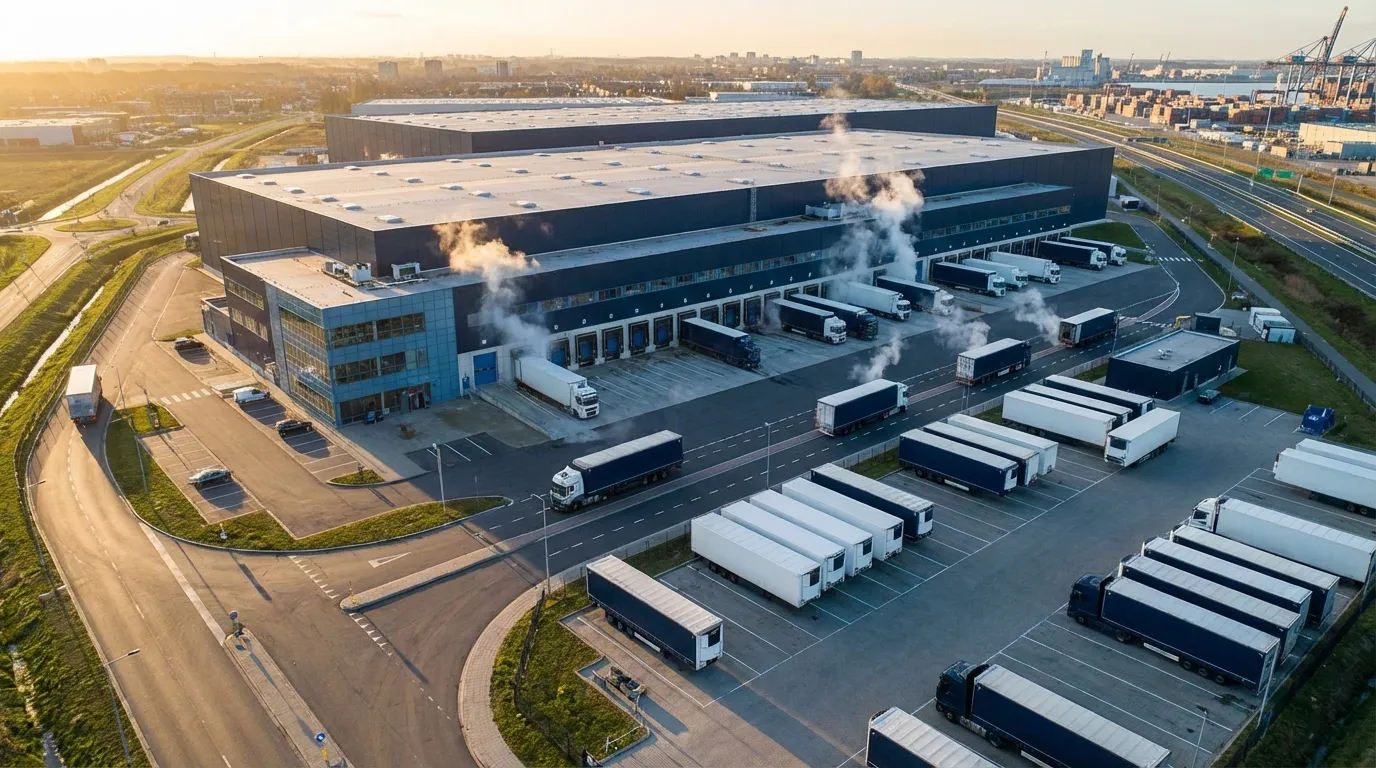
- Logistics warehousing: Key design considerations for large cold and frozen storage facilities include storage capacity calculations, racking system configuration, loading dock design, and automated warehouse system integration. Areas like Qianzhen and Xiaogang in Kaohsiung have already formed cold chain logistics clusters
- Distribution center: Transfer-type distribution centers emphasize rapid sorting and multi-temperature co-distribution capabilities, with HVAC systems that must dynamically adjust loads according to operational schedules
- End-point retail: Terminal refrigeration and freezing equipment for supermarkets, convenience stores, and food service operations — while not the focus of this article, their interface design with upstream cold chains cannot be overlooked
During the system planning phase, the core task of the engineering consultant is to establish a "no temperature interruption" design principle, ensuring that every cold chain handover point (such as docks, loading areas, and transfer zones) has appropriate temperature transition designs to prevent temperature excursions.
3. Engineering Design of Refrigeration and Cold Storage Facilities
Refrigeration and cold storage facilities are the core hardware of enterprise cold chains. The quality of their engineering design directly affects operational efficiency and maintenance costs for decades to come. The following provides an in-depth analysis from three aspects: multi-temperature zone configuration, traffic flow planning, and dock design[5].
Multi-temperature zone configuration design: A complete cold chain facility typically requires three main temperature tiers:
- Cold storage zone (0°C to 5°C): For short-term storage of fresh food ingredients, thawing buffer, and pre-shipment staging. Evaporator discharge temperature is typically designed at -5°C to -7°C, with relative humidity maintained at 85%–95% to slow moisture loss from produce
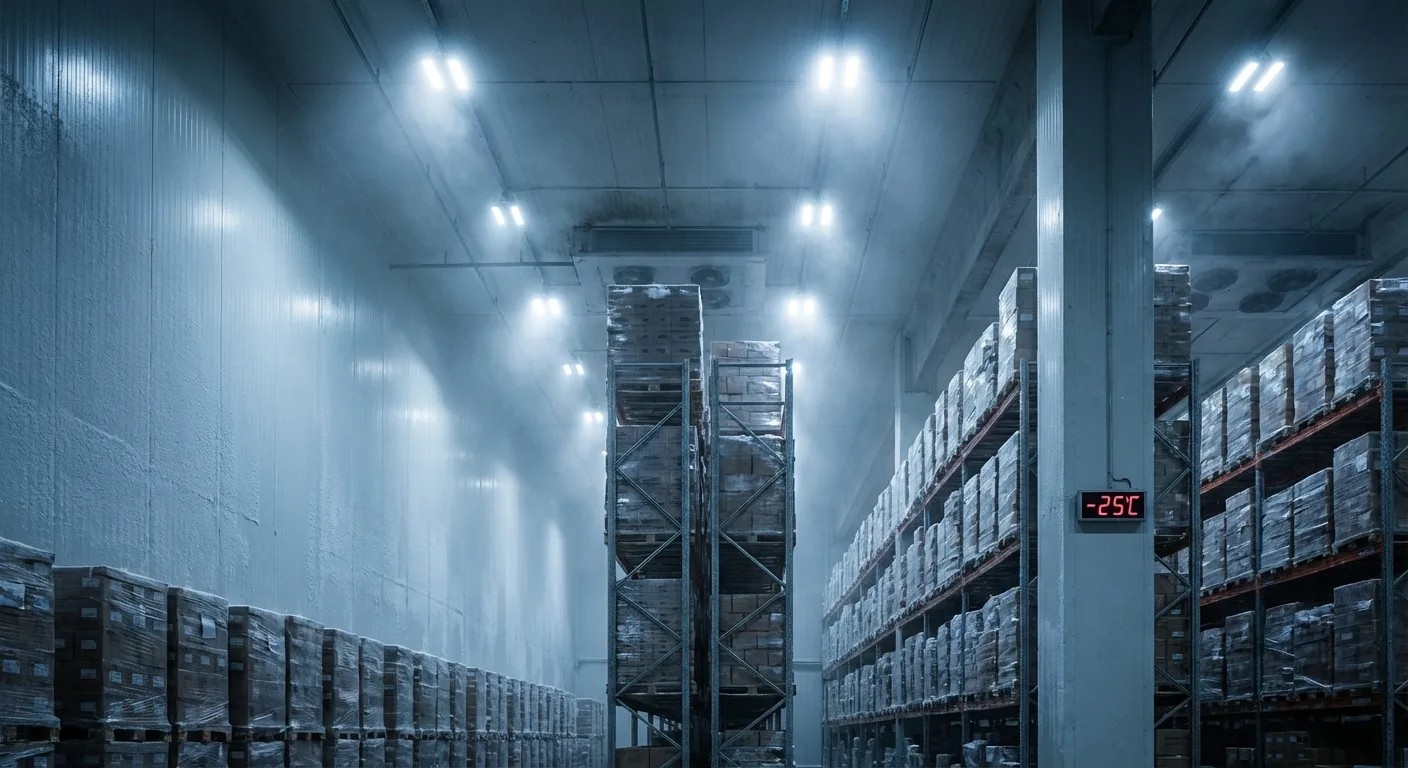
- Frozen storage zone (-18°C to -25°C): The standard temperature range for long-term frozen food storage. According to Codex Alimentarius[6] recommendations, frozen seafood should be stored below -18°C. Panel insulation thickness typically needs to reach 150mm to 200mm (PIR/PUR material), and floors must include anti-frost heating systems to prevent frost heave
- Blast freezing zone (-35°C to -40°C): For rapid product freezing, bringing the food's core temperature through the maximum ice crystal formation zone (-1°C to -5°C) in the shortest time, forming small ice crystals to maintain cell tissue integrity. Blast freezing tunnel air velocity is typically designed at 3–5 m/s, with freezing capacity measured in tons/hour
Traffic flow planning and cross-contamination prevention: Food processing plant traffic flow design must follow a "one-way flow" principle — raw materials move unidirectionally from the contaminated zone (receiving area) through the semi-clean zone (processing area) to the clean zone (packaging area and finished product warehouse), without reverse crossing. Positive/negative pressure configuration of the HVAC system must coordinate with traffic flow design, with clean zones maintained at positive pressure to prevent external air infiltration, and contaminated zones at negative pressure to prevent odor diffusion. Air showers or air curtains are installed between zones as transitional buffers.
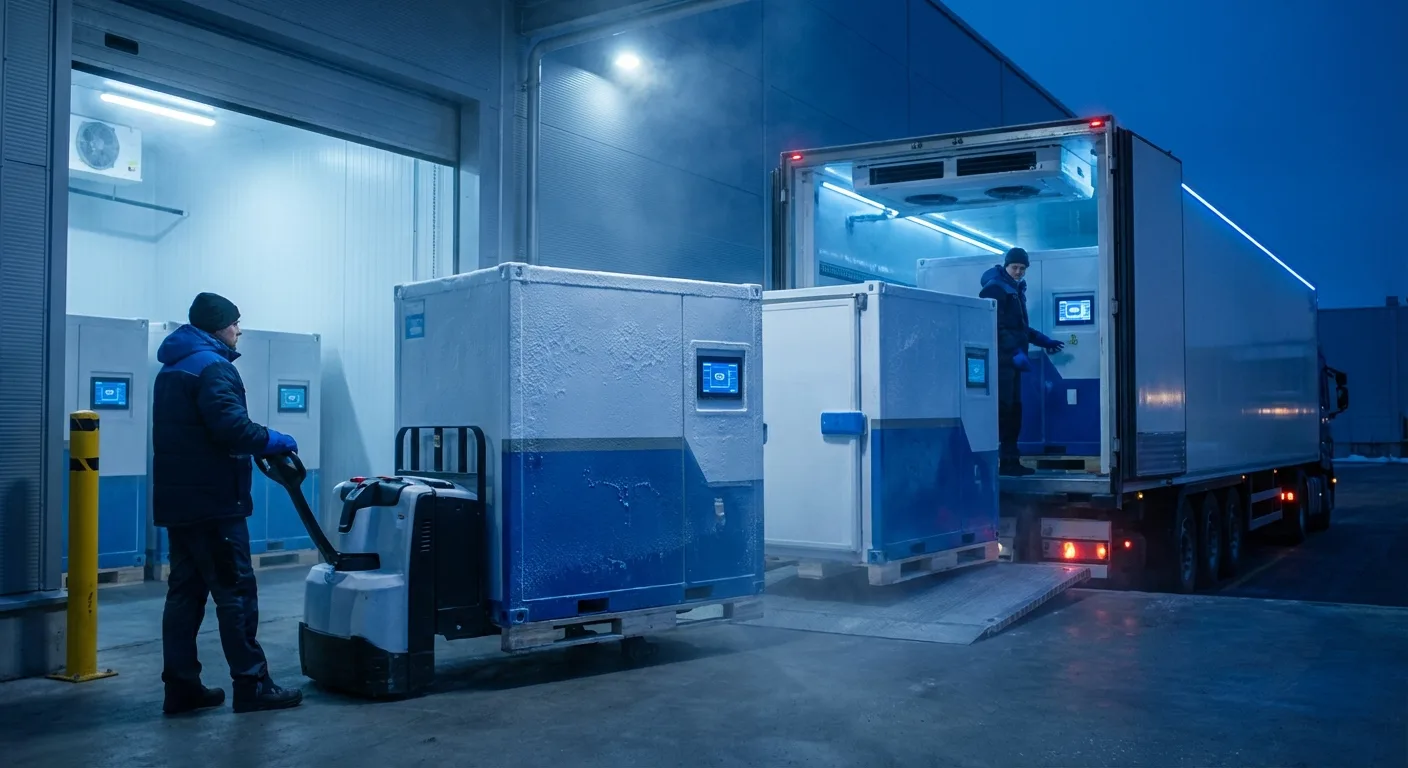
Loading dock design: Loading and unloading docks are critical nodes in cold chain connectivity. Professional dock design should include: adjustable dock levelers to accommodate different vehicle heights, inflatable dock seals to tightly wrap around vehicle rear doors to minimize warm air infiltration, dock vestibule air conditioning maintained at 10°C–15°C as a temperature buffer zone, and high-speed roll-up doors with motion sensors to reduce door open time.
4. Refrigerant System Selection and Environmental Regulations
Refrigerant selection is one of the core decisions in HVAC system design, directly affecting system efficiency, safety, environmental compliance, and long-term operating costs. In recent years, the evolution of international environmental regulations has been profoundly changing the refrigerant market landscape[7].
Phase-out trend of traditional HFC refrigerants: R-404A has long been the primary refrigerant for commercial freezing systems, but its Global Warming Potential (GWP) reaches 3922. Under the Kigali Amendment to the Montreal Protocol, developed countries will begin phasing down HFC consumption starting in 2024. Taiwan's Ministry of Environment has also announced schedules for controlling the import and use of high-GWP refrigerants. Enterprises building new cold chain facilities must incorporate refrigerant transition into their long-term planning.
Transitional alternative refrigerants: R-448A (GWP 1387) and R-449A (GWP 1282) are currently the most common transitional alternatives to R-404A. Both are zeotropic blend refrigerants with widespread application in both system retrofits and new installations. Compared to R-404A, these two refrigerants can improve energy efficiency by approximately 5%–10% in low-temperature freezing applications.
Natural refrigerants and transcritical CO2 systems: For large cold chain facilities (such as frozen logistics centers and large food processing plants), transcritical CO2 (R-744) systems are increasingly becoming the mainstream trend. CO2 has a GWP of 1, is non-flammable and non-toxic, and has excellent volumetric efficiency in the low-temperature range. However, CO2 systems operate at high-side pressures of 90–130 bar, placing higher requirements on piping materials, valves, and safety design, requiring more stringent engineering design and construction quality standards.
Additionally, ammonia (R-717) as a traditional natural refrigerant for large freezing systems offers excellent thermodynamic performance (high COP values) and zero GWP advantages, but its toxicity and flammability require strict safety design measures, including machine room isolation, ammonia detection systems, emergency ventilation, and personal protective equipment, designed in accordance with IIAR (International Institute of Ammonia Refrigeration) standards[8].
5. Temperature Monitoring and HACCP Compliance
Temperature monitoring is not merely an equipment operation management tool — it is a core requirement for food safety regulatory compliance. Under the HACCP (Hazard Analysis and Critical Control Points) system, temperature is the most critical "Critical Control Point" (CCP) in the cold chain, and any temperature excursion must be detected, recorded, evaluated, and corrected[9].
Continuous temperature monitoring systems: Modern enterprise cold chain temperature monitoring has evolved from traditional manual inspection records to fully automated, continuous IoT monitoring architectures. A typical system configuration includes:
- Wireless sensor nodes: Temperature and humidity sensors using BLE, Zigbee, or LoRa communication protocols, deployed throughout cold storage corners, shelf layers, and dock areas, with sensing accuracy within ±0.5°C
- Data gateways: Aggregating data from each node and uploading to cloud platforms via wired network or 4G/5G
- Cloud monitoring platform: Providing real-time temperature dashboards, historical trend analysis, anomaly alert notifications (SMS, LINE, email), and automatic report generation
- Data recording and backup: All temperature data must be stored in tamper-proof formats (such as digitally signed PDF/A) for at least three years for audit traceability
HACCP and ISO 22000 compliance essentials: ISO 22000:2018[10] integrates HACCP principles with food safety management system requirements. Enterprise cold chain temperature control design must support the following compliance needs: establishing clear critical limits, monitoring methods, corrective actions, and verification procedures for each temperature-controlled CCP. For example, a frozen storage critical limit is typically set at -18°C, with a pre-alert triggered when storage temperature rises to -15°C, and emergency corrective measures activated at -12°C (such as product transfer or backup system activation). All monitoring data, deviation records, and corrective actions must be documented as part of the HACCP plan.
For enterprises also engaged in seafood processing, reference should also be made to the Codex Alimentarius Code of Practice for Fish and Fishery Products (CAC/RCP 52-2003)[6], which provides specific guidance on freezing rates, storage temperatures, and thawing procedures for seafood products.
6. Energy Efficiency and Sustainable Operations
HVAC systems typically account for 60%–70% of total electricity consumption in enterprise cold chain facilities. Therefore, energy efficiency optimization is not only relevant to operating costs but also a key indicator for corporate carbon footprint management and ESG sustainability reporting. The following lists several proven energy-saving strategies[1]:
Compressor waste heat recovery: The high-temperature, high-pressure refrigerant gas discharged from refrigeration compressors contains significant waste heat. Through desuperheaters or heat recovery heat exchangers, this waste heat can be used to produce hot water (for cleaning), office area heating, or drying process preheating. In large freezing systems, waste heat recovery can save 10%–15% of total energy consumption.
Variable Speed Drive (VSD/VFD) technology: Equipping compressors, condenser fans, and evaporator fans with variable frequency drives allows equipment speed to dynamically adjust based on actual load. During off-peak periods (such as nighttime with no loading/unloading operations), freezer loads may be only 30%–50% of design load. Variable frequency control prevents compressors from frequent start-stop cycling or prolonged idle running during these periods, saving 15%–25% in compressor electricity.
Cold storage LED lighting: Lighting inside cold storage not only consumes electricity itself but its heat dissipation also increases the refrigeration load. Replacing traditional fluorescent tubes with LED fixtures reduces lighting electricity by more than 50%, and the reduced heat dissipation further indirectly decreases HVAC system energy consumption. Low-temperature LED fixtures can now withstand -40°C environments, making them the optimal choice for cold storage lighting.
Solar photovoltaic integration: Cold chain facilities typically have large roof areas, making them very suitable for solar photovoltaic system installations. Daytime peak electricity demand of cold storage aligns well with the solar power generation curve, resulting in significant economic benefits from self-consumption. For a 5,000-ping (approx. 16,500 m²) frozen logistics center, the rooftop can accommodate approximately 500 kWp of solar capacity, generating about 550,000 kWh annually, supplying approximately 8%–12% of the facility's electricity.
Carbon footprint and ESG considerations: An enterprise cold chain's carbon footprint encompasses direct emissions (CO2 equivalent from refrigerant leaks), indirect emissions (carbon from electricity consumption), and supply chain emissions (transportation diesel carbon). Selecting low-GWP refrigerants, improving energy efficiency, and adopting renewable energy constitute a triple-benefit strategy for simultaneously achieving emission reduction targets and lowering operating costs.
7. Temperature Validation and Quality Confirmation
Temperature validation after cold chain facility completion is the final checkpoint for confirming that system design and construction quality meet expectations. A system that fails validation, regardless of how good its hardware quality may be, cannot guarantee temperature uniformity and stability during actual operation[11].
Temperature mapping: This is the core procedure of temperature validation. Under both empty and fully loaded conditions, multiple temperature loggers are deployed inside the cold storage (typically at least one recording point per 50–100 cubic meters of storage volume), continuously recording temperature data for at least 72 hours. Recording points should cover all four corners, the center, near the door, below evaporator air outlets, and the location farthest from the evaporator. Analysis covers the average temperature, maximum temperature, minimum temperature, and temperature uniformity (typically required within ±2°C) across all recording points.
GDP validation for pharmaceutical cold chains: For enterprises also handling pharmaceutical storage and distribution, more stringent validation procedures per WHO GDP (Good Distribution Practice)[11] requirements are needed. Temperature mapping for pharmaceutical cold storage (2°C–8°C) must be performed once each during the hottest and coldest seasons, and must be repeated after any equipment changes or storage layout modifications.
Equipment qualification trilogy (IQ/OQ/PQ):
- Installation Qualification (IQ): Verifying that all equipment has been correctly installed according to design drawings, including refrigeration units, evaporators, control panels, sensor positions, and piping configuration
- Operational Qualification (OQ): Verifying under no-load (empty storage) conditions that the system can reach design temperatures and operate stably, including pull-down time, control accuracy, and alarm function testing
- Performance Qualification (PQ): Verifying the system's temperature maintenance capability under actual load (fully loaded or simulated full load) conditions, including door opening tests (simulating temperature recovery under normal loading/unloading frequency) and power failure recovery tests (simulating backup power activation and temperature maintenance duration after power outage)
Door opening tests and power failure recovery tests: Door opening tests simulate daily loading/unloading operations, keeping the door open continuously for 3–5 minutes then closing it, recording the degree of storage temperature rise and time required to recover to the set temperature. Power failure recovery tests cut off the main power supply to verify automatic backup generator startup time (typically required within 10–30 seconds) and the temperature change magnitude during the switchover period.
8. Maintenance Management and Backup Strategies
Long-term stable operation of cold chain facilities depends on systematic maintenance management and comprehensive backup strategies. Temperature excursions caused by equipment failures can lead to product waste in minor cases or food safety incidents and legal liability in severe cases[8].
Preventive maintenance plan: A professional HVAC maintenance plan should cover the following periodic tasks:
- Daily: Inspect compressor operating current, discharge temperature, suction pressure, and oil level; confirm evaporator defrost is operating normally; check door seal integrity
- Weekly: Clean condenser fin coils (especially in high-humidity areas like Kaohsiung, where fins are more prone to dust accumulation and corrosion); check cooling tower water quality and fan operation
- Monthly: Check refrigerant charge level (by weighing or subcooling/superheat method); calibrate temperature sensor accuracy; test alarm systems
- Semi-annually: Compressor oil analysis; electrical connection tightening and insulation resistance measurement; safety valve testing
- Annually: Complete system refrigerant leak detection (regulatory requirement for systems containing 50 kg or more of refrigerant); control system parameter optimization; refrigerant oil replacement evaluation
N+1 redundancy design: Critical refrigeration equipment should use N+1 redundant configuration — in addition to the N units required to meet the design load, an extra backup unit is provided. When any unit fails or needs maintenance, the backup can automatically take over, ensuring uninterrupted refrigeration capacity. For large cold storage, compressor systems should use multiple parallel units rather than a single large unit, so each unit failure results in only partial, not total, loss of refrigeration capacity.
Emergency power: Cold chain facilities must be equipped with emergency generator sets to handle power grid interruptions. Generator capacity must support all refrigeration compressors, evaporator fans, control systems, and lighting. The Automatic Transfer Switch (ATS) should complete the switchover within 10–30 seconds after main power interruption. Additionally, for control systems and temperature monitoring systems, an Uninterruptible Power Supply (UPS) is recommended to ensure continuous data recording.
Refrigerant leak detection: For large systems using ammonia (R-717), ammonia detectors must be installed in machine rooms, evaporator rooms, and valve concentration areas, triggering alarms at 25 ppm and activating emergency exhaust fans and personnel evacuation procedures at 150 ppm. Systems using HFC or CO2 refrigerants should also be equipped with corresponding refrigerant leak detection devices to prevent reduced refrigeration capacity or confined space asphyxiation risks from leaks.
9. Investment Planning and Phased Construction Strategy
Enterprise cold chain construction investments are typically substantial, ranging from several million to hundreds of millions of NT dollars. Therefore, rational investment planning and phased construction strategies are crucial.
Phased construction approach: Considering market demand uncertainty and capital pressure, large cold chain facilities often adopt phased construction. Phase one builds core cold storage and infrastructure (machine rooms, main piping, docks), and phase two expands storage capacity and processing capability based on operational results. The key to phased construction is that phase one planning must reserve space for future expansion, including: machine room foundations and piping connections reserved for expansion units, electrical rooms with transformer and switchgear positions reserved for future loads, and cooling water system main piping sized for the ultimate capacity.
Scalable system design: Modular refrigeration system design allows additional units to be installed without system shutdown. For example, a system architecture using multiple parallel screw compressors only requires adding compressor modules and connecting them to the shared piping system for expansion, without major modifications to existing systems. Additionally, cold storage partition walls can use removable panel designs, allowing temperature zone reconfiguration or expansion of individual zones with minimal downtime.
Government subsidies and financing: The Taiwan government provides multiple support measures for cold chain infrastructure investment, including cold chain equipment subsidies from the Ministry of Agriculture's Fisheries Agency, energy-efficient equipment subsidies from the Ministry of Economic Affairs for SMEs, and preferential measures from local governments for industrial parks. Furthermore, in alignment with government policies promoting net-zero transition, investment projects adopting high-efficiency HVAC equipment and renewable energy systems may enjoy additional tax incentives or low-interest financing programs.
Life Cycle Cost Analysis (LCCA): Cold chain facility investment decisions should not merely compare initial construction costs but should conduct a complete life cycle cost analysis incorporating equipment procurement costs, installation expenses, annual energy costs, maintenance costs, refrigerant replacement costs, and equipment replacement costs over a 15–20 year lifespan. In many cases, system options with higher initial investment but better energy efficiency (such as transcritical CO2 systems or variable-speed screw compressors) actually have lower total lifecycle costs than traditional options with lower initial investment but poorer energy efficiency.
Conclusion
Enterprise cold chain construction is a cross-disciplinary systems engineering project involving HVAC engineering, food science, regulatory compliance, energy management, and investment strategy. From multi-temperature zone facility planning, refrigerant system selection, and HACCP temperature compliance design to energy efficiency optimization, temperature validation, and long-term maintenance management, every step requires solid engineering expertise and extensive practical experience.
Under the dual trends of continued cold chain market demand growth and increasingly stringent environmental regulations, enterprises investing in cold chain infrastructure should look beyond immediate production capacity needs and adopt forward-looking systems planning that incorporates long-term factors such as refrigerant transition, energy efficiency, scalability, and regulatory compliance into their overall design. Only then can they build truly competitive and sustainable cold chain systems that lay a solid foundation for long-term corporate development.