
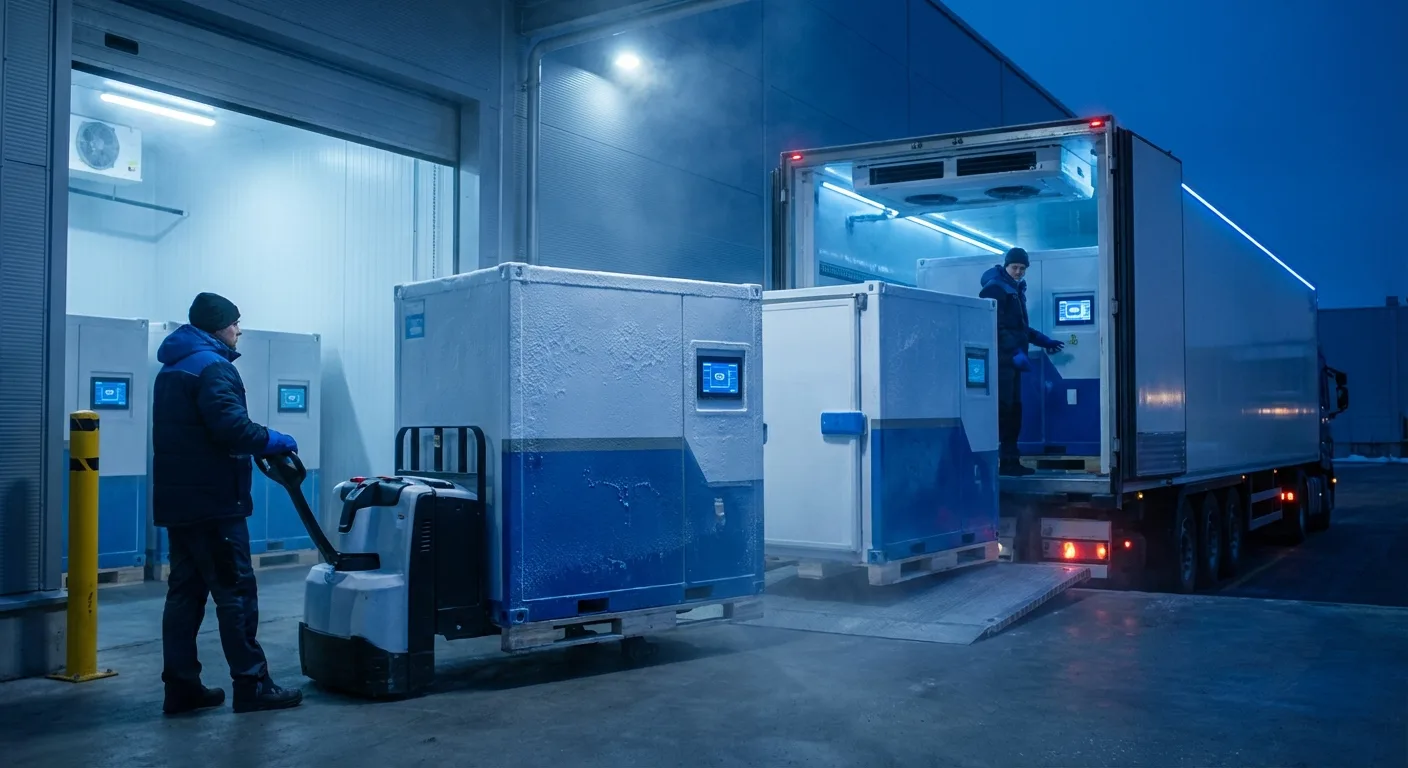
A cold chain is a systematic engineering endeavor that ensures temperature-sensitive products maintain appropriate temperatures throughout the entire journey from origin to consumer. A temperature break at any single point can lead to food spoilage or pharmaceutical degradation. Based on the cold chain technical guidance from the ASHRAE Handbook -- Refrigeration, combined with the ISO 22000 food safety management system and HACCP principles, we plan comprehensive cold chain infrastructure for enterprise clients.
Design Process
- Cold Chain Requirements Analysis -- Identify product types, temperature requirements, throughput, logistics flow, and storage duration to establish cold chain temperature control specifications.
- Pre-Cooling Facility Planning -- Based on product characteristics, select the appropriate pre-cooling method (forced-air cooling, vacuum cooling, hydro-cooling, etc.) and design the refrigeration capacity and throughput capability of pre-cooling facilities[1].
- Cold Storage Design -- Plan cold/frozen storage spaces at different temperature zones and design the insulation, refrigeration systems, and automated logistics flow.
- Temperature Monitoring System Integration -- Design end-to-end temperature monitoring solutions covering temperature recording and anomaly alert mechanisms across storage, transportation, and distribution stages, in compliance with HACCP traceability requirements[2].
- Dock and Transfer Zone Design -- Plan sealing and temperature control solutions for refrigerated truck docking areas to minimize temperature fluctuations during loading and unloading.
- Validation and Compliance -- Verify that cold chain facilities comply with ISO 22000 food safety management system requirements[3], and assist clients in establishing temperature control validation procedures and documentation.
Technical Standards and Specifications
- ASHRAE Handbook -- Refrigeration -- Chapter 25 (Cargo Containers, Rail Cars, Trailers, and Trucks), Chapter 26 (Marine Refrigeration), and Chapter 27 (Air Transport) provide temperature control design guidance for various cold chain transportation modes[1].
- ISO 22000:2018 -- Food safety management system standard providing a food safety management framework for the design and operation of cold chain facilities[3].
- HACCP -- Hazard Analysis and Critical Control Points; temperature control in the cold chain is one of the critical control points[2].
Key Design Considerations
The Critical Role of Pre-Cooling
Pre-cooling is the first and most important step in the cold chain. Field heat in agricultural products must be removed as quickly as possible after harvest to slow respiration and microbial growth. The ASHRAE Handbook -- Refrigeration details the applicable conditions for various pre-cooling methods[1]: forced-air cooling is suitable for most fruits and vegetables, vacuum cooling for leafy greens, and hydro-cooling for root vegetables such as carrots. The refrigeration capacity design of pre-cooling facilities must account for peak throughput and incoming product temperatures.
Cold Chain Break Risk Management
The most vulnerable points for temperature breaks in a cold chain are during transfer and loading/unloading operations. The interface design between refrigerated trucks and warehouse docks is critical -- inflatable dock shelters effectively prevent outside air infiltration, while vestibules (ante-rooms) serve as temperature buffer zones. Additionally, the deployment and management of continuous temperature data loggers throughout the chain is the last line of defense for ensuring cold chain integrity.
Special Requirements for Pharmaceutical Cold Chain
Cold chain requirements for vaccines and biologics are even more stringent than for food. The WHO requires vaccine cold chain temperatures of +2°C to +8°C, with absolutely no freezing permitted. Pharmaceutical cold chain facilities require higher levels of redundancy, more precise temperature monitoring, and comprehensive GDP (Good Distribution Practice) compliance documentation.
Our Advantages
Cold chain engineering requires cross-disciplinary knowledge spanning refrigeration and air conditioning technology, food science, and logistics management. Our team, with professional expertise in refrigeration and air conditioning engineering at its core, combined with deep understanding of food safety regulations and cold chain management systems, provides clients with complete cold chain solutions from origin pre-cooling facilities to end-point cold storage distribution centers.
Technical Highlights of Each Cold Chain Stage
Pre-Cooling at Origin
Pre-cooling is the first critical stage in the cold chain, aimed at reducing product temperature to the target storage/transport temperature as quickly as possible after harvest or production to inhibit microbial growth and quality degradation. Common pre-cooling methods include forced-air cooling, vacuum cooling, hydro-cooling, and ice-water cooling. Different products require different pre-cooling methods -- for example, leafy vegetables are best suited for vacuum cooling (which can reduce core temperature from 30°C to 2°C in 20-30 minutes), while fruits typically use forced-air cooling. We plan the most appropriate pre-cooling facilities and equipment configurations based on product characteristics and throughput requirements.
Refrigerated Transportation
Refrigerated transportation is the most vulnerable stage in the cold chain. Temperature management inside the cargo compartment is affected by multiple factors including door-opening frequency, outside air temperature, cargo loading patterns, and refrigeration unit performance. We assist clients in establishing standardized loading SOPs, including pre-cooling the compartment, cargo stacking clearances (to ensure cold air circulation), sensor placement, and real-time temperature monitoring systems. For multi-temperature zone delivery (such as transporting both frozen and refrigerated goods in the same vehicle), we design compartment partitions and independent temperature control solutions.
Last-Mile Delivery
The last mile of the cold chain is a rapidly evolving area, particularly driven by the demand for fresh e-commerce and instant delivery. Last-mile delivery challenges include variable routes, frequent door openings, and limited delivery box capacity. We provide insulated delivery box thermal design consulting, phase change material (PCM) cold pack selection guidance, and small-scale dark store refrigeration equipment planning to ensure products maintain optimal quality when they reach consumers.
Temperature Monitoring and Traceability
A comprehensive temperature monitoring and traceability system is the core of modern cold chain management. Our temperature monitoring solutions include wireless data logger deployment, RFID/IoT real-time sensing, cloud data platforms, and anomaly alert mechanisms. All temperature data can be traced by batch, meeting HACCP and ISO 22000 requirements for continuous monitoring and record retention at critical control points (CCPs). When a temperature excursion is detected, the system automatically sends alerts and logs the event, providing objective evidence for quality assessment and liability determination.