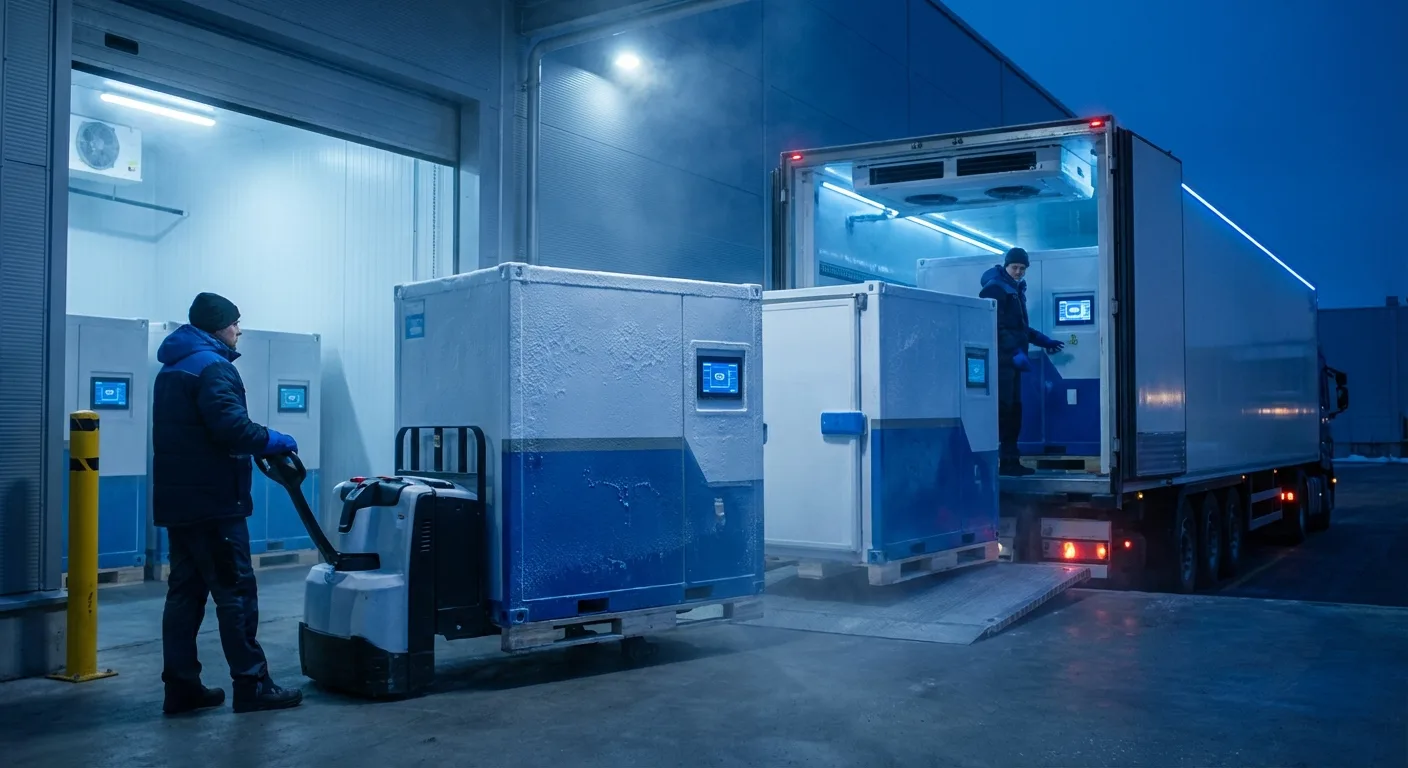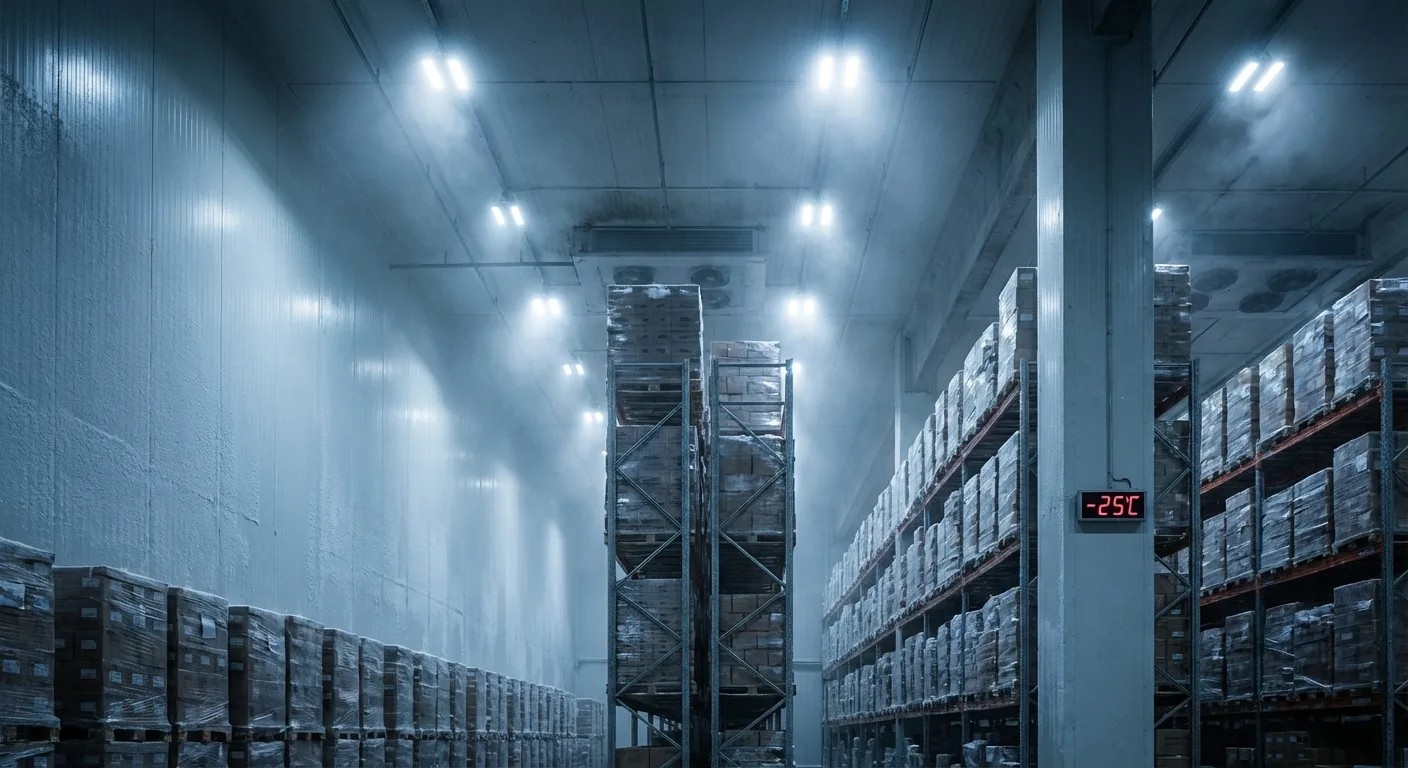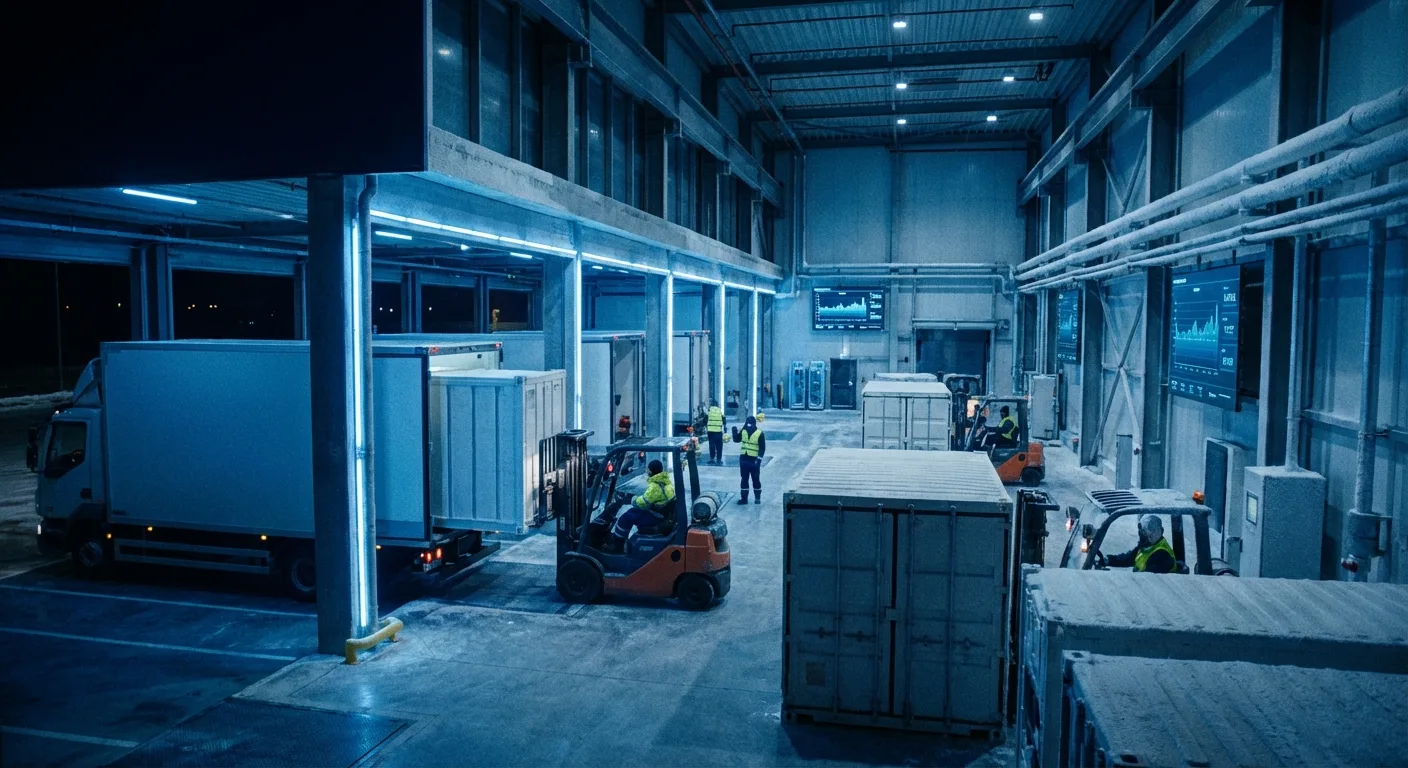
A Cold Chain refers to a logistics system that maintains products within a specified low-temperature range throughout the entire process from production, processing, storage, and transport to final delivery to the consumer. Any temperature excursion at any link can lead to food safety risks, medication failure, or even life-threatening consequences. The essence of cold chain logistics is an engineering practice racing against temperature and time[1].
1. Temperature Zone Classification of Cold Chains
International cold chain systems classify multiple temperature zones based on product characteristics, with different HVAC equipment configurations and control precision requirements for each[2]:
- Controlled Ambient (15 degrees C--25 degrees C): Chocolate, certain pharmaceuticals, cosmetics, and other temperature-sensitive products
- Refrigerated (2 degrees C--8 degrees C): Dairy products, vaccines, biologics, fresh fruits and vegetables
- Frozen (-18 degrees C and below): Frozen foods, ice cream products
- Deep Frozen (-60 degrees C to -80 degrees C): mRNA vaccines (such as Pfizer-BioNTech COVID-19 vaccine initial storage requirement of -60 degrees C to -90 degrees C)[3]
Among these, the pharmaceutical cold chain directly concerns human life safety, requiring temperature control precision and documentation traceability far exceeding food cold chains. Both WHO and PIC/S GDP (Good Distribution Practice) have established explicit regulations for pharmaceutical cold chain temperature validation, deviation management, and calibration traceability[4].
2. Pre-Cooling Treatment: The First Line of Defense
Pre-cooling refers to the process of rapidly reducing product temperature from its initial harvest or production temperature to the target storage/transport temperature before entering the cold chain. The speed and uniformity of pre-cooling directly affect product shelf life and quality. Major pre-cooling methods include[5]:
- Forced-Air Cooling: Cold air is forced through stacked product packaging, with pre-cooling speeds approximately 4--10 times faster than static refrigeration, suitable for most fruits and vegetables
- Hydrocooling: Ice water is directly sprayed on or products are immersed in it, offering high heat transfer efficiency, suitable for root vegetables that can withstand water exposure
- Vacuum Cooling: Utilizing moisture evaporation in a vacuum environment to remove heat, this is the fastest pre-cooling method (capable of reducing temperature by over 20 degrees C within tens of minutes), particularly suitable for leafy vegetables
- Package Icing: Crushed ice is placed over or packed within product packaging, suitable for seafood catch
The key HVAC design focus for the pre-cooling stage is high cooling capacity and rapid temperature pull-down capability. For forced-air pre-cooling, air velocity typically needs to be maintained at 1.0--2.5 m/s, ensuring uniform airflow penetration through all packaging layers[6].
3. Refrigerated Transport Temperature Control Challenges
Refrigerated vehicle HVAC system design faces unique challenges: limited vehicle body insulation performance, frequent door openings during delivery causing large volumes of warm air infiltration, and external disturbance factors such as vehicle vibration and solar radiation during transit.
According to the EU ATP Agreement (Agreement on the International Carriage of Perishable Foodstuffs)[7], refrigerated vehicle bodies are classified into two insulation grades: "Normal Insulation" (K-value of 0.70 W/m2 K or less) and "Heavy Insulation" (K-value of 0.40 W/m2 K or less). Although Taiwan is not an ATP signatory, most large cold chain operators have voluntarily adopted this standard.
Refrigerated vehicle refrigeration units are categorized by power source into vehicle engine-driven and independent engine types. Independent units provide stable refrigeration capacity unaffected by vehicle engine speed and are the mainstream choice for long-haul transport. In recent years, electric refrigerated vehicles with battery-powered refrigeration units have attracted increasing attention, offering zero-emission and low-noise advantages in urban delivery scenarios[8].
4. Temperature Monitoring and Data Traceability
The core of cold chain temperature control is not just "maintaining temperature" but also "proving that temperature has always been maintained." A comprehensive temperature monitoring and data traceability system is indispensable infrastructure for modern cold chains.
Temperature monitoring technology solutions include[9]:
- Wired Temperature Sensors: Highest precision (plus/minus 0.1 degrees C), suitable for multi-point monitoring in fixed cold storage facilities
- Wireless Data Loggers: Compact and transportable with cargo, data downloaded via NFC or BLE, widely used in the transport segment
- IoT Real-Time Monitoring: Sensors equipped with 4G/LTE or NB-IoT communication modules can transmit data to cloud platforms in real time and trigger alerts, enabling full-chain visibility
Pharmaceutical cold chain temperature validation is particularly stringent. Per GDP regulations, all temperature sensors must be regularly calibrated (at least annually), and complete Temperature Mapping reports must be established to confirm that temperatures at all locations within the storage space are within acceptable ranges[10].
5. Current Status and Challenges of Taiwan's Cold Chain
Taiwan's subtropical location with high annual average temperatures and humidity, combined with high dining-out rates and rapidly growing demand for e-commerce fresh food delivery, creates both demand and challenges for cold chain logistics:
- Last Mile: Frequent door openings and short-duration multi-stop delivery in urban areas represent the highest risk segment for temperature interruption
- Front-Store Back-Warehouse Model: Small refrigerated equipment in convenience stores and fresh supermarkets varies widely in performance
- Multi-Temperature Integration: Increasing demand for multi-temperature zone distribution using the same vehicle for products at different temperature ranges
Taiwan's 2021 revision of the Good Hygiene Practice for Foods[11] strengthened temperature control and recording requirements for food cold chains, demonstrating that the regulatory framework is progressively driving cold chain quality improvement.
Conclusion
Cold chain logistics is far more than simply "putting things in a refrigerator and shipping them out." It is a complex systems engineering discipline spanning HVAC engineering, logistics management, sensing technology, and regulatory compliance. The temperature control design of every link must be precisely implemented, because the strength of a cold chain is always determined by its weakest link.