An HVAC system with excellent cooling performance but thunderous noise may actually result in lower user satisfaction than a slightly less powerful but quiet system. Noise control is one of the most expertise-demanding areas in HVAC engineering — it involves interdisciplinary knowledge spanning acoustics, vibration dynamics, and fluid mechanics. As the concluding article in this series, this piece analyzes the sources, assessment methods, and engineering control strategies for HVAC system noise.
- Indoor Air Quality Standards and HVAC Design
- Central AC Professional Maintenance Plan
- The Hidden Science of Office HVAC Design
- HVAC Noise Control Engineering (This Article)
1. Noise Assessment Standards: NC and RC
HVAC system noise assessment does not use general decibel values (dBA), but instead employs spectral analysis with NC (Noise Criteria) or RC (Room Criteria) curves[1]:
- NC Curves: Evaluated using octave band sound pressure levels; lower NC values indicate quieter environments. Common design targets: conference rooms NC 25–30, open offices NC 35–40, corridors NC 40–45
- RC Curves: A more precise assessment method recommended by ASHRAE that evaluates not only noise magnitude but also spectral characteristics (Rumble / Hiss)
Target NC/RC values should be clearly defined at the beginning of the project and used as constraints for equipment selection and duct design.
2. HVAC System Noise Sources
HVAC system noise sources are complex and diverse[2]:
- Compressors: Compressors in chillers and VRF outdoor units are the primary noise sources — scroll type approximately 65–75 dBA, screw type approximately 75–85 dBA, centrifugal type approximately 80–90 dBA
- Fans: Noise is related to airflow volume, static pressure, and impeller speed; backward-curved centrifugal fans are quieter than forward-curved types
- Duct Systems: Airflow noise within ducts, turbulence noise at branch fittings, and regenerated noise from dampers
- Supply Air Outlets: Whistling occurs when air velocity is too high (exceeding 2.5 m/s)
- Pumps and Piping: Pump operating noise transmitted through piping to the building structure
3. Noise Considerations in Equipment Selection
The first line of defense in noise control is selecting low-noise equipment during the equipment selection phase[3]:
- Chillers: Magnetic bearing centrifugal chillers operate at significantly lower noise levels (65–70 dBA) compared to conventional centrifugal chillers (80–90 dBA)
- Fan Selection: Once airflow and static pressure requirements are determined, select fans whose operating point falls near the peak efficiency zone — the highest efficiency point typically corresponds to the lowest noise point
- VRF Outdoor Units: Pay attention to whether the installation location is adjacent to noise-sensitive areas (bedrooms, conference rooms); install acoustic barriers if necessary
4. Duct Silencer Design
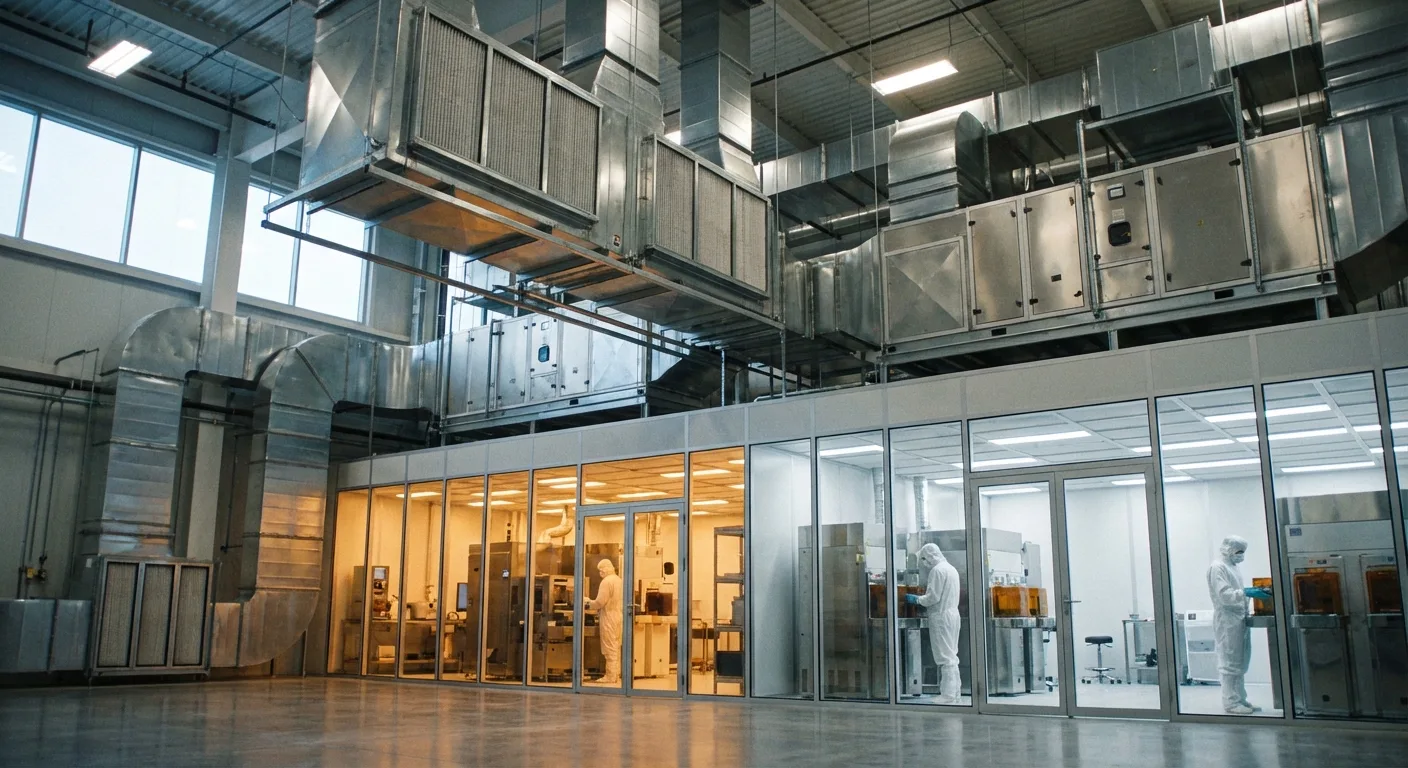
When equipment noise alone cannot meet indoor NC requirements, silencers must be installed in the duct system[4]:
- Absorptive Silencers: Sound-absorbing materials such as fiberglass or mineral wool line the interior of ductwork; highly effective for mid- to high-frequency noise
- Silencer Elbows: Sound-absorbing material applied at duct turns, combining directional change with silencing function
- Reactive Silencers: Designed for specific low-frequency noise using resonant chambers to absorb acoustic energy
- Natural Attenuation: Duct length, elbows, branches, and other fittings also provide some natural noise reduction
Silencer design must balance noise reduction with pressure loss — silencer air resistance increases fan energy consumption, and over-designed silencing systems not only waste cost but also increase operational energy consumption.
5. Vibration Isolation and Structure-Borne Noise Control
Vibration from HVAC equipment propagating through building structures (Structure-borne Noise) is the most challenging noise problem to address. Prevention strategies include[5]:
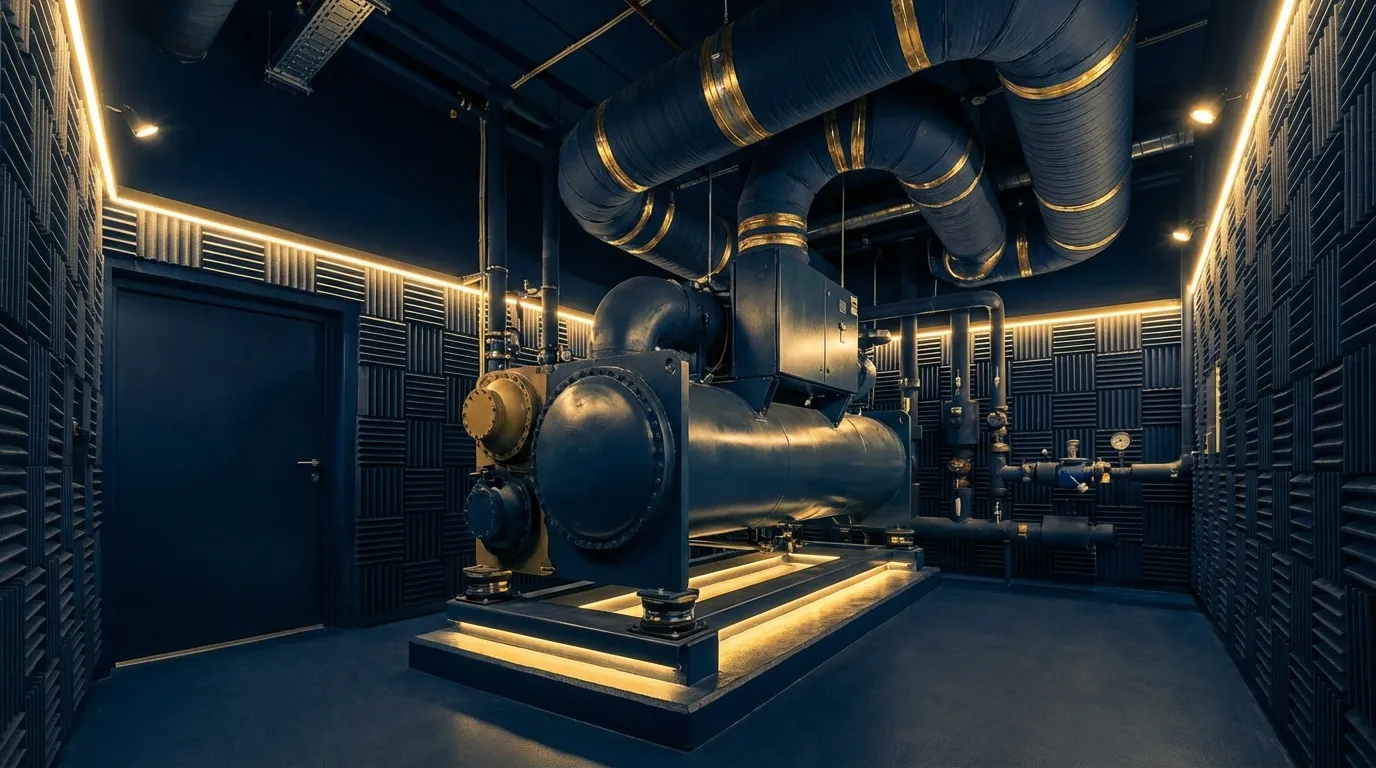
- Equipment Base Design: Chillers, pumps, and other rotating equipment installed on concrete inertia bases of sufficient mass
- Vibration Isolators: Spring or rubber vibration isolators installed between equipment and bases, with isolation efficiency of 90% or higher
- Flexible Connectors: Flexible joints installed between piping/ductwork and equipment to interrupt vibration transmission paths
- Pipe Supports: Resilient pipe hangers should be used where piping penetrates floors or walls to prevent direct vibration transmission to the structure
6. Compliance with Taiwan's Noise Regulations
Taiwan's Noise Control Act and related standards have explicit regulations for noise from HVAC outdoor equipment. In residential areas or near noise-sensitive zones such as hospitals, noise emissions from outdoor HVAC equipment (cooling towers, VRF outdoor units) must comply with the standards for each noise control zone classification. Noise prediction analysis should be performed during the engineering design phase, with acoustic barriers planned or low-noise equipment selected as necessary.
Conclusion
Noise control is the "last mile" of HVAC engineering quality — when cooling performance, energy efficiency, and air quality are all addressed, but noise exceeds standards, the user experience still suffers significantly. From this four-article series — air quality, maintenance management, thermal comfort, to noise control — we can see that the impact of HVAC systems on building occupants extends far beyond the single dimension of "is it cool enough." A truly excellent HVAC system should make people "unaware of its presence" — quiet, comfortable, and healthy. This is the highest aspiration that HVAC engineers strive for.