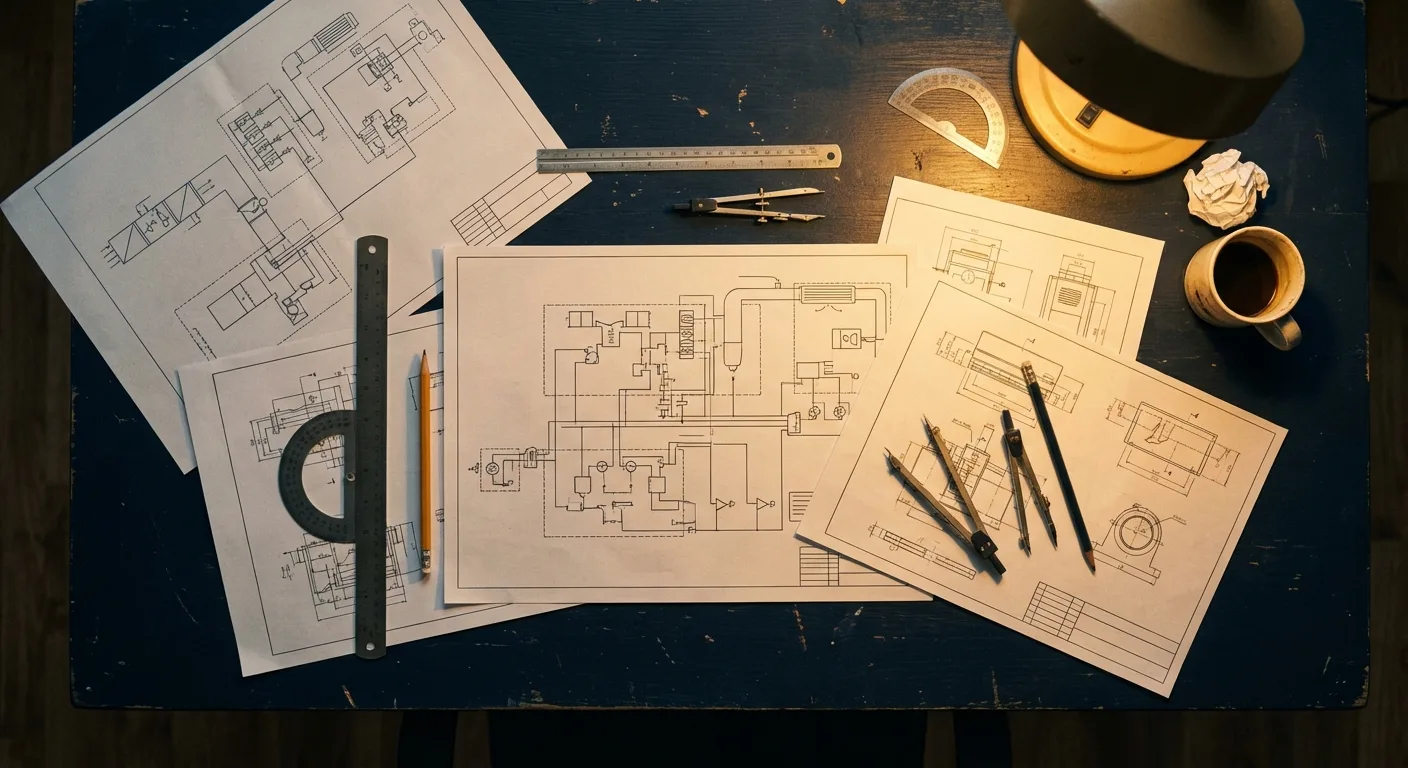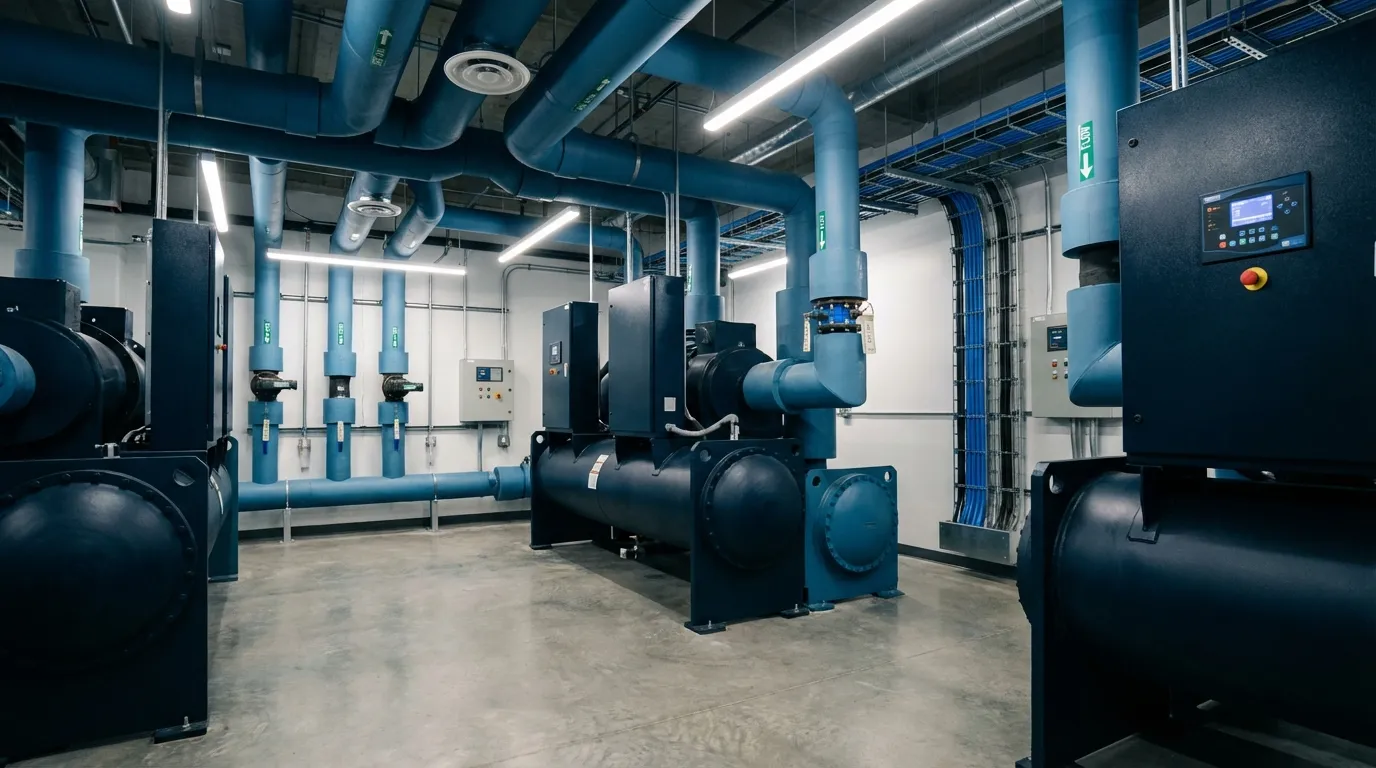
For government agency procurement personnel, HVAC engineering is often one of the most technically complex items in public building procurement. Unlike civil or interior construction, HVAC systems involve cross-disciplinary expertise in thermodynamics, fluid mechanics, automatic controls, and building physics, and their operational performance directly affects building occupant comfort, indoor air quality, and long-term energy expenditure. This article approaches from the practical perspective of public works procurement, systematically analyzing every critical stage from requirements planning, design commissioning, bidding, to construction acceptance for HVAC engineering, helping procurement personnel establish a comprehensive professional judgment framework.
1. Life-Cycle Management of Public Building HVAC Systems
Public building HVAC systems differ fundamentally from private sector projects: public buildings have service lives of fifty years or more, while HVAC main equipment has an economic life typically of fifteen to twenty years[1]. This means a public building will undergo at least two to three major HVAC system upgrades during its lifetime. Therefore, procurement personnel must adopt a "Total Cost of Ownership" (TCO) mindset from the planning stage.
Taking a central HVAC system of approximately 300 RT as an example, initial equipment and installation costs account for approximately 20% to 25% of total life-cycle costs, while electricity consumption over fifteen years accounts for 60% to 70%, with the remainder being maintenance costs[2]. In other words, if the procurement phase excessively pursues minimum initial cost while ignoring energy efficiency, the ultimate operational cost may be several times higher. This concept is especially important for government procurement, as public building operating electricity comes from public funds, and energy-saving benefits have direct public interest implications.
Core concepts of life-cycle management include:
- Long-term efficiency degradation of equipment: HVAC equipment energy efficiency ratios (COP/EER) decline annually with use, and design should include reasonable efficiency degradation margins
- Maintenance accessibility: Equipment placement and space planning should ensure the feasibility of future repairs, parts replacement, and even complete unit replacement
- System expansion flexibility: Consider potential future space use changes or building additions, reserving piping and machinery room space
- Refrigerant transition planning: In line with the Kigali Amendment to the Montreal Protocol controlling high-GWP refrigerants[3], new systems should prioritize low-GWP refrigerant equipment
2. Requirements Planning Stage: From Usage Needs to Design Specifications
The most common procurement mistakes occur at the initial requirements planning stage. Many agencies submit procurement requests simply titled "replace air conditioning" or "update HVAC equipment," lacking systematic analysis of usage needs. A comprehensive requirements planning document should cover the following aspects:
Building Usage Characteristics Analysis
Different types of public buildings have vastly different technical HVAC requirements:
- Museums and galleries: Collection spaces require strict temperature/humidity control (typically 22 +/- 1 degrees C, 55 +/- 5% RH), with dedicated constant temperature/humidity HVAC systems to ensure stable preservation environments[4]
- Courts and legislatures: Courtrooms and assembly halls require extremely low background noise levels (NC-25 to NC-30); vibration isolation and sound attenuation in HVAC design are critical requirements
- Healthcare facilities: Operating rooms, ICUs, and negative pressure isolation rooms must comply with strict infection control standards, including specific air change rates, air filtration grades (HEPA), and pressure differential control[5]
- Schools and administrative agencies: Usage is concentrated and seasonal; energy efficiency and partial load performance are key considerations
- Airports and transit stations: Large volumes of people entering and exiting create significant outdoor air loads, requiring special consideration of fresh air processing capacity and air quality maintenance
Current Condition Survey and Energy Baseline Establishment
For existing building HVAC improvement projects, a professional engineer should be commissioned to conduct a current condition survey before procurement, including: existing equipment inventory and operating condition assessment, historical energy consumption data statistics and analysis, building envelope thermal performance testing, indoor environmental quality measurements (temperature, humidity, CO2 concentration, noise levels), and piping and ductwork system condition diagnostics. Only with a thorough understanding of current conditions can reasonable improvement targets and budget estimates be established.
3. Government Procurement Act Application to HVAC Engineering
Public works HVAC procurement must strictly comply with the Government Procurement Act[6] and its related subsidiary regulations. Procurement personnel need to understand the following key thresholds and applicable provisions:
Amount Thresholds and Bidding Methods
- Above the publication threshold (NTD 1.5 million): Per Article 19 of the Government Procurement Act, open bidding or selective tendering is required, with announcements published on the Government e-Procurement System
- Above the audit threshold (NTD 50 million): Per Article 12, the superior agency must dispatch personnel for audit, and construction quality is subject to inspection by the Public Construction Commission
- Major procurement (NTD 200 million and above): More rigorous bidding and review procedures apply, requiring publication in the Government Procurement Gazette
Procurement Category Determination
HVAC engineering under the Government Procurement Act framework may involve two procurement categories:
- Works procurement: HVAC system installation falls under "works" and is subject to works procurement regulations
- Technical services procurement: HVAC system planning, design, and supervision fall under "services" specifically "technical services," processed according to the Regulations for Selection and Fee Calculation of Technical Service Providers[7]. Technical service procurement is by law based on the "most advantageous bid" principle
The optimal procurement strategy separates design/supervision (technical services) from construction/installation (works procurement) — the so-called "design-build separation" principle. First, through technical service procurement, commission a professional engineering firm to complete design and specifications, then use these as the basis for works procurement to contract construction. This approach ensures design independence and supervision objectivity, representing the long-term policy direction promoted by the Public Construction Commission[8].
Most Advantageous Bid vs Lowest Bid
Due to the highly technical nature of HVAC engineering, Article 52 of the Procurement Act allows agencies to award based on "most advantageous bid." In practice, for HVAC projects above the audit threshold, the most advantageous bid approach better ensures quality because:
- HVAC equipment performance varies significantly; equipment with the same cooling tonnage can differ markedly in energy efficiency, noise, and durability
- Construction quality heavily depends on the technical team's experience and capability; low-price bidding often leads to corner-cutting
- System integration and commissioning require professional judgment, beyond simple equipment installation
If the lowest bid must be used, specification writing quality becomes even more critical — performance specifications must precisely define minimum quality thresholds to prevent bidders from winning with solutions that technically meet minimum specifications but have overall poor quality.
4. Professional Engineer Certification and Specialization
Article 13 of the Building Act clearly stipulates that professional engineering portions of buildings for public use must be handled by licensed professional engineers[9]. Since public buildings are virtually all classified as "buildings for public use," HVAC system planning and design legally requires certification by a licensed HVAC professional engineer.
The Engineer's Roles and Responsibilities
HVAC professional engineers play multiple roles in public works:
- Planning and design: Based on building usage requirements and physical conditions, perform load calculations, system selection, equipment specification setting, piping layout, and automatic control system design
- Design certification: Per Article 12 of the Professional Engineers Act[10], engineers bear legal responsibility for engineering design documents they sign, including design safety, reasonableness, and regulatory compliance
- Construction supervision: Serve as the owner's professional representative during construction, reviewing shop drawings, material/equipment submittals, conducting on-site inspections, handling change orders, and interpreting design intent
- Acceptance assistance: Assist the owner in conducting performance verification testing to confirm the completed system meets design specifications
Division Between HVAC and Electrical Engineers
A common practical question concerns the scope of HVAC engineering certification. Per relevant Ministry of the Interior interpretive letters, the HVAC professional engineer's certification scope covers planning and design of refrigeration, air conditioning, and ventilation systems, while electrical system portions (such as distribution panels, cable routing) fall under the electrical engineer's professional scope. Large public works projects typically require collaboration between HVAC engineers and electrical engineers, each certifying within their professional domain to ensure comprehensive system integration.
Why Engineer Certification Is Essential for Public Works
The engineer certification system is the cornerstone of public works quality management. Engineers, with professional qualifications obtained through national examinations, bear legal responsibility for the correctness of design documents, providing institutional assurance that: design solutions undergo professional engineering judgment, load calculations have scientific basis, equipment selection is comprehensive and reasonable, and system design complies with current building and energy codes. For procurement personnel, engineer certification is the first line of quality control for design quality.
5. Key Points in Specification Writing
Specifications are the core document linking design intent with construction execution, and their quality directly determines procurement success or failure. HVAC engineering specifications have unique characteristics, and procurement personnel should note the following principles:
Performance Specifications Over Brand Specifications
Per Article 26 of the Government Procurement Act, bidding documents shall not restrict competition or designate specific brands. HVAC equipment specifications should primarily use performance-based specifications, stating the performance parameters equipment must achieve rather than specifying specific brands or models. Key performance parameters include:
- Cooling capacity: Rated cooling tonnage (RT or kW) under standard test conditions
- Energy efficiency: Appropriate efficiency indicators by equipment type — COP for chilled water plants; EER for packaged air-cooled units; CSPF (Cooling Seasonal Performance Factor) for variable-speed split units[11]
- Noise limits: Sound pressure or sound power levels measured under specified conditions per CNS standards
- Electrical characteristics: Rated voltage, frequency, rated current, maximum starting current
- Operating range: Ambient temperature and load range for normal equipment operation
Writing Techniques to Avoid Bid-Rigging Concerns
Practical techniques for ensuring equipment quality without bid-rigging include:
- Using international or national standards (ASHRAE, CNS) as performance test bases rather than individual manufacturer conditions
- Setting reasonable efficiency thresholds rather than specific values, e.g., "COP not less than 5.5" rather than "COP must be 6.2"
- Requiring equipment to pass specific certifications or third-party testing reports, such as energy efficiency labeling or AHRI certification[12]
- Specifications may list three or more reference brands meeting specifications, annotated with "or equivalent"
Energy Efficiency Requirements and Legal Basis
Under the Energy Management Act and related subsidiary regulations, HVAC equipment must comply with the Bureau of Energy's published minimum energy consumption standards[11]. Energy efficiency requirements in specifications should not merely meet minimum legal standards but should set targets above the legal minimum. ASHRAE Standard 90.1 provides internationally recognized building energy efficiency benchmarks[13] and serves as an important reference for public works specifications.
6. Evaluation and Award Strategy
For HVAC projects using the most advantageous bid, the evaluation mechanism design directly affects engineering quality. Procurement personnel should carefully plan evaluation criteria weighting and evaluation committee selection.
Evaluation Committee System
Per the Procurement Evaluation Committee Organization Standards[14], evaluation committees should have an odd number of five to seventeen members, with external expert/academic members comprising at least one-third. HVAC engineering evaluation committees should include professionals with HVAC engineering backgrounds to ensure technical review professionalism. Procurement personnel may reference the Public Construction Commission's procurement professional roster for selecting appropriate committee members.
Recommended Evaluation Items and Scoring
Recommended evaluation framework for HVAC engineering procurement:
- Technical capability (35%–45%): Completeness and reasonableness of system design proposal, accuracy of load calculations, appropriateness of equipment selection, degree of energy-saving technology application
- Firm experience and track record (20%–25%): Performance records on similar-type, similar-scale public works in the past five years, technical team qualifications and professional certifications
- Price (20%–30%): Total price reasonableness analysis, unit price analysis completeness, life-cycle cost evaluation
- Construction management and schedule (10%–15%): Feasibility of construction plan, quality management measures, safety and health plan, schedule reasonableness
Heterogeneous Lowest Bid Application
Besides the most advantageous bid, "heterogeneous lowest bid" is another viable award method. This approach first eliminates bidders failing to meet technical evaluation thresholds, then awards to the lowest price among qualified bidders. For projects with clear technical requirements but where internal agency reservations exist about the most advantageous bid approach, the heterogeneous lowest bid can serve as a compromise.
7. Construction Supervision and Quality Control
HVAC construction quality largely determines the system's long-term operational performance. Since HVAC piping is mostly concealed within ceilings, pipe chases, and floor structures, quality control during the construction phase is particularly important as inspection after closure is difficult.
Construction Inspection System
Public works above the audit threshold must establish a three-tier quality management system per the Public Works Construction Quality Management Guidelines: contractor self-inspection (first tier), supervisor verification (second tier), and competent authority construction inspection (third tier)[8]. Items requiring particular three-tier quality management implementation in HVAC engineering include:
- Refrigerant copper piping: Pipe diameter, material, insulation thickness, welding quality, and nitrogen-purged brazing execution
- Chilled water piping system: Pipe material, joint methods, insulation material and thickness, support hanger spacing and strength
- Ductwork system: Material, sheet thickness, fabrication precision, joint sealing, fire damper installation
- Drainage system: Condensate drain pipe slope, diameter, and trap installation
- Electrical control system: Wiring specifications, grounding, control logic verification
Material and Equipment Submittal
Before construction, the contractor should submit material and equipment submittal documents per specification requirements, including: equipment brand catalogs and performance data, testing reports or certification documents, shop drawings, and material samples. The supervising engineer should review each item against design specifications to confirm submittal items meet contract specifications. This step is the key defense against construction-phase corner-cutting.
Concealed Work Inspection
The most critical inspection focus in HVAC engineering is work about to be concealed. Before ceiling closure, pipe chase closure, and insulation application, supervisory personnel must conduct on-site verification and photographic documentation. Verification focuses include: pipe routing compliance with design drawings, welding quality acceptance, insulation material and thickness specification compliance, hanger support stability, and fire compartment penetration seal implementation.
Commissioning and System Balancing (TAB)
HVAC system performance verification cannot rely solely on visual inspection but requires systematic Testing, Adjusting and Balancing (TAB) procedures[13]. Primary TAB work includes:
- Air volume testing and balancing: Measuring airflow at each supply outlet and adjusting dampers to match each zone's airflow to design values
- Water flow testing and balancing: Measuring flow rates at each chilled water piping branch and adjusting balance valves to match design water distribution
- Temperature/humidity performance verification: Measuring each zone's temperature and humidity under design conditions to verify compliance
- Noise measurement: Measuring background noise levels in each zone to verify compliance with design limits
- Control system functional testing: Verifying each automatic control function and interlock logic individually
TAB work should be performed by an independent third-party professional team rather than by the contractor to ensure test result objectivity. ASHRAE Standard 111 provides standard operating procedures and measurement methods for TAB[15].
8. Acceptance and Warranty
HVAC engineering acceptance differs from general construction that relies primarily on visual and dimensional inspection; it requires performance test results as the primary basis for acceptance qualification.
Key Points in Acceptance Procedures
Per Articles 71 through 73 of the Government Procurement Act and the Procurement Acceptance Regulations, acceptance should be conducted by agency-designated personnel, and the primary acceptance personnel shall not be the original procurement handler[6]. Special considerations for HVAC engineering acceptance include:
- Performance verification priority: Acceptance focus should be on whether system operational performance meets design specification requirements, including cooling capacity, energy efficiency ratio, noise levels, and temperature/humidity control precision
- TAB report review: Require the contractor to submit a complete TAB test report confirming that airflow and water flow distribution have been balanced to design values
- As-built documentation completeness: As-built drawings, equipment operation/maintenance manuals, spare parts lists, warranty certificates, and other documentation completeness
- Operations training: Confirm before acceptance that the contractor has completed training for agency operations and maintenance personnel
Warranty Period and Deficiency Correction
Per Article 99 of the Procurement Act Enforcement Rules, the warranty period for works procurement is set by the agency in bidding documents. General HVAC engineering warranty periods are one to two years, with longer warranty periods possible for critical equipment (such as chiller compressors). During the warranty period, the contractor is responsible for equipment normal operation maintenance and fault repair. It is recommended that agencies continue monitoring system energy consumption data during the warranty period as an objective basis for evaluating whether system performance meets design expectations.
Energy Savings Performance Tracking
For HVAC upgrade projects with energy-saving improvement objectives, it is recommended to include energy savings performance verification clauses in the contract. By comparing energy baseline data before and after improvements, energy-saving benefits can be objectively verified against design expectations. This approach not only demonstrates responsible use of public funds but also accumulates evidence-based data for public works energy management, serving as reference for future similar projects.
9. Common Procurement Pitfalls and Response Strategies
Based on years of public works HVAC design and supervision experience, the following are the most common procurement pitfalls and corresponding prevention strategies:
Pitfall 1: Lowest Bid Resulting in Poor Quality
HVAC equipment quality differences are not as visually discernible as civil construction materials. Low-price winning bidders may use equipment with poor energy efficiency, simplify control systems, reduce insulation thickness, or lower construction quality. These differences are difficult to detect at acceptance but manifest during operations as high electricity bills and frequent breakdowns.
Response strategy: Use the most advantageous bid for projects above the audit threshold whenever possible; if the lowest bid must be used, specifications should clearly define minimum energy efficiency values, quality standards, and third-party testing requirements, incorporating life-cycle cost analysis into the evaluation.
Pitfall 2: Incomplete Specifications Leading to Subsequent Changes
Insufficient design depth or vague specification descriptions are the primary causes of late-stage change orders. Common situations include: inadequate survey of existing piping conditions, demolition and restoration work for concealed portions not included, automatic control system functional requirements not sufficiently specific, and unanticipated user requirement changes.
Response strategy: Invest sufficient design budget to commission experienced engineering firms for comprehensive current condition surveys and design. Design fees typically represent only 5% to 8% of total project cost but can avoid 10% to 20% in change order costs caused by design deficiencies.
Pitfall 3: Neglecting Commissioning and System Calibration
Some projects rush to acceptance after equipment installation, skipping system commissioning, TAB calibration, and performance verification. The result is a system that runs but has uneven air distribution, imprecise temperature control, and excessive energy consumption.
Response strategy: Clearly specify in the contract the commissioning period (typically two to four weeks) and TAB execution standards, listing the TAB report as a required acceptance document.
Pitfall 4: Schedule Compression Sacrificing Quality
HVAC engineering is often constrained by the overall building schedule, compressed into the final phase for rushed completion. However, HVAC pipe installation, insulation, and control system commissioning all require adequate time; rushing typically results in degraded concealed work quality and incomplete system calibration.
Response strategy: Reasonably schedule HVAC engineering timelines during project planning, incorporating phased inspection and commissioning milestones into the contract schedule management.
Pitfall 5: Ambiguous Procurement Scope Causing Disputes
HVAC engineering has numerous interfaces with civil, electrical, fire protection, and other engineering disciplines. If contracts do not clearly define work scope and interface responsibilities for each contract package, disputes over responsibility attribution during construction are highly likely.
Response strategy: During the design phase, prepare detailed interface demarcation drawings, and in specifications clearly document each work package's scope, interface locations, and handover testing responsibilities using an "Interface Division Table."
Conclusion
Public building HVAC procurement is a systematic endeavor requiring both technical expertise and administrative procedures to proceed in parallel. From usage needs analysis in requirements planning, to Government Procurement Act procedural compliance, professional engineer certification quality control, specification quality requirements, evaluation and award strategy design, construction supervision quality management, and acceptance and warranty performance tracking — every stage is interconnected and indispensable.
For government procurement personnel, the most critical conceptual shift is: HVAC procurement should not be viewed merely as "buying equipment," but as a long-term investment decision for the next fifteen to twenty years of public building usage quality and operating costs. Under the hot climatic conditions of Kaohsiung and southern Taiwan, HVAC system performance more directly affects public building service quality and public fund utilization efficiency. Only with a full life-cycle perspective, professional engineer participation, and rigorous procurement procedures can every public dollar be maximized for greatest benefit.