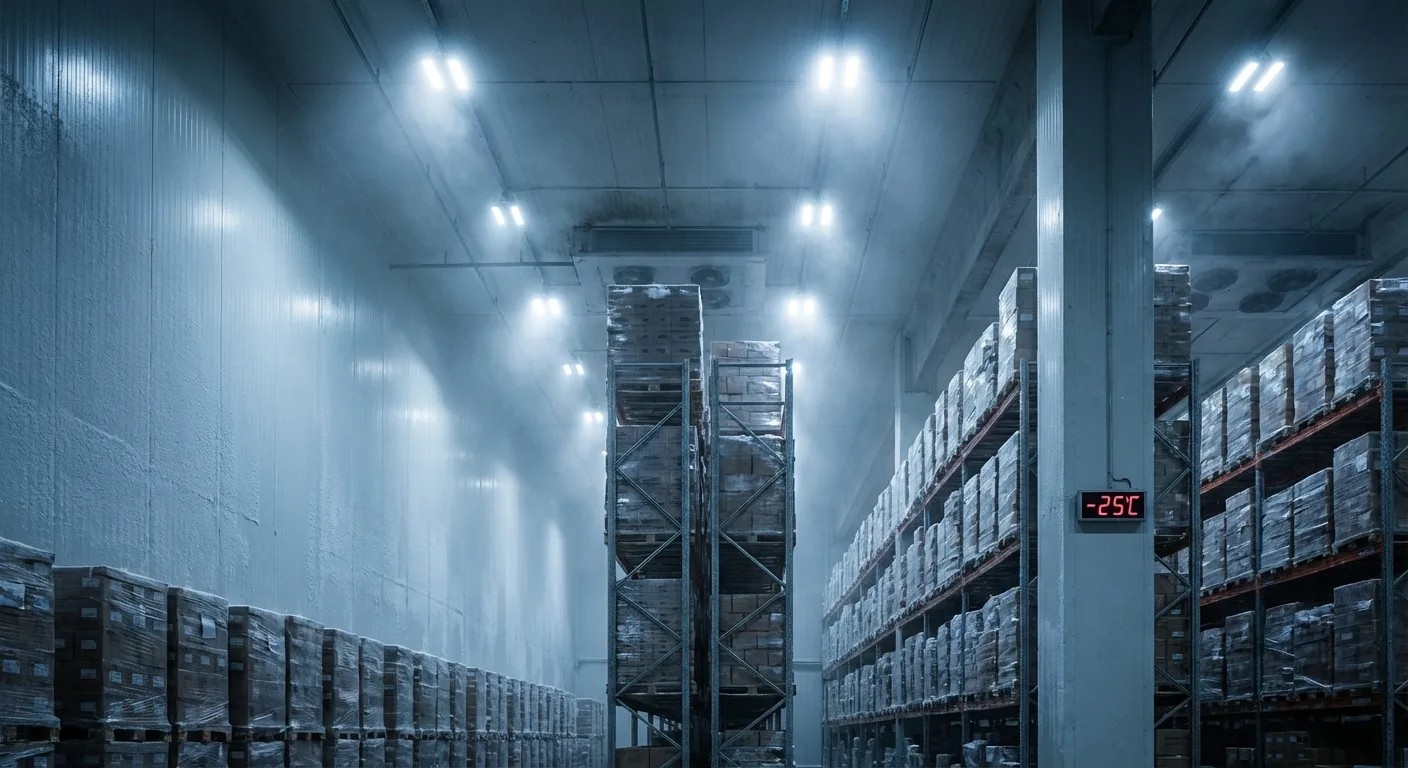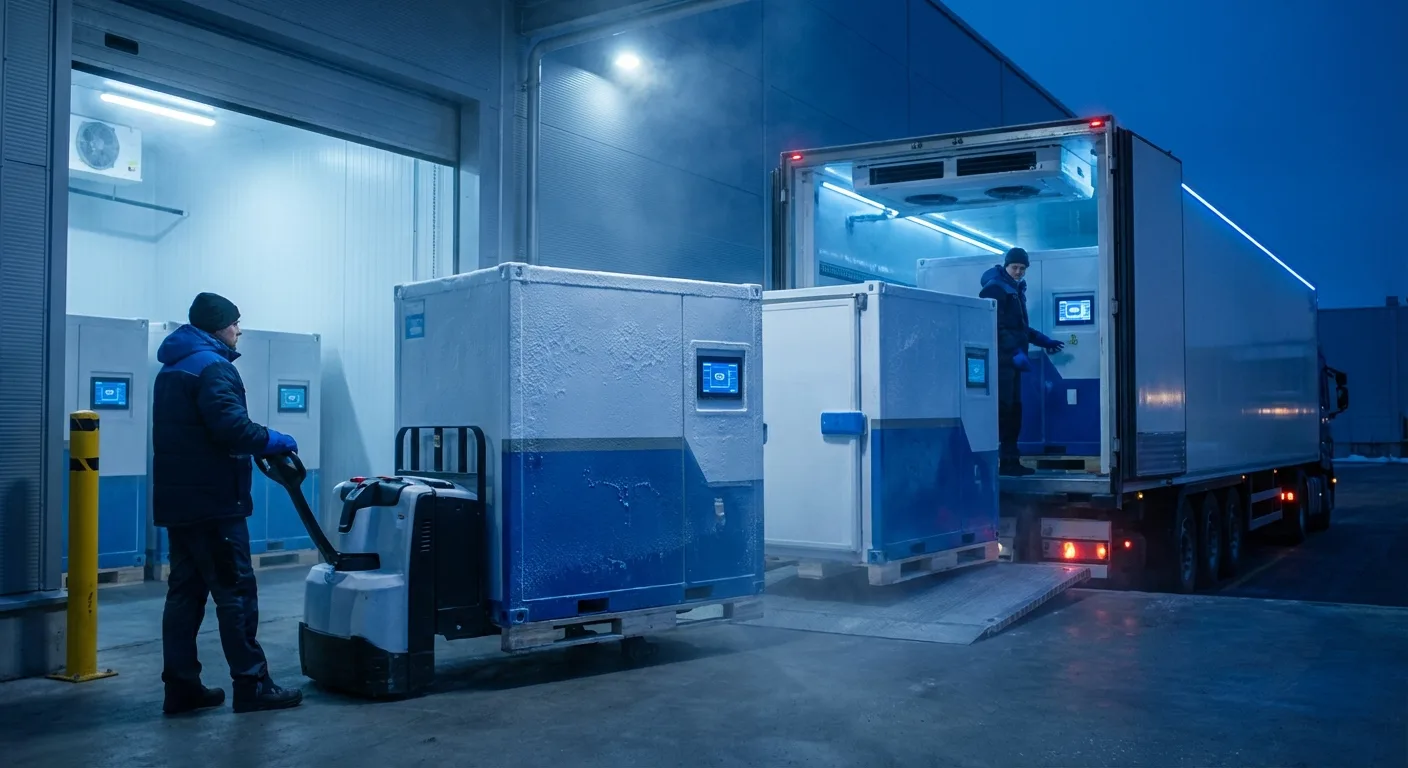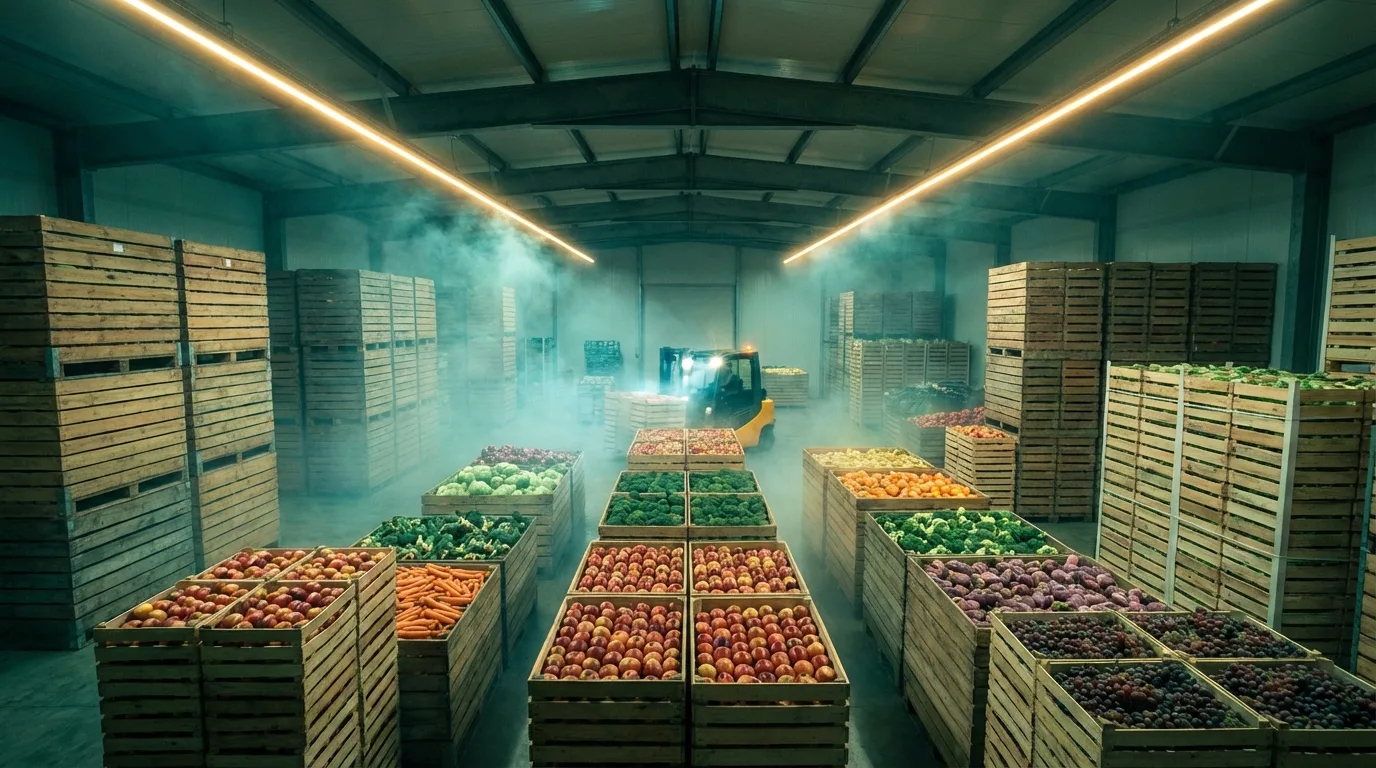
Taiwan's agriculture is renowned for its diverse and refined products, from highland vegetables and tropical fruits to cut flowers and potted plants, with annual production value exceeding hundreds of billions of NT dollars. However, cold chain breaks from harvest to consumer result in loss rates of 15% to 30% annually, far exceeding the below 5% rates in advanced agricultural countries like Japan and the Netherlands. Farmers' associations, as core organizations in Taiwan's agricultural marketing system, directly impact farmer income and consumer welfare through the quality of their cold storage planning and design. This article examines the temperature and humidity engineering design essentials for produce and floral preservation in agricultural cold storage facilities from a professional refrigeration and air conditioning engineering perspective, providing systematic technical reference for agricultural cold chain modernization.
1. Taiwan's Agricultural Cold Chain Status and the Role of Farmers' Associations
The Severe Challenge of Post-Harvest Loss
Located in the subtropics, Taiwan's hot and humid summer climate causes extremely rapid post-harvest deterioration of agricultural products. According to surveys by the Council of Agriculture's Agriculture and Food Agency, Taiwan's post-harvest loss rates are approximately 20% to 35% for vegetables, 15% to 25% for fruits, and 25% to 40% for cut flowers[1]. These losses represent not only economic losses from farmers' hard work but also waste of food resources and ineffective carbon emissions. By comparison, Japan controls produce post-harvest losses at 3% to 5%, and the Netherlands keeps floral losses below 2% -- both countries share the key advantage of complete cold chain coverage from origin to consumer.
The root cause of post-harvest loss is the lack of immediate and appropriate temperature management after harvest. Produce continues to undergo respiration and transpiration after harvest -- respiration generates heat that accelerates tissue aging, while transpiration causes moisture loss and wilting. ASHRAE Handbook -- Refrigeration Chapter 21 states that for every hour of delayed pre-cooling, most produce loses one day of shelf life[2]. This highlights the irreplaceable importance of origin-end cold storage facilities in the overall cold chain.
The Critical Position of Farmers' Associations in the Cold Chain System
Under the Farmers' Association Act, farmers' associations are public legal entities tasked with promoting agricultural technology, organizing joint marketing, and operating agricultural-related businesses[3]. Among approximately 300 grassroots farmers' associations across Taiwan, those with cold storage facilities cover major produce production areas and floral distribution centers, playing core roles in origin pre-cooling, temporary storage and consolidation, and joint marketing. In the Kaohsiung area, for example, the Meinong Farmers' Association edamame cold storage consolidation facility, the Dashu Farmers' Association lychee cold storage, and the Gangshan Farmers' Association vegetable low-temperature consolidation facility are all important nodes in the origin cold chain.
However, cold storage facilities across Taiwan's farmers' associations vary widely in construction era and technical standards. Some facilities were built in the 1980s and 1990s and suffer from equipment aging, insulation degradation, insufficient temperature control precision, and lack of humidity management. Many early cold storage facilities were designed with a single temperature, unable to accommodate the multi-temperature zone requirements of different agricultural products, causing some items to deteriorate faster due to inappropriate temperatures. The modernization upgrade of farmers' association cold storage has become a critical infrastructure project for improving Taiwan's agricultural competitiveness.
2. Produce Cold Storage Temperature and Humidity Standards and Respiration Management
The Engineering Significance of Produce Respiration
The fundamental difference between produce and frozen seafood is that produce remains a living organism after harvest, continuing respiration that consumes organic matter and releases heat, carbon dioxide, and moisture. Respiration Rate is the core indicator for evaluating produce storage characteristics, directly determining cold storage refrigeration load and ventilation requirements. ASHRAE Handbook -- Refrigeration Chapter 21 provides detailed respiration heat data for various produce at different temperatures[2]. Below are common Taiwan items for engineering design reference:
- Leafy vegetables (spinach, lettuce, bok choy): High respiration rate group, approximately 150 to 250 mW/kg at 20 degrees C, reducible to 20 to 40 mW/kg at 0 degrees C, a 5 to 8-fold reduction
- Fruit vegetables (tomato, bell pepper, bitter gourd): Moderate respiration rate group, approximately 50 to 100 mW/kg at 20 degrees C; most varieties are cold-sensitive and should not be stored below 7 to 10 degrees C
- Tropical fruits (mango, papaya, banana): Also moderate respiration rate, but with distinct climacteric respiration peaks and high susceptibility to Chilling Injury; optimal cold storage temperature is 10 to 15 degrees C
- Temperate fruits (apple, pear, grape): Lower respiration rate, can tolerate long-term storage at 0 to 2 degrees C; some varieties can be combined with controlled atmosphere storage to extend preservation for months
From an engineering design perspective, respiration heat constitutes an important component of cold storage Product Load. Unlike frozen storage where product load is primarily freezing latent heat that drops significantly after freezing is complete, cold storage respiration heat load is continuous -- as long as living produce is stored, respiration heat never stops. Therefore, cold storage refrigeration units must be capable of continuous 24-hour operation, and equipment selection should be based on the Steady-State Operating Point rather than only the peak load during the pull-down phase.
Multi-Temperature Zone Design and Mixed Storage Management
Different produce items have vastly different optimal cold storage conditions. USDA Handbook 66, The Commercial Storage of Fruits, Vegetables, and Florist and Nursery Stocks, provides comprehensive storage parameters for each item[4]. Agricultural cold storage facilities handling multiple product types should plan at least three to four temperature zones:
- Low temperature zone (0 to 2 degrees C): Suitable for leafy vegetables, root vegetables (radish, scallion, garlic), temperate fruits (apple, pear, strawberry); relative humidity 90% to 98%
- Medium temperature zone (5 to 8 degrees C): Suitable for fruit vegetables (tomato, bell pepper, eggplant) and some melons; relative humidity 85% to 95%
- High temperature zone (10 to 15 degrees C): Suitable for tropical fruits (mango, papaya, pineapple, banana) and items susceptible to chilling injury; relative humidity 85% to 90%
- Pre-cooling work area (variable temperature design): Rapid pre-cooling zone for incoming produce, requiring high refrigeration capacity and high air velocity; after pre-cooling, items are moved to the corresponding temperature storage area
Mixed storage management is a critical aspect of agricultural cold storage operations. Beyond temperature differences, ethylene sensitivity is another key consideration. Climacteric fruits such as apples, mangoes, and bananas release large amounts of ethylene during ripening, while leafy vegetables, cauliflower, and carrots are extremely sensitive to ethylene -- even trace amounts (above 0.1 ppm) can cause yellowing, softening, or off-flavors[5]. Therefore, ethylene-producing items and ethylene-sensitive items must never be stored together in the same cold room.
3. Special Requirements for Floral Cold Storage: Ethylene Control and Humidity Management
Unique Challenges of Cut Flower Cold Storage
Taiwan is an important Asian flower exporting country, with primary export items including Phalaenopsis orchids, Oncidium orchids, lilies, chrysanthemums, and Anthurium. Floral cold storage has several fundamental engineering design differences from produce cold storage that require special consideration. First, cut flowers are extremely fragile and high-value commodities -- any degree of freeze damage, dehydration wilting, or ethylene injury can render an entire shipment commercially worthless. Second, the optimal cold storage temperature range for flowers is extremely narrow -- most temperate cut flowers require 0 to 2 degrees C, while tropical orchids need 7 to 12 degrees C[4], with a permissible temperature fluctuation of only +/-1 degree C, requiring much higher temperature control precision than general produce cold storage.
Floral cold storage requires extremely high relative humidity, typically maintained at 90% to 95% or above. Excessively low humidity accelerates moisture evaporation from petals and leaves, causing wilting and petal browning. However, excessively high humidity (approaching 100%) can cause condensation droplets on petal surfaces, promoting the spread of Botrytis cinerea and other fungal diseases[6]. This creates a balance point in engineering design that must be precisely calibrated.
Ethylene Control Engineering Solutions
Ethylene (C2H4) is the primary environmental hazard for floral cold storage. Extremely low concentrations of ethylene (as low as 0.01 to 0.1 ppm) can cause irreversible damage including petal drop, bud failure to open, and leaf yellowing. Ethylene sources include physiological release from the flowers themselves, cross-contamination from decaying produce, and exhaust emissions from internal combustion engines (forklifts, transport vehicles). For agricultural floral cold storage, the following multi-layered ethylene control strategies are recommended:
- Source isolation: Floral cold rooms and produce cold rooms must be completely independent with no shared return air ducts. Fuel-powered forklifts are strictly prohibited inside storage -- electric handling equipment should be used instead
- Ethylene adsorption devices: Install potassium permanganate (KMnO4) oxidation-type ethylene adsorption filter media in return air ducts, or use catalytic oxidation ethylene decomposers, to control storage ethylene concentration below 0.01 ppm[5]
- Ventilation design: Periodically introduce filtered fresh air to dilute storage ethylene and CO2 concentrations. Ventilation rate design must balance ethylene dilution effectiveness against increased refrigeration load; generally 0.5 to 1.0 air changes per hour is recommended
- Pre-treatment measures: Treating cut flowers with silver thiosulfate (STS) or 1-methylcyclopropene (1-MCP) before storage can effectively block ethylene receptors, improving flowers' ethylene tolerance
Evaporator Design for High-Humidity Environments
The key to maintaining high humidity in floral cold storage lies in the evaporator's Temperature Difference (TD). When evaporator surface temperature falls below the air dew point, moisture in the air condenses on the fin surface, reducing storage humidity. To minimize this dehumidification effect, floral cold storage evaporator TD should be controlled within 3 to 5 degrees C, much lower than the 6 to 8 degrees C typical of general produce cold storage[7]. A smaller TD means a larger evaporator surface area is needed, with higher initial equipment investment, but it can effectively maintain storage relative humidity above 90%, reducing flower moisture loss and quality deterioration.
For evaporator airflow design, floral cold storage should avoid direct strong wind blowing on flower surfaces to prevent accelerated transpiration. Large-area, low-velocity air delivery is recommended, with air velocity controlled within 0.5 to 1.0 m/s, using deflector plates or fabric ducts to distribute airflow evenly throughout the storage space.
Need professional planning and design for agricultural cold storage? Contact our engineering team for a cold storage engineering solution tailored to your needs.
4. Cold Storage Building Design: Insulation, Floor Anti-Frost, and Door Selection
Insulation System Materials and Construction
Cold storage insulation performance directly determines the magnitude of Transmission Load and long-term operational energy consumption. Common insulation systems for agricultural cold storage come in two main types: prefabricated polyurethane sandwich panels (PUR/PIR), and site-assembled insulation panels with specialized cold storage sealing strips. Prefabricated sandwich panels have become the mainstream choice for agricultural cold storage due to factory-controlled quality and rapid on-site installation.
Insulation panel thickness selection requires thermal calculations based on cold storage design temperature and local climate conditions. For agricultural cold storage in southern Taiwan (summer outdoor design temperature 35 degrees C), recommended insulation thicknesses (polyurethane, thermal conductivity approximately 0.022 W/m-K) for different temperature zones are[8]:
- High-temperature cold storage zone (10 to 15 degrees C): Wall panel thickness 75 to 100 mm, ceiling 100 mm
- Medium-temperature cold storage zone (5 to 8 degrees C): Wall panel thickness 100 to 120 mm, ceiling 120 mm
- Low-temperature cold storage zone (0 to 2 degrees C): Wall panel thickness 120 to 150 mm, ceiling 150 mm
Construction quality of the insulation system is equally important as material selection. Improperly treated joints between panels create Thermal Bridge effects that not only increase energy consumption but can also cause condensation or frost formation on cold-side surfaces, gradually eroding insulation material and storage structure. During construction, all joints should be filled with specialized cold storage polyurethane sealant, and a continuous Vapor Barrier should be applied at panel intersections to prevent moisture from the warm side from penetrating into the insulation layer.
Floor Anti-Frost and Structural Design
Although agricultural cold storage primarily operates at positive temperatures above 0 degrees C (unlike freezer storage), floors in the 0 to 2 degrees C low-temperature zone still require anti-frost considerations. During long-term low-temperature operation, cold energy conducts through the floor into the soil below. If soil moisture content is high, this can cause Frost Heaving -- soil freezing and expansion that causes floor upheaval and cracking, potentially compromising structural safety in severe cases[8].
Common floor anti-frost engineering measures include:
- Floor heating system: Electric heating cables or hot water pipes are laid between the insulation layer and concrete floor, maintaining soil temperature below the insulation layer above 0 degrees C. For 0 to 2 degrees C cold storage, floor heating capacity is typically designed at 8 to 12 W/m2
- Elevated ventilated floor: Steel or concrete pile foundations raise the cold storage floor 60 to 90 cm, using natural or forced ventilation to maintain sub-floor soil temperature above freezing. This method has low maintenance costs and is suitable for new construction
- Enhanced floor insulation: High-density extruded polystyrene (XPS) insulation boards are installed below the floor, with thickness calculated based on storage temperature, to reduce the rate of cold energy conduction into the soil
Door Selection and Air Curtain Design
Doors are one of the primary pathways for heat load infiltration in cold storage. Agricultural cold storage experiences far more frequent door openings than typical logistics warehouse cold storage due to frequent produce movement, making cold loss and warm, humid air infiltration through door areas particularly problematic. Door selection should be based on comprehensive evaluation of opening frequency, cargo dimensions, and operational patterns:
- Manual sliding cold storage doors: Suitable for long-term storage rooms with low opening frequency; best sealing performance but slow opening/closing speed
- Electric high-speed roll-up doors: Fast opening/closing speed (0.8 to 1.5 m/s), suitable for pre-cooling and consolidation areas with frequent produce movement; significantly reduces door-open time to minimize cold loss
- Swing doors (impact doors): Suitable for corridors with frequent personnel and small vehicle traffic; auto-return design ensures doors don't remain open for extended periods
Installing Air Curtains on the exterior side of storage doors is an effective measure for reducing cold loss during door openings. Air curtains use high-velocity airflow to create an invisible barrier blocking convective air exchange between inside and outside the storage. For agricultural cold storage, air curtains with wind speed of 8 to 12 m/s that effectively cover the full door height are recommended, with door sensor-linked start/stop controls[9].
5. Pre-Cooling System Selection: Forced Air, Vacuum, and Hydrocooling
The Engineering Necessity of Pre-Cooling
Pre-cooling is the first critical step in the post-harvest cold chain for agricultural products, aimed at reducing the product's field heat to the target storage temperature (or near it) in the shortest possible time, suppressing respiration, slowing aging, and extending shelf life. Research from Taiwan's Agricultural Research Institute indicates that vegetables pre-cooled within 1 to 2 hours of harvest can have their shelf life extended 2 to 5 times compared to non-pre-cooled products[10].
If agricultural cold storage facilities lack independent pre-cooling equipment and instead place freshly harvested ambient-temperature produce directly into cold storage for cooling, they face two engineering problems: First, large batches of ambient-temperature produce entering storage cause storage temperature to spike sharply, affecting the quality of existing inventory. Second, general cold storage air delivery speed and refrigeration capacity are insufficient to complete pre-cooling within a reasonable timeframe, and during the slow cooling process, produce continues to consume significant nutrients and moisture. Therefore, independent pre-cooling facilities are an indispensable component of the agricultural cold storage system.
Comparison of Three Main Pre-Cooling Methods
Agricultural pre-cooling technologies are classified into three main categories based on cooling medium and heat transfer method[2]:
Forced-Air Cooling: Fans force cold air through stacked produce packaging cartons, using convective heat transfer to remove field heat. This is currently the most widely adopted pre-cooling method by farmers' associations. Advantages include simple equipment, broad applicability (suitable for nearly all produce types), and compatibility with standard packaging cartons. Disadvantages include relatively slow cooling speed (7/8 cooling time typically requires 1 to 4 hours), and the need to ensure proper carton ventilation hole ratios and stacking patterns for uniform airflow. Key engineering design parameters include: air velocity 1 to 3 m/s, static pressure differential 50 to 250 Pa, and cold air temperature 1 to 2 degrees C below the target temperature.
Vacuum Cooling: Produce is placed in a sealed chamber, and a vacuum pump reduces chamber pressure to 600 to 800 Pa, causing rapid evaporation of surface moisture under low pressure, using evaporative latent heat to remove field heat. Vacuum cooling is extremely fast (15 to 30 minutes to complete) and particularly suitable for high-surface-area, loosely structured leafy vegetables (lettuce, spinach, cabbage) and mushrooms. Disadvantages include high equipment investment cost, processing volume limited by chamber capacity, and 1% to 3% weight loss from moisture evaporation[11].
Hydrocooling: 0 to 1 degrees C ice water is directly sprayed on or immerses produce, using water's high convective heat transfer coefficient to rapidly remove field heat. Hydrocooling speed falls between forced air and vacuum cooling, and is suitable for water-tolerant root vegetables (carrots, radishes), fruit vegetables (bell peppers, corn), and some fruits (lychees, longans). Disadvantages include unsuitability for leafy vegetables (causes water damage) and flowers, and ice water systems require microbial contamination control, typically needing food-grade disinfectant addition and regular water changes.
Pre-Cooling System Selection Recommendations for Farmers' Associations
Farmers' associations should select pre-cooling methods based on the characteristics of their primary products. For comprehensive associations handling diverse items, forced-air cooling is recommended as the baseline configuration, with vacuum cooling equipment added as needed for specific high-value items (such as export flowers, organic leafy vegetables). Pre-cooling facility capacity should be designed based on peak harvest season maximum daily intake volume, with appropriate margin for the next 3 to 5 years of production growth. After pre-cooling, products should be immediately transferred to corresponding temperature cold storage, and the handling process must also take place in a low-temperature environment to prevent quality loss from re-warming.
6. Government Cold Chain Subsidy Program Application Practices
Subsidy Program Framework and Eligibility
The Ministry of Agriculture (formerly the Council of Agriculture) has allocated multiple subsidy programs to promote the construction of agricultural cold chain logistics systems. Programs most directly related to farmers' association cold storage construction include: the Agriculture and Food Agency's "Agricultural Product Marketing Facility Subsidy Program," the "Agricultural Product Cold Chain Logistics Construction Program," and agricultural facility subsidies under the "Agricultural Development Fund"[3]. Eligible applicants include farmers' associations at all levels, agricultural cooperatives, farmer organizations, and qualified agricultural enterprises.
Subsidy ratios vary by program type and applicant category. Generally, government funding for farmers' association cold storage construction subsidies covers approximately 49% to 70% of total project costs, with the remainder self-funded by the farmers' association[12]. Subsidized items cover cold storage construction, pre-cooling facility installation, refrigeration equipment procurement, temperature monitoring system installation, and renovation of existing cold storage facilities. Applicant associations must submit a complete project proposal including: facility planning and design documents (including refrigeration load calculations, equipment specifications, layout drawings), cost estimates, expected benefit analysis, and operational management plans.
Key Engineering Points for Project Proposal Preparation
Refrigeration and air conditioning engineering offices typically serve as technical consultants in farmers' association cold storage subsidy projects, assisting in preparing the engineering technical sections of project proposals. A proposal that can pass review should cover the following engineering aspects:
- Demand analysis and production forecasting: Clearly list the primary agricultural products within the association's jurisdiction, annual production volumes, seasonal fluctuations, peak intake volumes, and future growth trends. These data form the foundation for cold storage capacity design
- Refrigeration load calculation report: Systematically calculate various loads following ASHRAE methods -- product load (including sensible heat, respiration heat), envelope transmission load, air infiltration load, lighting and equipment heat load, occupant heat load, etc., totaled with appropriate safety factors
- Equipment specifications and layout drawings: Types, specifications, and quantities of core equipment including compressors, evaporators, and condensers; refrigerant system piping layout; electrical control system single-line diagram; cold storage floor plan and cross-section drawings
- Quantified energy efficiency analysis: Energy saving rate, annual electricity cost savings, and Payback Period of new construction or renovation versus current conditions -- these quantified indicators are key focus areas for subsidy review committees
Procurement Procedures and Technical Specification Preparation
When farmers' associations receive government subsidies exceeding announced thresholds and subsidy amounts exceed half the procurement amount, procurement must follow the Government Procurement Act[3]. Cold storage projects fall under the engineering procurement category, with common bidding methods being open tendering or restricted tendering (requiring approval from supervisory authorities). Technical specification preparation is the key to ensuring project quality -- specifications should center on Performance Specifications, clearly defining cold storage refrigeration capacity, temperature uniformity (temperature difference between any two points within +/-1 to +/-2 degrees C), relative humidity control range, energy consumption indicators (unit volume power W/m3 or EER/COP values), noise limits, and other key performance indicators, while maintaining reasonable flexibility in equipment brands and system architecture.
Acceptance testing is the final quality assurance checkpoint. Technical specifications should clearly define acceptance testing methods, conditions, and passing criteria, including: empty storage Pull-Down Test, full-load operation test, temperature uniformity test, relative humidity test, equipment noise test, and continuous 72-hour operational stability test. Acceptance test results should be fully documented in written reports as baseline data for subsequent warranty and maintenance.
Conclusion
Agricultural cold storage planning and design is a cross-disciplinary engineering project that integrates agricultural science, food engineering, and refrigeration and air conditioning technology. From understanding produce respiration mechanisms to developing precise multi-temperature zone design solutions, from mastering floral sensitivity to ethylene and humidity to selecting the optimal pre-cooling system type, from building insulation and floor anti-frost construction to government subsidy application practices -- every step requires engineers who combine a solid foundation in thermodynamics with deep understanding of the agricultural industry. As Taiwan's agricultural products face increasingly fierce international competition, the modernization upgrade of farmers' association cold storage is not only a technical means of reducing post-harvest losses but also a foundational infrastructure investment for improving Taiwan's overall agricultural competitiveness and protecting farmer income. Only with professional engineering planning and design as the foundation, combined with effective use of government subsidy resources, can a complete cold chain from origin to consumer be built for Taiwan's agricultural products.