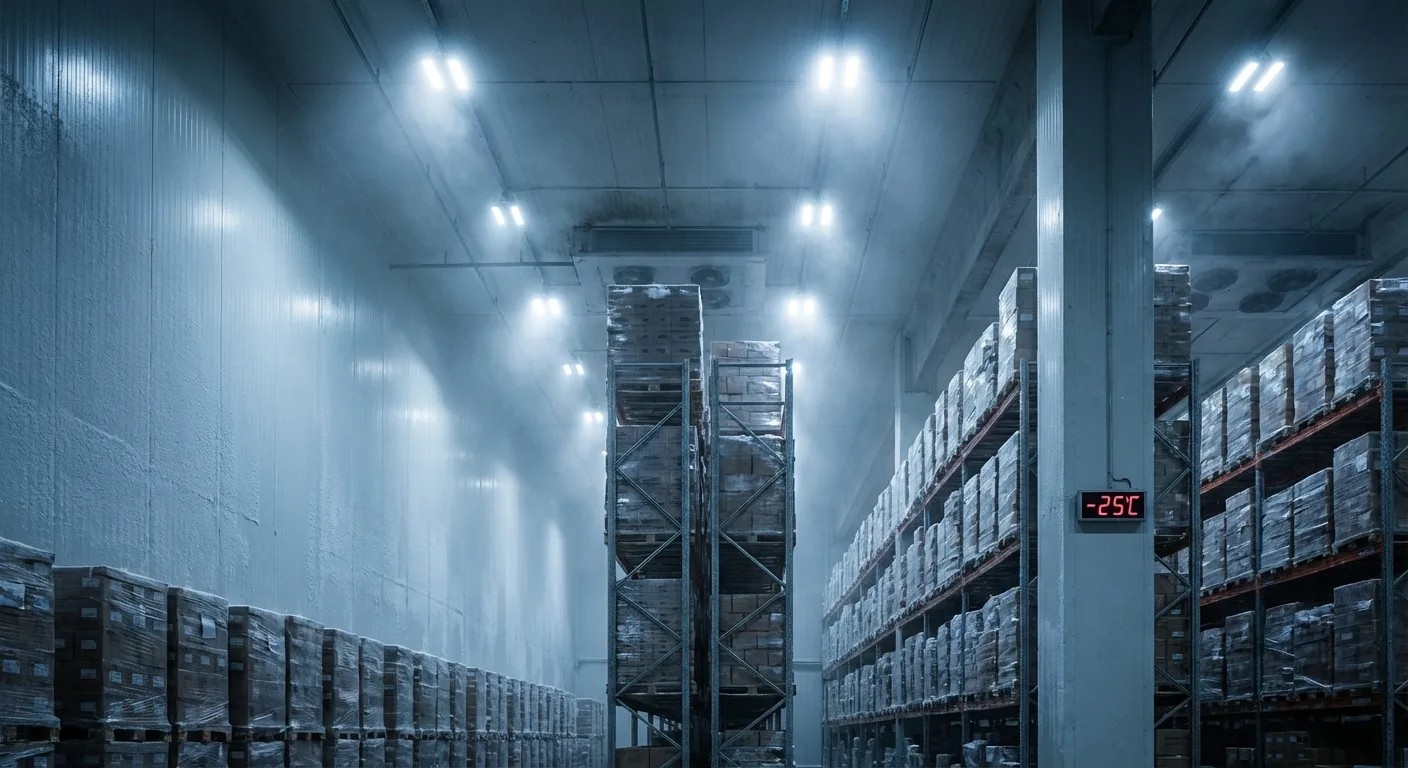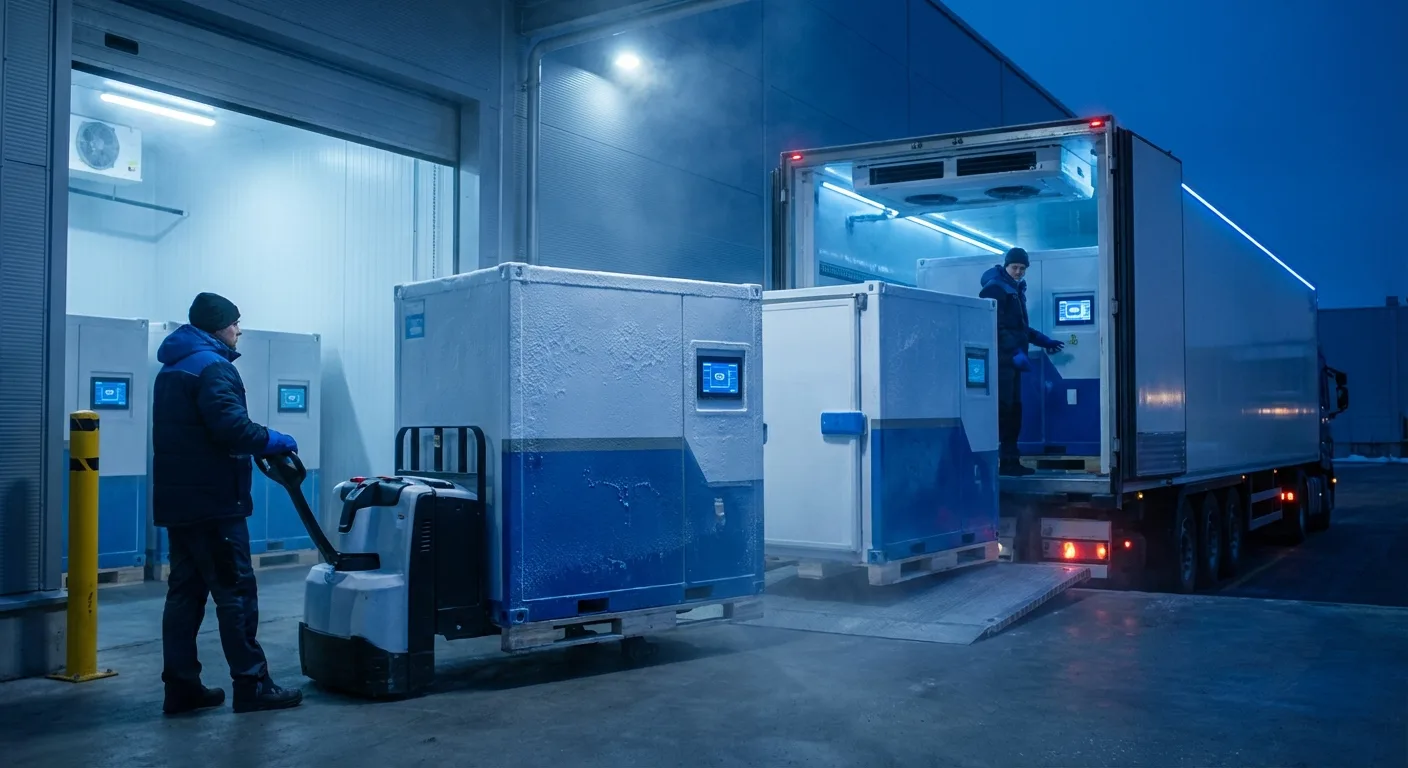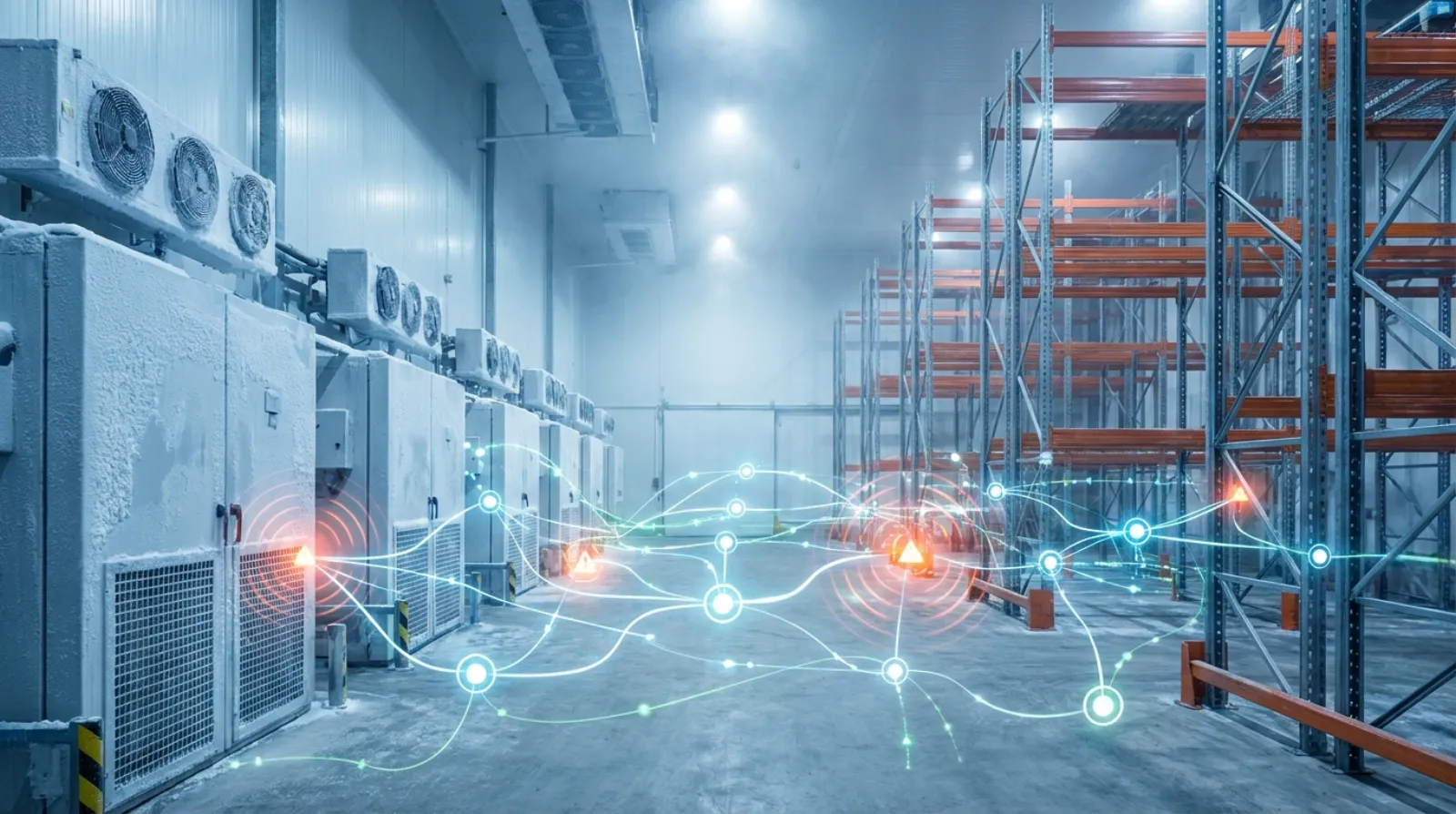
Frozen logistics is the last line of defense for food safety. From ice production at fishing ports to frozen warehousing, from low-temperature distribution to retail display freezers, any break in the temperature chain can lead to food deterioration, compliance violations, and even public health incidents. Taiwan's Act Governing Food Safety and Sanitation explicitly requires food businesses to establish effective temperature control and traceability systems[1], while the international HACCP standard designates temperature as the most critical Critical Control Point (CCP)[2]. However, the traditional temperature monitoring model relying on manual recording and scheduled inspections can no longer meet the real-time and full-coverage requirements in large cold storage facilities — often exceeding 10,000 pallet positions spanning multiple temperature zones. This article takes the OpenClaw autonomous AI agent framework as a starting point to explore the engineering applications of AI agents in frozen logistics monitoring in depth, from architecture design to predictive maintenance, from HACCP compliance to energy optimization, outlining the complete technological landscape of smart cold chain.
1. OpenClaw: The Architectural Foundation of Autonomous AI Agents
OpenClaw is an open-source autonomous AI agent framework designed with the philosophy of enabling large language models (LLMs) to not only answer questions but actively observe environments, formulate plans, and execute actions[3]. Unlike traditional chat-based AI assistants, agents under the OpenClaw architecture possess three core capabilities:
- Perception: Connecting to external systems through tool calling mechanisms to continuously acquire real-time data
- Reasoning: Analyzing and evaluating collected data based on the LLM's contextual understanding capabilities
- Action: Automatically triggering downstream actions based on reasoning results — sending alerts, adjusting settings, or initiating maintenance work orders
Heartbeat Active Monitoring Mode
One of the most critical features in the OpenClaw architecture is the Heartbeat mode — an active environmental monitoring mechanism. Unlike traditional AI assistants that passively await user commands, Heartbeat mode enables AI agents to actively poll external systems at configured intervals (e.g., every 30 seconds or every 5 minutes), continuously monitoring environmental status[3]. This "heartbeat" style active monitoring architecture is naturally suited for industrial monitoring scenarios — cold storage temperatures don't wait to be asked before changing, and equipment anomalies don't only occur during business hours.
The engineering significance of Heartbeat mode lies in its ability to cover critical parameters across an entire cold storage facility at near-real-time temporal resolution, without being constrained by staffing schedules, fatigue, or attention lapses. In a large cold storage facility operating 24 hours a day, the traditional model might have on-duty personnel conduct inspections every 4 hours — during the 4-hour gap between inspections, a slowly rising temperature deviation could have already caused irreversible quality degradation. Heartbeat mode compresses this detection interval to the second level.
2. Engineering Challenges of Cold Chain Monitoring
Before discussing how AI agents can intervene, it is essential to understand the core engineering challenges facing cold chain monitoring. The ASHRAE Handbook — Refrigeration indicates that temperature management in cold storage involves multidimensional complex factors[4]:
Temperature Excursion
Temperature excursion is the most direct risk in cold chains. Research by the International Institute of Refrigeration (IIR) indicates that the exposure time of frozen foods above -18°C has a nonlinear relationship with quality degradation — even brief temperature fluctuations accelerate ice crystal recrystallization, causing destruction of food tissue structure[5]. Common causes of temperature excursion include:
- Door Operations: Large cold storage loading docks handle dozens of truck entries and exits daily, with each door opening causing cold loss
- Defrost Cycles: Storage temperature may temporarily rise 3-5°C during evaporator defrost periods
- Heat Load Variations: Incoming goods bring significant heat loads into storage, especially products that haven't been pre-cooled
- Equipment Failures: Compressor trips, condenser cooling deficiencies, expansion valve sticking
Multi-Temperature Zone Management
Modern large frozen logistics centers often need to simultaneously maintain multiple temperature zones: frozen zone (-25°C to -18°C), refrigerated zone (0°C to 7°C), and controlled ambient zone (15°C to 18°C). Each temperature zone has different equipment configurations, energy consumption characteristics, and temperature tolerance ranges, requiring differentiated monitoring logic.
Compliance Documentation Management
Taiwan's Food and Drug Administration (TFDA) requires food cold chain operators to maintain complete temperature records at intervals of no less than every 30 minutes[1]. During HACCP verification audits, operators must provide continuous, gap-free temperature records demonstrating effective temperature control. Paper records are prone to omissions and tampering risks, and while digital records improve traceability, they still require manual compilation and review.
3. MCP Protocol: The Bridge Connecting AI Agents to Industrial Control
To enable AI agents to truly intervene in frozen equipment monitoring, the key lies in establishing a communication bridge between AI and industrial control systems. The Model Context Protocol (MCP) is the protocol designed for exactly this purpose[6]. MCP defines a standardized communication interface between LLMs and external tools, enabling AI agents to invoke external system functions in a structured manner — whether reading sensor data, querying databases, or triggering control commands.
From SCADA/PLC to AI Agents
The control core of cold storage facilities typically consists of SCADA (Supervisory Control and Data Acquisition) paired with PLCs (Programmable Logic Controllers). PLCs handle real-time equipment control logic — compressor start/stop, expansion valve opening adjustment, defrost scheduling; SCADA handles data acquisition, historical trend recording, and human-machine interface. Through the MCP protocol, AI agents can:
- Read PLC Registers: Obtain real-time parameters including compressor operating current, discharge temperature, evaporation pressure, and condensation pressure
- Query SCADA Historical Databases: Access temperature trends and equipment operation records spanning hours to months
- Receive Alarm Events: When SCADA generates alarms (such as temperature exceedance or equipment fault codes), AI agents receive and perform contextual analysis in real-time
- Issue Control Recommendations: After analysis, AI agents can return control recommendations to SCADA or directly trigger predefined response procedures
The standardized nature of the MCP protocol means the same AI agent logic can interface with PLCs from different manufacturers (such as Siemens S7, Allen-Bradley ControlLogix, Mitsubishi iQ-R), as long as corresponding communication drivers (such as OPC UA, Modbus TCP) are implemented on the MCP server side. This significantly reduces the engineering cost of migrating AI agents between different cold storage facilities.
Security Considerations
Connecting AI agents to industrial control systems must strictly comply with the IEC 62443 industrial cybersecurity standard[7]. In architectural design, AI agents should be deployed in the IT network layer, accessing SCADA systems in the OT (Operational Technology) network through firewalls and a DMZ (Demilitarized Zone), with read-only access as the default permission. Any commands involving equipment control should undergo manual review and confirmation or be limited to a pre-approved Safe Command Whitelist.
4. AI Automation of HACCP Compliance
HACCP (Hazard Analysis and Critical Control Points) is the international gold standard for food safety management. Among the seven HACCP principles established by the Codex Alimentarius Commission, Principle 4 (Establish Monitoring Systems) and Principle 5 (Establish Corrective Actions) directly involve cold chain temperature monitoring[2]. AI agents can play the following roles in HACCP compliance:
Real-Time CCP Monitoring
Critical Control Points (CCPs) in HACCP plans for cold chain scenarios are typically temperature upper limits at specific locations — for example, the core area of frozen storage must not exceed -18°C, and refrigerated storage must not exceed 7°C. AI agents continuously read temperature sensor values at each CCP through Heartbeat mode, generating alerts at the first moment of deviation, compressing the time delay from hours of manual inspection to seconds.
Automated Corrective Action Triggering
When CCP deviations are detected, AI agents can automatically trigger predefined corrective actions — such as starting backup compressors, closing non-essential door opening schedules, and notifying quality assurance personnel to conduct product quality assessments. The triggering and execution of these corrective actions are automatically recorded in HACCP documentation, forming a complete compliance evidence chain.
Automated Compliance Report Generation
AI agents can automatically compile temperature monitoring data on a daily, weekly, or monthly basis, generating compliance reports that meet TFDA and HACCP audit requirements. Report contents include temperature trend charts for each temperature zone, CCP deviation event lists, corrective action records, and equipment maintenance summaries. This not only reduces the documentation burden on quality assurance personnel but also ensures report timeliness and consistency.
5. Real-Time Temperature Anomaly Detection and Smart Alerting
Traditional temperature alarm systems typically use fixed thresholds — triggering an alarm when temperature exceeds a set value. While effective in simple scenarios, this approach faces two problems in large cold storage facilities: first, alert fatigue, because normal operations such as defrost cycles and receiving operations cause brief temperature fluctuations that also trigger alarms; second, missed detection risk, because slowly drifting temperature trends may remain below the threshold for extended periods while already deviating from normal range.
Multi-Layer Anomaly Detection Model
AI agents can construct multi-layer anomaly detection models combining statistical methods and machine learning techniques:
- Baseline Learning: AI agents learn normal temperature ranges and change patterns for each temperature zone across different time periods and operational states through historical data
- Dynamic Thresholds: Dynamically adjusting alarm thresholds based on current operational status (e.g., during defrost, during receiving operations) to reduce false alarms
- Trend Detection: Using linear regression or ARIMA time series models to detect long-term temperature drift trends, providing early warnings even when current temperatures are still within threshold limits
- Multi-Sensor Correlation Analysis: Simultaneously analyzing readings from multiple temperature sensors within the same storage area — an anomaly from a single sensor may indicate sensor failure rather than actual temperature deviation
Context-Aware Alerting
The natural language understanding capabilities of AI agents enable them to generate alert messages with engineering context, rather than just cold numbers. For example: "Storage Room 3 Zone B temperature has risen from -22.3°C to -19.1°C over the past 45 minutes, with a warming rate of 4.3°C/hr, significantly higher than the normal defrost mode warming rate of 2.1°C/hr. During the same period, Compressor 3B discharge pressure is 12% above normal, suggesting condenser cooling performance inspection is recommended." This type of contextual alerting, which integrates temperature data, equipment parameters, and historical pattern comparison, enables on-duty engineers to quickly understand the nature and possible causes of the problem, shortening decision-making and response time.
6. Predictive Maintenance of Compressor Groups
The core equipment of refrigeration systems — compressors — is the key determinant of system reliability. Large cold storage facilities typically deploy multiple screw or reciprocating compressors in parallel operation, and failure of a single compressor, if not detected and addressed in time, can lead to temperature control loss across an entire temperature zone. The ASHRAE Handbook — Refrigeration indicates that common compressor failure modes include bearing wear, suction valve plate fracture, refrigeration oil degradation, and motor insulation deterioration[4].
AI-Driven Fault Precursor Detection
AI agents can continuously monitor multidimensional compressor operating parameters through the MCP protocol, building health status assessment models:
- Vibration Spectrum Analysis: Bearing wear produces abnormal vibration signatures at specific frequencies. AI agents can analyze vibration sensor data through FFT (Fast Fourier Transform), detecting early signs weeks or even months before failure occurs
- Discharge Temperature and Pressure Ratio Trends: Compression efficiency decline is reflected in rising discharge temperatures and pressure ratio drift. AI agents tracking long-term trends of these parameters can assess the degree of volumetric efficiency degradation
- Current Waveform Analysis: Changes in harmonic components of motor operating current can indicate the health status of stator windings or rotor
- Refrigeration Oil Analysis Correlation: By integrating periodic oil analysis reports (including acid number, moisture content, metal particle concentration), AI agents can build predictive models for oil degradation
Condenser and Evaporator Maintenance
Condenser cooling performance directly affects system energy efficiency and reliability. In the high-temperature, high-humidity environment of southern Taiwan, air-cooled condenser fins are prone to dust accumulation and corrosion, while evaporative condensers face water quality management and fill media degradation issues[8]. AI agents can assess condenser fouling levels by monitoring the difference between condensation pressure and ambient temperature (Approach Temperature) — when this difference consistently increases, it indicates the condenser needs cleaning and maintenance.
Regarding evaporators, frost thickness directly affects heat transfer efficiency. AI agents can optimize defrost scheduling by monitoring correlations between evaporator supply/return air temperature differential, fan current, and evaporation pressure changes — initiating defrost only when frost actually impacts performance, avoiding unnecessary defrost operations that cause temperature fluctuations and energy waste.
7. Case Study: AI Agent Monitoring for a 10,000-Pallet Cold Storage Facility
Using a typical 10,000-pallet large frozen logistics center as an example, this section illustrates the architecture and operation of an AI agent monitoring system. This facility is located in the Kaohsiung port area, serving three major product categories — frozen seafood, frozen meat, and frozen food — with the following temperature zone configuration:
- Ultra-Low Temperature Zone (-40°C to -30°C): 2,000 pallet positions for sashimi-grade seafood, equipped with 4 two-stage screw compressors
- General Frozen Zone (-25°C to -18°C): 6,000 pallet positions for general frozen food and meat, equipped with 6 single-stage screw compressors
- Refrigerated Zone (0°C to 5°C): 2,000 pallet positions for short-term storage of high-freshness products, equipped with 3 chiller units
Sensor Deployment
Following ASHRAE cold storage design guidelines[4], this facility deploys a total of:
- Storage area temperature sensors x 120 points (including return air, supply air, and core temperatures within product stacks)
- Compressor operating parameters (discharge temperature, suction pressure, discharge pressure, current) x 13 units
- Condenser parameters (condensation pressure, fan current, ambient temperature/humidity) x 4 units
- Evaporator parameters (evaporation pressure, supply/return air temperature differential, defrost sensors) x 18 units
- Door sensors x 8 units (each loading dock)
- Approximately 280 real-time data points in total
AI Agent Operational Flow
The AI agent operates on a 30-second Heartbeat cycle, executing the following process with each heartbeat:
- Data Acquisition: Invoking OPC UA tools through the MCP server to read the latest values of all 280 data points from SCADA
- Real-Time Comparison: Comparing temperatures in each zone against corresponding CCP thresholds, immediately generating high-priority alerts for any exceedance
- Trend Analysis: Executing temperature trend analysis every 5 minutes, detecting abnormal warming trends within a 30-minute window
- Equipment Health Assessment: Integrating multidimensional parameters from compressors, condensers, and evaporators every 15 minutes for health status scoring
- Compliance Recording: Automatically writing each data acquisition result to the HACCP temperature record database
- Situational Reporting: Automatically generating a facility operation summary report every 4 hours, distributed to the operations management team
Anomaly Response Scenario
Suppose at 2:30 AM, the AI agent detects that the temperature in General Frozen Zone Room C has risen from -22.1°C to -19.8°C within 15 minutes, with a warming rate significantly deviating from normal defrost patterns. The AI agent's response process is as follows:
- Confirm that no scheduled defrost or receiving operations are taking place in Room C during this period
- Query Compressor 4C operating parameters — discover that discharge pressure is normal but suction pressure is low, current is 35% below rated value
- Infer probable cause: Compressor 4C suction valve plate damage or insufficient refrigerant charge
- Automatically send a high-priority alert to the on-duty engineer's mobile phone, with alert content including anomaly description, probable causes, and recommended actions
- Simultaneously, automatically redistribute Room C's cooling load to the adjacent compressor group and activate standby units
- Record this temperature excursion event, trigger time, corrective actions, and temperature recovery time in HACCP documentation
8. Cold Storage Energy Optimization
Electricity costs for large cold storage facilities are a major component of operating expenses. According to statistics from Taiwan's Bureau of Energy, the average electricity consumption intensity of the cold storage industry is approximately 200-350 kWh per square meter per year[9], with the refrigeration system accounting for approximately 65-75% of total electricity consumption. AI agents can contribute to energy optimization on three levels:
Compressor Group Scheduling Optimization
When multiple compressors operate in parallel, traditional control logic typically uses fixed-sequence start/stop — loading and unloading compressors in numerical order. However, each compressor has different energy efficiency (COP) at different load rates, and this changes with operating hours and maintenance status. AI agents can build COP models for each compressor under different operating conditions, calculating the optimal unit combination for real-time load demand to maximize overall system energy efficiency. Research shows that such optimization strategies can reduce compressor group energy consumption by 8-15%[10].
Demand Response and Peak/Off-Peak Scheduling
The thermal mass of cold storage itself is a massive energy buffer. During off-peak electricity rate periods (typically nighttime), AI agents can instruct the system to lower storage temperatures to the management lower limit (e.g., from -20°C to -25°C), storing cold energy; during peak rate periods, compressor operation is reduced, allowing storage temperatures to naturally rise within the safe range. This "cold storage" strategy can effectively reduce peak electricity demand contract capacity and electricity costs without affecting product quality.
Smart Defrost Scheduling
Traditional defrost scheduling is typically based on fixed time intervals (e.g., every 6 hours), but actual frosting rates are highly variable, influenced by ambient humidity, door opening frequency, and receiving operations. AI agents optimize by monitoring evaporator heat transfer efficiency indicators (such as changes in the temperature differential between supply air and evaporation temperature), initiating defrost only when frost genuinely impacts performance, avoiding energy waste and temperature fluctuations from excessive defrosting. ASHRAE research indicates that demand defrost can save 10-20% of defrost-related energy consumption compared to timed defrost[4].
9. Taiwan Food Cold Chain Regulations and Industry Trends
Taiwan's food cold chain regulatory framework is based on the Act Governing Food Safety and Sanitation as the parent law, with the "Regulations on Good Hygiene Practice" (GHP) and the "Regulations on Food Safety Control System" (HACCP Regulations) forming the compliance obligations for cold chain operators[1]. In recent years, TFDA has continuously strengthened digitalization requirements for cold chain management:
- 2022 Revision: Requires certain categories of food businesses to maintain temperature recording capability throughout transportation and storage
- Food Traceability System: Rolled out in phases since 2014, requiring businesses to register source and destination information for food products, with cold chain temperature records increasingly becoming part of the traceability chain
- FTrace Platform: An online traceability platform established by TFDA that may expand to integrate real-time temperature monitoring data in the future[11]
Industry Digital Transformation Trends
Taiwan's cold chain logistics industry is transitioning from traditional "equipment management" thinking to a "data-driven" operational model. Several noteworthy trends include:
- IoT Sensor Proliferation: LPWAN technologies such as LoRa and NB-IoT have significantly reduced the deployment cost and maintenance complexity of cold storage temperature sensors
- Cloud SCADA Platforms: Small and medium-sized cold chain operators are beginning to adopt cloud-based SCADA solutions, lowering the IT operations barrier of on-premises deployment
- ESG Disclosure Requirements: Carbon inventory and sustainability reports for listed food companies require cold chain energy consumption data support, driving refinement of energy monitoring
- Cold Chain Talent Gap: Cross-disciplinary talent with both refrigeration and HVAC engineering and IT system integration capabilities is severely scarce. AI agents can partially fill this gap — embedding senior engineers' diagnostic experience into AI models enables experience to be replicated at scale
10. From Proof of Concept to Engineering Implementation
Deploying AI agents for frozen logistics monitoring is not an overnight project but a progressive engineering adoption process. The recommended implementation path is as follows:
Phase 1: Data Infrastructure (3-6 months)
Ensure the cold storage facility's sensor coverage and data quality meet the minimum requirements for AI agents. This includes temperature sensor calibration and supplementary deployment, SCADA system communication interface standardization (prioritizing OPC UA adoption), and historical data cleaning and structured storage.
Phase 2: Monitoring-Only AI Agent (6-12 months)
Deploy an AI agent operating in read-only mode, focusing on temperature anomaly detection, contextual alerting, and automated HACCP report generation. At this stage, the AI agent does not intervene in equipment control, serving only as a "smart observer" to assist human decision-making. This phase validates the AI agent's detection accuracy and builds the engineering team's trust in the system.
Phase 3: Predictive Maintenance and Energy Optimization (12-24 months)
After accumulating sufficient equipment operation history data, introduce predictive maintenance models and energy optimization scheduling. The AI agent begins generating maintenance recommendations and scheduling adjustment suggestions, but execution still requires engineer confirmation.
Phase 4: Semi-Autonomous Control (24+ months)
After thorough validation, gradually authorize the AI agent to execute low-risk automated control actions — such as defrost schedule adjustments, compressor start/stop sequence optimization, and automatic standby unit switching. High-risk operations (such as system shutdown for maintenance) remain under human decision-making authority.
Conclusion
From the OpenClaw autonomous AI agent framework to the engineering field of frozen logistics, what we see is not merely the application of a new technology, but a comprehensive upgrade of cold chain engineering from "scheduled inspections" to "real-time perception," from "breakdown repair" to "predictive prevention," and from "manual recording" to "automated compliance." The Heartbeat active monitoring mode makes AI agents tireless cold chain guardians; the MCP protocol provides a standardized bridge for AI-to-industrial-control-system integration; and the contextual understanding capabilities of large language models transform cold sensor data into engineering-meaningful judgments and actions.
Against the backdrop of increasingly stringent food safety regulations in Taiwan and the urgent need for digital transformation in the cold chain industry, AI agent monitoring systems are no longer a distant vision but an engineering practice taking shape. The key lies in choosing partners who understand the fundamentals of refrigeration and HVAC engineering — because even the most advanced AI algorithms must be built upon solid refrigeration system design, reliable sensor deployment, and deep cold chain engineering experience.
Planning smart monitoring upgrades for large cold storage or enterprise cold chain systems? Contact our engineering team to obtain professional guidance from refrigeration system design to AI monitoring integration.