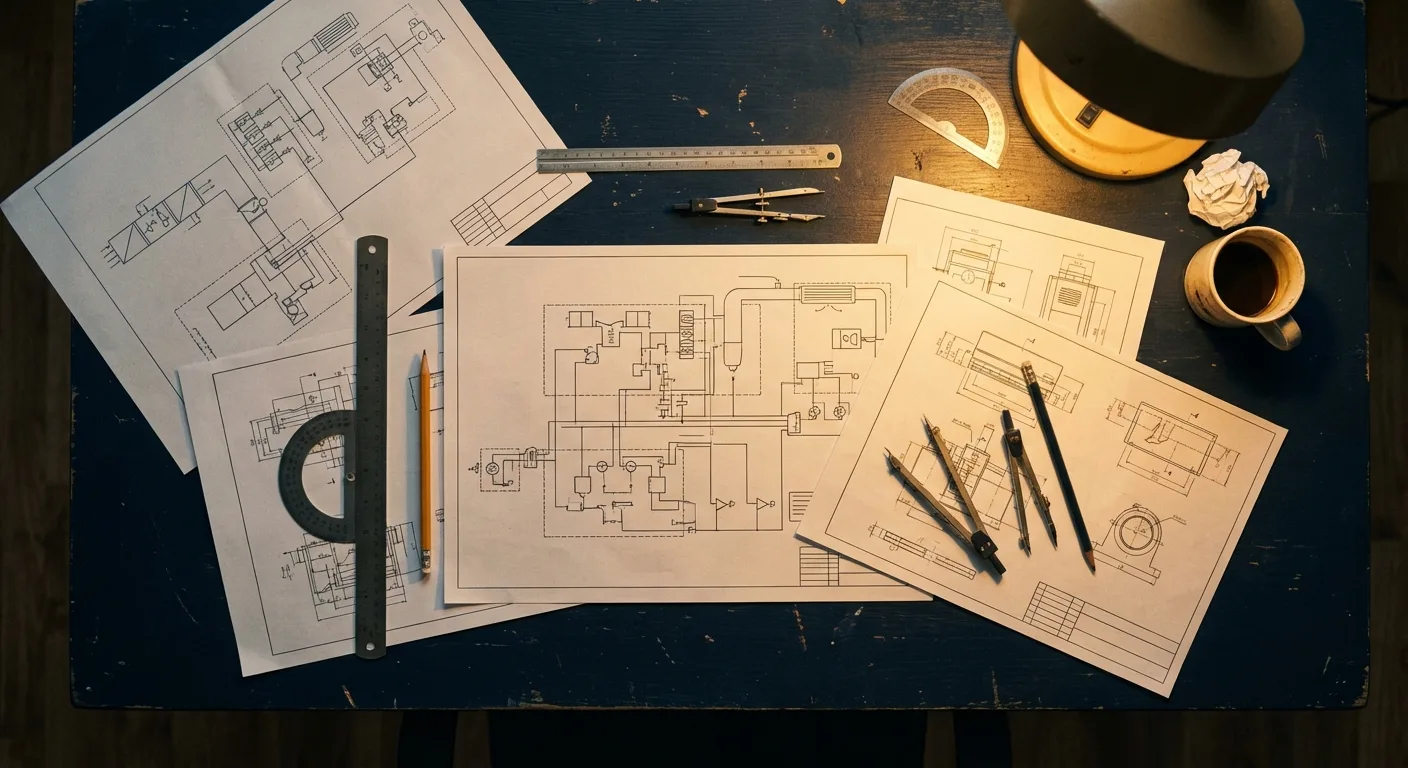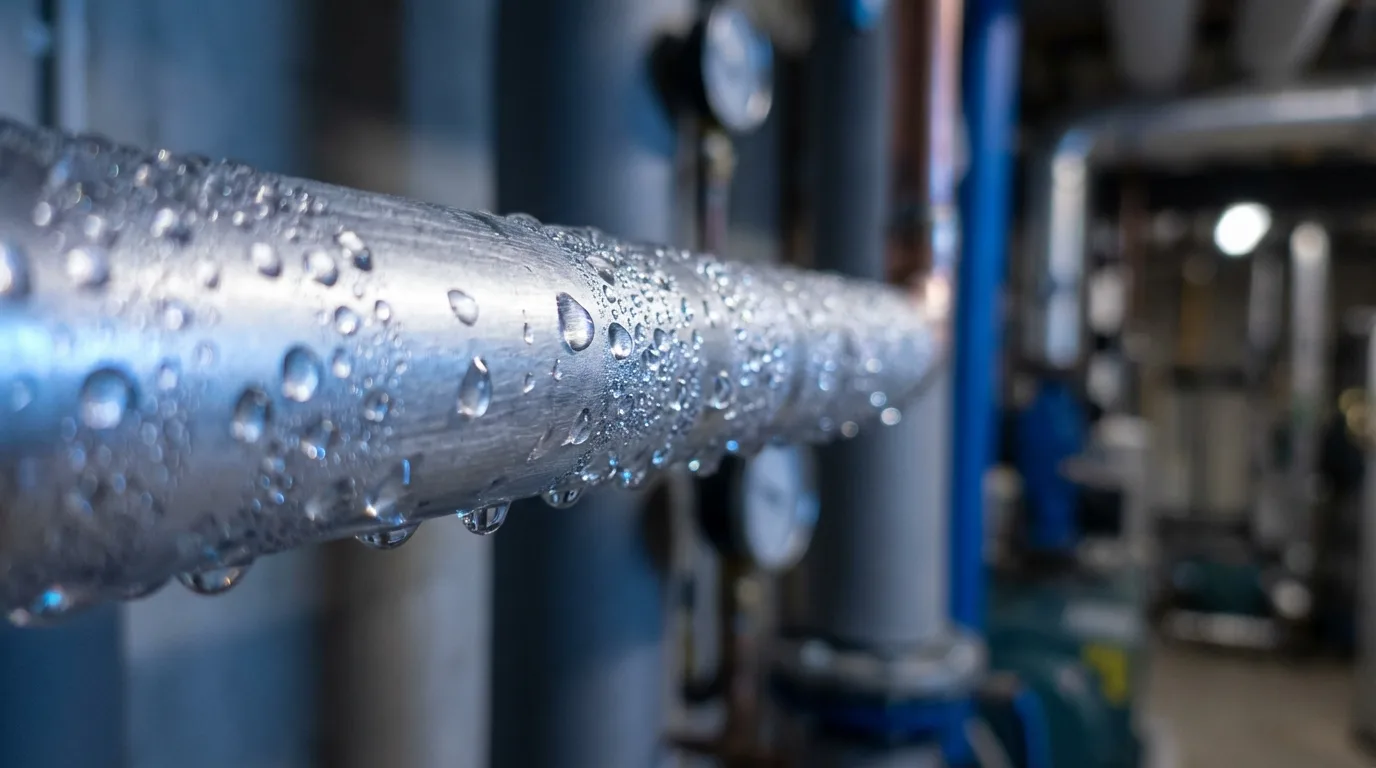
In Taiwan's HVAC engineering practice, "condensation" is the second most common client complaint after insufficient cooling capacity. Ceiling dripping, sweating on duct exteriors, water droplets forming at air outlets -- these seemingly minor phenomena can lead to mold growth, structural steel corrosion, electrical short circuits, and even ceiling collapse. The physical root cause of all condensation problems points to a single critical parameter: dew point temperature. This article starts from the fundamental principles of dew point temperature and systematically analyzes the mechanisms, risk zones, hazard assessment, and engineering solutions for condensation in HVAC systems, with practical recommendations specific to Taiwan's hot and humid environment.
1. What Is Dew Point Temperature: Understanding Water Vapor in Air
Air is a mixture of dry air and water vapor. At any given temperature and pressure, there is an upper limit to how much water vapor air can hold -- when the water vapor content reaches this limit, the air is in a "saturated" state with a relative humidity of 100%. The higher the temperature, the more water vapor the air can hold; conversely, when humid air is cooled, its capacity to hold water vapor gradually decreases[1].
The dew point temperature is defined as: the temperature to which air must be cooled to reach saturation, assuming the water vapor content (humidity ratio) remains unchanged. In other words, when a surface temperature falls below the surrounding air's dew point temperature, the water vapor in the air will condense into liquid water on that surface -- this is the condensation phenomenon. Taking typical outdoor air conditions during Taiwan's summer as an example: at a dry-bulb temperature of 33°C and relative humidity of 75%, the corresponding dew point temperature is approximately 28.2°C. This means any surface with a temperature below 28.2°C may experience condensation[2].
In psychrometrics, dew point temperature is one of the fundamental parameters describing the moisture state of air, together with dry-bulb temperature, wet-bulb temperature, relative humidity, humidity ratio, and enthalpy forming the complete information set of the psychrometric chart. Understanding the engineering significance of dew point temperature is the theoretical foundation for diagnosing and preventing all condensation problems[1].
2. Dew Point Temperature Calculation Methods and Measurement
The Magnus Formula
The most commonly used approximate calculation method for dew point temperature is the Magnus formula (also known as the Magnus-Tetens formula). Its core concept uses the relationship between temperature and saturation vapor pressure to derive the dew point temperature from known dry-bulb temperature and relative humidity[3]. The calculation steps are as follows:
First, define the empirical constants a = 17.27, b = 237.7°C. The logarithmic function of saturation vapor pressure is:
γ(T, RH) = [a × T / (b + T)] + ln(RH / 100)
The dew point temperature Td is obtained from:
Td = b × γ / (a − γ)
Using dry-bulb temperature 33°C and relative humidity 75% as an example: γ = [17.27 × 33 / (237.7 + 33)] + ln(0.75) = 2.104 + (−0.288) = 1.816, Td = 237.7 × 1.816 / (17.27 − 1.816) ≈ 27.9°C. This result has an error of less than 0.5°C compared to precision table values, which is sufficient for engineering applications.
Want to quickly calculate dew point temperature? Try our online dew point calculator -- simply enter the dry-bulb temperature and relative humidity to get your result.
Wet-Bulb and Dry-Bulb Thermometer Measurement
In the field, the traditional sling psychrometer remains a reliable tool for measuring air conditions. By simultaneously reading the dry-bulb and wet-bulb temperatures and referencing the psychrometric chart or lookup tables, all thermodynamic properties of the air can be determined, including the dew point temperature. Modern engineering typically employs electronic temperature and humidity meters or dew point meters, the latter using chilled mirror sensors to directly measure dew point temperature with accuracy up to ±0.2°C, particularly suitable for environments with strict humidity control requirements[1].
Key Measurement Practices in Engineering
In on-site diagnosis of condensation problems, proper measurement methodology is critical. Engineers need to simultaneously measure two sets of data: first, the temperature and relative humidity of the air near the condensation surface (to calculate dew point temperature); second, the temperature of the condensation surface itself (using an infrared thermometer or contact thermocouple). When the surface temperature is below the air's dew point temperature, the physical conditions for condensation are met. The greater the difference between the two, the more severe the condensation and the greater the volume of condensate[4].
3. Four Major Condensation Risk Zones in HVAC Systems
In the design and maintenance of HVAC systems, four zones are most susceptible to condensation problems. The condensation mechanism in each zone differs slightly, and the corresponding prevention strategies vary accordingly[5].
1. Duct Exterior Surfaces
HVAC ducts carry cooled and dehumidified low-temperature air (typically 12-16°C). When ducts pass through unconditioned areas (such as ceiling plenums, mechanical rooms, and shafts), the duct exterior surface temperature approaches the temperature of the air inside. If the surrounding environment's dew point temperature exceeds the duct exterior surface temperature, condensation will occur. During Taiwan's summers, air temperatures in ceiling plenums often reach 35°C or higher with 70-80% relative humidity, corresponding to dew point temperatures of approximately 27-30°C -- far above the duct exterior temperature of 14-18°C, creating extremely harsh condensation conditions. Ducts with inadequate or damaged insulation are the most common source of condensation complaints.
2. Chilled Water Piping
Chilled water systems typically have a supply water temperature of 7°C and return water temperature of approximately 12°C, resulting in very low pipe exterior surface temperatures. The condensation risk for chilled water piping is even higher than for ducts -- because the surface temperatures are lower, creating a greater difference from the environmental dew point temperature. Pipe joints, valves, flanges, and supports are the locations where insulation installation most commonly has gaps and discontinuities, and these are the first places where condensation appears. If condensation water from chilled water piping drips uncontrolled, it can cause ceiling water stains, floor puddles, and even corrosion of equipment and structures below[5].
3. Air Supply Outlets
Condensation at air supply diffusers is the most easily noticed problem by end users. When cold air exits the diffuser, it creates a low-temperature zone at the diffuser edges and ceiling surface. If the temperature in this zone drops below the environmental dew point, water droplets will form on the metal or plastic surfaces of the diffuser. In severe cases, droplets may even fall onto office desks or documents. Diffuser condensation is commonly seen in the following situations: supply air temperature is too low, the diffuser area lacks insulation treatment, and indoor relative humidity is elevated (for example, frequent foot traffic increases outdoor air infiltration).
4. Equipment Joints and Fittings
Various joints, valves, sensors, drain pipe connections, and flexible connections in HVAC systems are often the most difficult areas to fully cover with insulation. Even when the main pipeline insulation is well executed, these geometrically complex fittings are prone to insulation gaps due to installation blind spots. Condensation occurring on small fittings such as expansion tanks, automatic air vents, and pressure gauge connections may produce small amounts of water per point, but the long-term moisture accumulation accelerates metal corrosion and contaminates ceiling materials[4].
4. Condensation Damage to Buildings and Equipment
Condensation may appear to be merely a layer of water droplets on a surface, but its long-term effects can cause serious damage to buildings and equipment[6].
Mold Growth and Indoor Air Quality Degradation
Condensation provides two key conditions for mold growth: moisture and suitable temperature. When condensation water continuously wets ceiling panels, insulation materials, or wall surfaces, mold can begin growing within 24-48 hours. Common mold species in condensation zones include Aspergillus, Penicillium, and Cladosporium. The spores and metabolic byproducts (MVOCs) produced by these molds can severely affect indoor air quality, triggering allergies, asthma, and respiratory diseases[6]. Taiwan's Indoor Air Quality Management Act includes total fungal colony count as a regulated indicator, with the standard for designated public spaces set at 1,000 CFU/m³ or below.
Metal Corrosion and Shortened Equipment Lifespan
Condensation water contains dissolved oxygen and trace acidic substances from the atmosphere, making it corrosive to carbon steel, galvanized steel, and other common HVAC materials. Long-term condensation on duct exteriors leads to galvanized coating degradation and steel perforation, ultimately causing air leaks and even structural failure. At insulation gaps on chilled water piping, condensation water directly corrodes pipe walls, shortening pipe service life. Corrosion of hanging rods, brackets, and other structural steel components can compromise the structural safety of ceiling systems.
Ceiling and Interior Finish Damage
Condensation water dripping or flowing along piping onto ceiling panels causes mineral fiber board deformation, gypsum board water stains, and calcium silicate board swelling and delamination. In commercial spaces, ceiling water stains not only affect aesthetics but also raise questions about building quality. Severe condensation can even cause ceiling panels to fall due to excessive moisture absorption, creating a public safety hazard.
Electrical Short Circuits and Safety Risks
When HVAC equipment control panels, terminal blocks, sensors, and wiring are located in condensation zones, condensation water may seep into electrical components along wire paths, causing insulation degradation, short circuits, or ground faults. In extreme cases, electrical short circuits can lead to fires. Additionally, lighting fixtures, fire smoke detectors, and low-voltage equipment in ceiling plenums may also malfunction due to dripping or seeping condensation water[4].
5. Condensation Prevention Engineering Solutions
The core principle of condensation prevention is straightforward: ensure that all cold surface temperatures remain above the dew point temperature of their surrounding environment, or reduce the environmental air dew point temperature below the cold surface temperature. Based on this principle, engineering solutions can be divided into four major approaches[5].
1. Insulation Design and Installation Quality
Thermal insulation is the most fundamental and important measure for condensation prevention. The function of the insulation layer is to establish sufficient thermal resistance between the cold surface and the surrounding environment, keeping the insulation outer surface temperature above the environmental dew point temperature. Insulation thickness must be calculated based on condensation prevention requirements -- ASHRAE Handbook Fundamentals, Chapter 23 provides calculation methods for pipe and duct insulation thickness[1].
Taking chilled water piping as an example, under Taiwan's environmental conditions (ambient temperature 35°C, relative humidity 80%, dew point temperature approximately 31°C), the insulation thickness for chilled water supply pipes (7°C) typically requires 25-40 mm of closed-cell elastomeric foam (such as Armaflex or equivalent Class 1 insulation), depending on pipe diameter. Beyond thermal conductivity (λ), insulation material selection must also consider low water absorption, closed-cell structure, and weather resistance. Open-cell insulation materials (such as fiberglass) without adequate vapor barriers allow water vapor to gradually penetrate into the insulation interior, causing a dramatic decline in insulation performance -- this is the root cause of many recurring condensation problems[7].
Installation quality has an impact on condensation prevention comparable to design itself. Insulation material seams must be completely sealed; longitudinal seams should be bonded with dedicated adhesive and sealed with tape; circumferential seams require an overlap of at least 50 mm. Pipe support locations must use insulation inserts to prevent metal brackets from making direct contact with pipe walls, forming thermal bridges. All valves, flanges, and fittings must be fully covered with pre-formed insulation shells or field-fabricated insulation.
2. Vapor Barrier Installation
The vapor barrier is an indispensable component of the insulation system, functioning to prevent water vapor from the surrounding environment from penetrating through the insulation to reach the cold surface. ISO 13788 provides assessment methods for internal condensation risk in building components, and its core concepts are equally applicable to pipe and duct vapor barrier design[7]. The vapor barrier must be installed on the "warm side" of the insulation -- the side facing the high-temperature, high-humidity environment. For cold pipes and ducts, the vapor barrier should be on the outer surface of the insulation.
Common vapor barrier materials include aluminum foil, polyethylene film, and dedicated vapor barrier coatings. The greatest installation risk for vapor barriers is the loss of continuity -- any pinhole, crack, or unsealed seam becomes a pathway for water vapor penetration, leading to gradual moisture accumulation within the insulation. Therefore, vapor barrier installation quality requirements are extremely high; all seams must be sealed with aluminum foil tape, and nail holes and punctures must be repaired. Closed-cell insulation materials (such as closed-cell elastomeric foam or PIR board) inherently possess superior water vapor permeation resistance and are widely adopted in Taiwan's engineering practice[5].
3. Supply Air Temperature Adjustment
Approaching the issue from the HVAC system's operational control perspective, appropriately raising the supply air temperature can effectively reduce condensation risk at air outlets and duct exterior surfaces. When supply air temperature is raised from 12°C to 14-16°C, the surface temperatures of duct exteriors and air outlets increase correspondingly, making the critical conditions for condensation harder to reach. However, raising supply air temperature means that airflow volume must be increased to maintain the same cooling capacity, which has downstream effects on duct sizing and fan energy consumption[8].
In Variable Air Volume (VAV) systems, a Supply Air Temperature Reset strategy can dynamically adjust supply air temperature based on indoor load -- raising supply air temperature during partial load periods while reducing airflow volume, balancing energy savings with condensation prevention. Additionally, ensuring that diffuser air velocity does not create excessive induction effect near the outlet, which could draw high-humidity air from the ceiling plenum into the cold air zone, is also a design technique for reducing diffuser condensation.
4. Dehumidification Control
Lowering the dew point temperature of the environmental air is another approach to solving condensation problems at the source. In unconditioned spaces such as ceiling plenums and mechanical shafts, if air relative humidity can be controlled within a reasonable range, condensation risk significantly decreases even without changing pipe insulation thickness. Engineering measures include:
- Maintaining positive pressure: Maintaining slight positive pressure (5-10 Pa) in conditioned areas prevents high-humidity outdoor air from infiltrating into indoor spaces and ceiling plenums
- Plenum ventilation: Routing a small portion of return air through the ceiling plenum to reduce plenum humidity and temperature
- Dedicated dehumidification: Installing dedicated dehumidifiers or dehumidification ducts in high-humidity risk zones to control local dew point temperature below cold surface temperatures
- Outdoor air dehumidification: Using a DOAS (Dedicated Outdoor Air System) to independently handle the latent heat load of outdoor air, preventing high-humidity outdoor air from directly entering conditioned areas[8]
Use our dew point temperature calculator to quickly determine whether your HVAC system is at risk of condensation -- simply enter your field measurement data for an instant assessment.
6. Special Challenges in Taiwan's High-Humidity Environment and Case Studies
Taiwan is a subtropical island with an annual average relative humidity of approximately 75-85%. In summer, humidity frequently exceeds 80%, and during the plum rain season and typhoon season, it can sustain extreme humidity levels of 85-95% for weeks at a time. These climate conditions make condensation prevention far more critical in Taiwan's HVAC engineering than in temperate countries[9].
Special Challenges During the Plum Rain Season
The annual plum rain season from May to June is the peak period for condensation problems. Typical outdoor air conditions during this period are: temperature 25-28°C, relative humidity 90-95%, corresponding to dew point temperatures of approximately 24-27°C. While the temperatures appear moderate, the extremely high moisture content creates severe condensation challenges. What makes the situation more difficult is that daytime temperatures during the plum rain season are not particularly high, and the HVAC system may be operating at low load or intermittently. The chilled water system's supply temperature remains at 7°C, but the environment outside the insulation is in a near-saturated state -- condensation conditions can be met at any moment when the HVAC system is running.
Case Study: Ceiling Dripping in a Commercial Office Building
A commercial office building in downtown Kaohsiung experienced severe ceiling dripping across multiple floors during its first summer after commissioning. On-site investigation revealed that the chilled water main pipes (supply at 7°C) in the ceiling plenum were experiencing extensive condensation at pipe support locations. Condensation water was flowing down support hangers and dripping onto mineral fiber ceiling tiles, causing board deformation and water stains. The diagnosis showed that pipe supports were using standard galvanized angle steel directly supporting the chilled water pipes, with the insulation material compressed flat at the support clamping points, creating approximately 50 mm wide insulation gaps (thermal bridges). The steel bracket temperature was close to the chilled water temperature inside the pipes, causing heavy condensation in the plenum environment of 33°C and 85% RH (dew point 30°C). The corrective measures included: installing high-density insulation inserts at all support points to isolate direct contact between metal brackets and pipe walls; reinstalling insulation at support sections to ensure continuity of both insulation and vapor barrier layers; and adding exhaust ventilation to the plenum to reduce plenum temperature and humidity.
Case Study: Duct Condensation in a Semiconductor Fab
A semiconductor fab in the Southern Taiwan Science Park experienced recurring condensation on the exterior surfaces of a newly installed large MAU (Make-up Air Unit) supply duct during every plum rain season, with condensation water dripping into the cleanroom corridor below. Investigation revealed that the duct was a rectangular galvanized steel duct with 25 mm fiberglass insulation and aluminum foil vapor barrier, with the insulation thickness determined during the design phase based on empirical values from temperate countries rather than being recalculated for Taiwan's high-humidity environment. Condensation prevention insulation thickness verification[1] showed that under conditions of 35°C ambient temperature, 85% relative humidity (32°C dew point temperature), and 16°C supply air temperature inside the duct, the minimum required insulation thickness was 40 mm of closed-cell elastomeric foam. The original 25 mm fiberglass design was not only insufficient in thickness, but as an open-cell material in a high-humidity environment, once the vapor barrier deteriorated, water vapor penetrated the fibrous material causing a dramatic decline in insulation performance. The final corrective solution was a complete replacement with 40 mm closed-cell elastomeric foam insulation, with enhanced sealing treatment at all joints[10].
Prevention During the Design Phase Is Better Than Remediation
These case studies share an important lesson: preventing condensation is far more economical and effective than after-the-fact remediation. During the HVAC system design phase, engineers should perform condensation prevention calculations for all cold surfaces, using the most severe local temperature and humidity conditions (not annual averages) as design criteria. For condensation prevention design in Taiwan, recommended environmental conditions are dry-bulb 35°C with relative humidity of 85% or above (corresponding to a dew point temperature of approximately 32°C), with even more conservative design parameters for basements, mechanical shafts, and other poorly ventilated areas.
Conclusion
Dew point temperature is the key to understanding all condensation phenomena. In Taiwan's year-round high-humidity island environment, condensation prevention in HVAC systems is not a secondary engineering detail but a critical issue affecting building durability, equipment lifespan, indoor air quality, and occupant health. From precise insulation thickness calculations and meticulous vapor barrier installation, to rational supply air temperature control and proactive environmental humidity management -- every aspect requires systematic thinking and rigorous oversight from professional engineers. Through over thirty years of HVAC engineering practice, we have come to deeply appreciate that the number calculated by the Magnus formula represents the engineering value behind countless ceilings that no longer drip and countless pieces of equipment saved from corrosion.