On average, 5–15% of a commercial building's HVAC energy consumption is wasted due to undetected equipment faults and operational deviations. When condenser fouling in a chiller reduces efficiency by 10%, or when an air handling unit's outdoor air damper is stuck half-open — these "soft faults" never trigger traditional alarms, yet day after day they drain energy and shorten equipment lifespan. As the second installment in this series, building on the data foundation, this article explores how AI detects these hidden faults.
- Data Foundations: From Sensors to Machine Learning Models
- Fault Detection and Predictive Maintenance (This Article)
- Chiller Plant Optimization: From MPC to Deep Reinforcement Learning
- Future Vision: Digital Twins, Generative AI, and Edge Intelligence
1. The Cost of Faults: The Invisible Energy Black Hole
In their seminal review paper, Katipamula and Brambley (2005) noted that operational and maintenance issues in commercial building HVAC systems in the United States cause over $15 billion in annual energy waste[1]. These issues include:
- Hard Faults: Equipment shutdown, compressor tripping, motor burnout — traditional BMS alarms can detect these in real time
- Soft Faults: Sensor drift, valve leakage, heat exchanger fouling, control logic deviations — these do not trigger alarms but cause enormous cumulative damage
- Performance Degradation: Gradual efficiency decline due to equipment aging, difficult to distinguish from load variations
Traditional maintenance strategies — periodic inspections plus post-failure emergency repairs — are extremely inefficient at detecting soft faults. A chiller's condensing pressure running 5% above normal may go unnoticed for months until a senior technician catches it during a routine inspection, during which time considerable excess electricity costs have already accumulated.
2. The ASHRAE FDD Framework: A Standardized Starting Point
ASHRAE has been researching fault detection and diagnostics (FDD) for over two decades. Section 5.16 of Guideline 36[2] explicitly defines FDD rules for air handling units (AHUs), including:
- Supply Air Temperature Fault: When supply air temperature deviates from the setpoint beyond the allowable range for a sustained period
- Mixed Air Temperature Fault: When mixed air temperature exceeds the physical limits between return air and outdoor air temperatures
- Damper Control Fault: When the actual position of the outdoor air damper is inconsistent with the command signal
- Energy Efficiency Fault: When equipment runs mechanical cooling while free cooling could be utilized
ASHRAE Research Project RP-1312 further extended FDD rules to chiller systems and cooling towers. The strengths of these rule-based FDD methods lie in their intuitiveness, interpretability, and ease of deployment, but their limitations are also evident: rules must be predefined for every possible fault mode, and their ability to capture complex multi-fault interaction scenarios is limited.
3. Rule-Based FDD: Formalizing Engineering Intuition
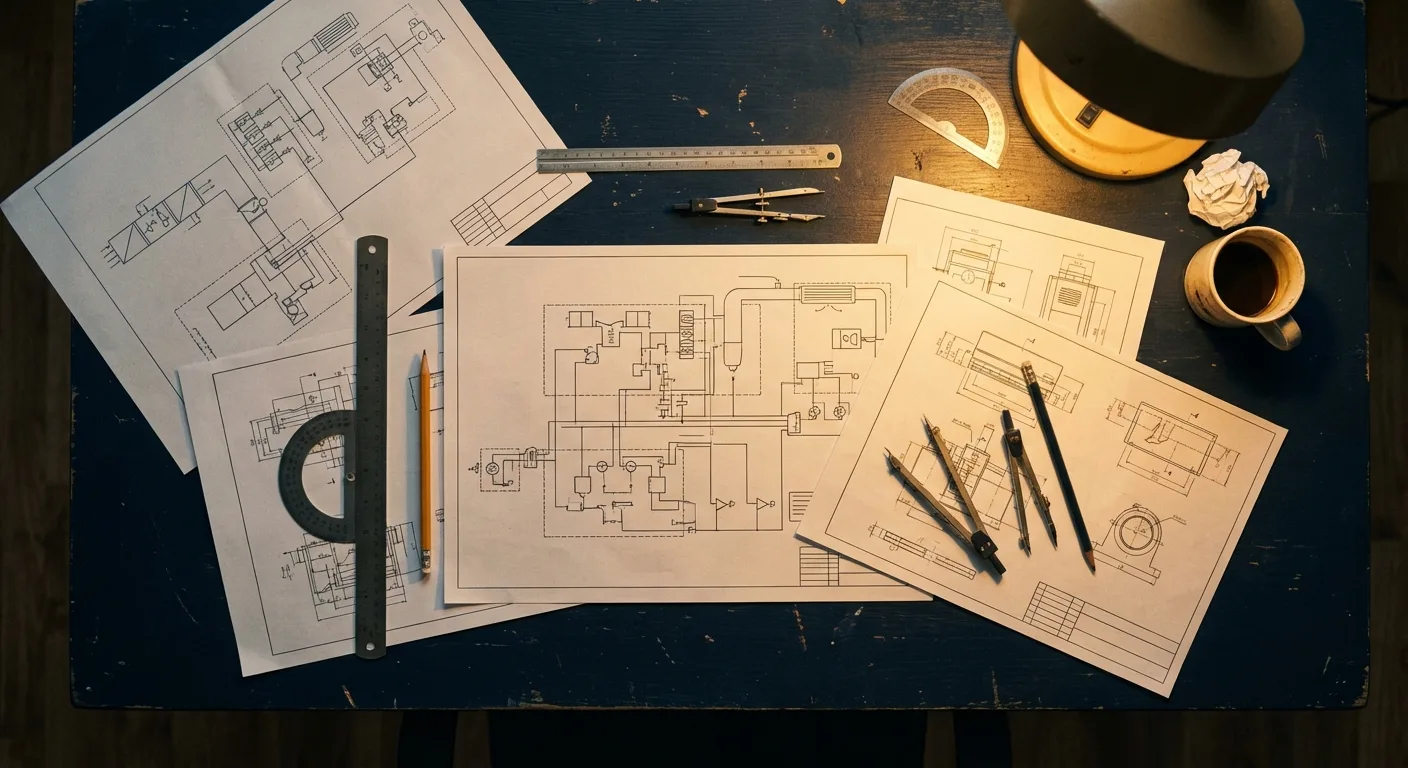
The core idea of rule-based FDD is to encode the diagnostic experience of senior HVAC technicians into "if...then..." logic rules. For example:
- If a chiller's condensing pressure is 15% above normal and cooling water flow is normal, then condenser fouling is likely
- If an AHU's filter pressure differential exceeds twice the initial value, then filter replacement is needed
- If supply air temperature remains 2°C above setpoint for over 30 minutes with the chilled water valve fully open, then insufficient chilled water flow or coil fouling is possible
Li and Braun (2007) at Purdue University developed a systematic chiller FDD methodology[3] that uses residual analysis under steady-state operating conditions to detect common faults such as refrigerant leakage, compressor performance degradation, and heat exchanger fouling. These methods have been integrated into products by multiple BMS manufacturers and have become the industry benchmark.
4. AI FDD: Beyond the Limits of Rules
AI-driven FDD methods do not require predefined fault rules. Instead, they learn "normal" operating patterns from data and flag deviations from these patterns as potential faults. Chapter 43 of the ASHRAE HVAC Applications Handbook provides a systematic discussion of these approaches[4].
Supervised Learning Methods
When labeled fault data is available, supervised classification models (such as random forests, support vector machines, and neural networks) can directly learn the mapping from sensor data to fault types. However, in practice, obtaining large quantities of real fault data is the biggest challenge — HVAC systems operate normally or near-normally most of the time, making fault samples extremely scarce and unevenly distributed across types.
Unsupervised Learning Methods
Unsupervised methods are particularly well-suited for FDD applications because they only require normal operating data to build a baseline model. Principal Component Analysis (PCA) can establish a multivariate statistical model of normal operation; when system operation deviates from this model, both the T² statistic and Q residual will rise simultaneously. Autoencoders use reconstruction error as an anomaly indicator — they reconstruct normal data well but produce spiking reconstruction errors for anomalous data.
Time-Series Anomaly Detection
HVAC faults often exhibit temporal evolution characteristics: condenser fouling is gradual, and abnormal compressor vibrations may show intermittent patterns. LSTM autoencoders and Transformer architectures can capture these temporal features, detecting slow degradation faults that are difficult for traditional methods to identify. O'Neill (2019) demonstrated the potential of deep learning models for FDD in large commercial buildings at LBNL[5].
5. Predictive Maintenance: From Detection to Prevention
Fault detection addresses the question "what is broken right now," while predictive maintenance answers "when will it break" — that is, Remaining Useful Life (RUL) estimation.
RUL Prediction Methods
- Physical Degradation Models: Building lifespan models based on the physical mechanisms of equipment degradation (e.g., compressor valve plate wear rate), requiring deep equipment knowledge
- Data-Driven Models: Training ML models on historical failure data to predict RUL, requiring full lifecycle data from multiple units of the same equipment type
- Hybrid Models: Combining physical constraints with data-driven approaches, using physical models for prior knowledge and data-driven models for calibration
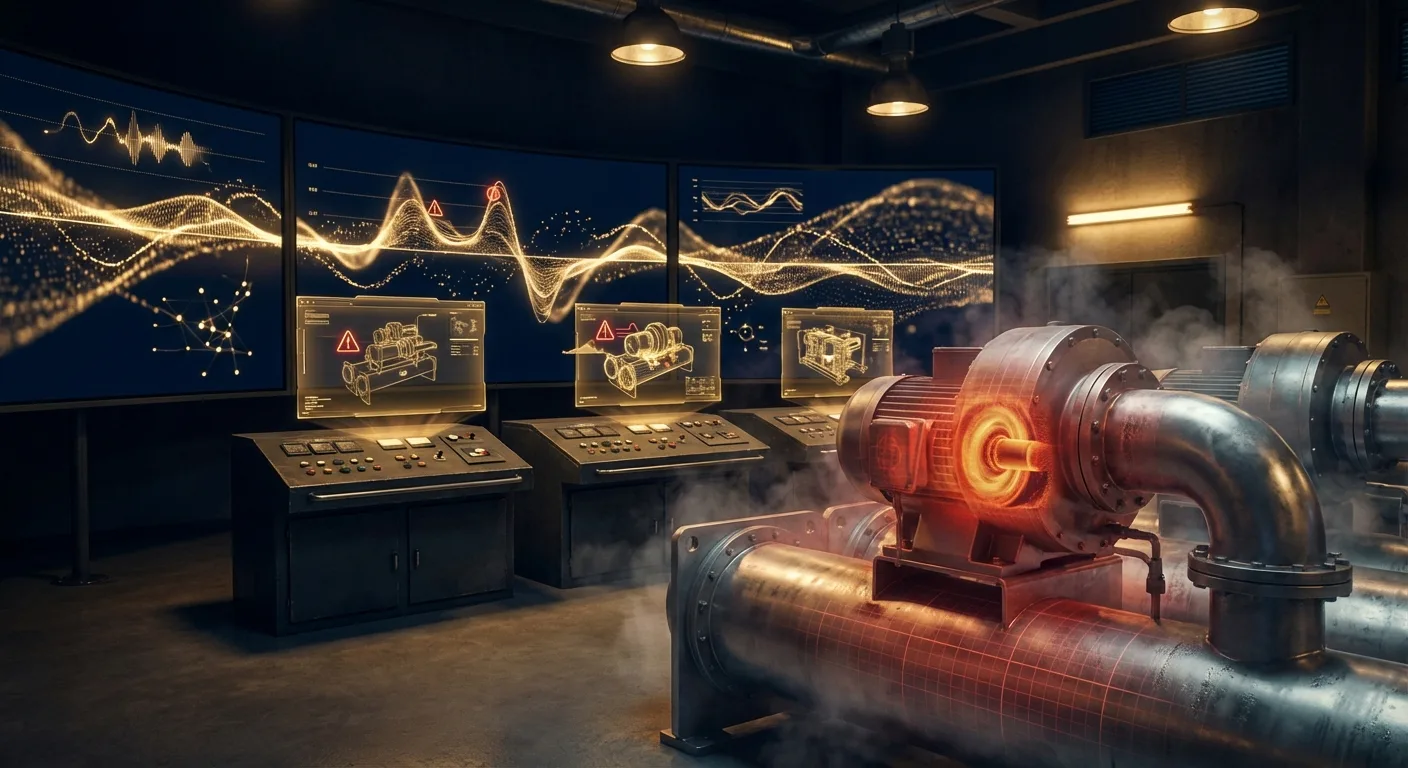
For HVAC systems, bearing degradation in compressors, pumps, and fan motors is the most common target for predictive maintenance. Vibration analysis combined with ML models can issue warnings weeks to months before bearing failure, allowing maintenance teams to replace parts during planned shutdowns and avoid the losses caused by unexpected failures.
6. Opportunities and Challenges for HVAC FDD Practice in Taiwan
Implementing AI FDD in Taiwan requires addressing several practical considerations:
- Insufficient Data Accumulation: Most buildings in Taiwan have limited BMS historical data retention periods, and data quality varies significantly, making the data foundation issues discussed in the first article of this series even more prominent
- Maintenance Culture Transformation: Shifting from "fix it when it breaks" to "predict and prevent" requires a change in management mindset and commitment to initial investment
- Quantifying ROI: The benefits of FDD systems (avoided energy waste, extended equipment lifespan, reduced downtime) require quantifiable ROI analysis to convince decision-makers
- High Temperature and Humidity Environment: Taiwan's climate conditions make issues such as condenser fouling and cooling tower biofilm more frequent, requiring FDD rules to be calibrated for subtropical environments
Granderson's team at LBNL (2021) proposed an FDD tool evaluation framework in their latest research[6], providing a methodological foundation for building owners to select and evaluate FDD products. HVAC engineering teams in Taiwan can leverage this framework to establish FDD evaluation standards suited to the local market.
Conclusion
AI FDD is pushing HVAC maintenance from "experience-driven" toward "data-driven," from "reactive repair" toward "predictive prevention." But successful technology deployment requires three pillars: a high-quality data foundation (as discussed in the first article of this series), appropriate algorithm selection, and engineering teams' trust in and adoption of AI tools. In the next article, we will further explore how AI optimizes chiller plant operations — from model predictive control to deep reinforcement learning.